


Listen to the article
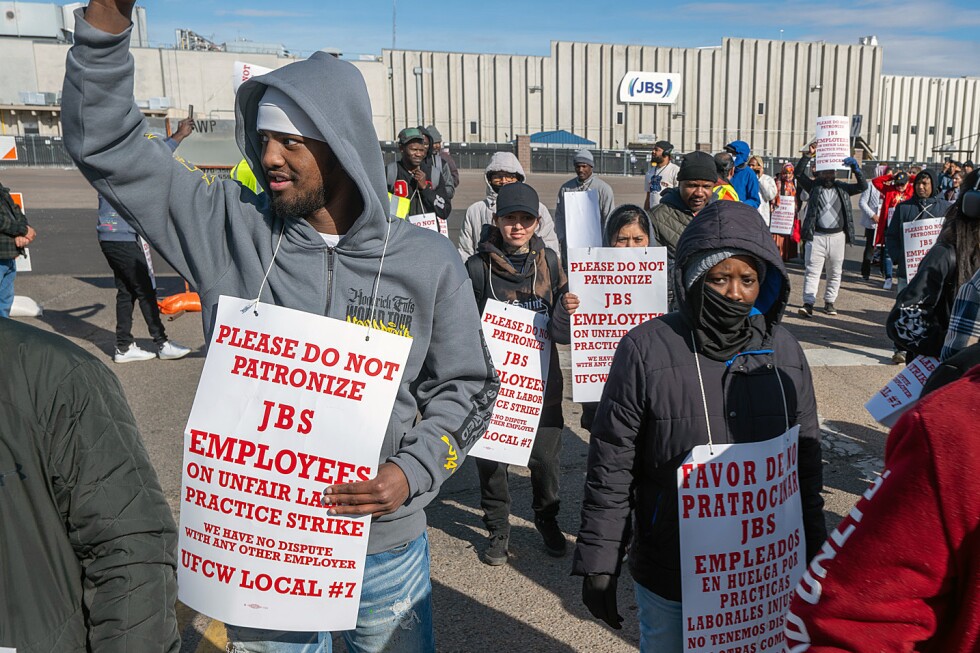
Thousands of striking workers at the Swift Beef Co. plant in Greeley, Colorado, have extended their walkout into a third week as negotiations with owner JBS USA remain stalled. The labor dispute, which began March 16, centers on demands for higher wages and improved healthcare benefits.
“The workers know the value of their labor,” said union President Kim Cordova on Friday. “This could be a long, drawn out fight.”
The strike marks a significant labor action in the meatpacking industry, representing the first U.S. slaughterhouse walkout since workers struck at a Hormel plant in Minnesota in 1985. That earlier dispute lasted more than a year and was marked by violent confrontations between police and protesters.
Nearly 3,800 workers belonging to the United Food and Commercial Workers Local 7 union initiated the current strike with 99% support from membership. Union officials have rejected JBS’s offer of 2% wage increases, arguing the proposal falls short of inflation rates and doesn’t account for Colorado’s higher cost of living compared to other regions where the company operates.
JBS USA, meanwhile, maintains that its operations continue despite the disruption. “We are operating the plant at limited capacity and have shifted beef production elsewhere to meet customer needs,” the company stated Friday. JBS spokesperson Nikki Richardson added in an email that the company is “maintaining supply, supporting the long-term stability of the beef chain, and minimizing disruption for producers, customers, and consumers.”
Industry analysts suggest the timing of the strike might actually benefit the broader meat industry. Jennifer Martin, from Colorado State University’s animal sciences department, noted that recent reductions in slaughter capacity—including the closure of a major Tyson Foods plant in Nebraska—have created conditions that could improve profit margins for companies.
“The lack of harvest capacity at one facility right now might actually be a benefit to the larger industry in the sense of improving margins,” Martin explained. “It’s not necessarily in favor of the employees.”
JBS USA is a dominant player in the meat industry landscape. As the world’s largest meatpacking company with a market capitalization of $17 billion, it serves as the top employer in Greeley, a city of approximately 114,000 residents located 50 miles northeast of Denver.
The company’s Greeley plant has a troubled recent history. In 2020, it became the site of Colorado’s deadliest workplace coronavirus outbreak, with 291 infections and six deaths among plant workers. During that crisis, then-President Donald Trump issued an executive order to keep meatpacking facilities operating nationwide, citing concerns about potential disruptions to America’s food supply. Federal regulators later fined JBS $15,615 for failing to adequately protect employees.
The current labor dispute occurs against a backdrop of shifting industry dynamics. Following the pandemic, beef companies invested billions to expand slaughter capacity. However, recent years have seen U.S. cattle numbers drop to a 75-year low, driven partly by drought conditions and low prices offered to ranchers, reducing the need for additional processing capacity.
JBS began trading on the New York Stock Exchange last May, despite facing opposition from environmental groups and scrutiny from federal investigators. The company previously pleaded guilty to charges of bribing Brazilian officials to secure financing for its U.S. expansion efforts.
While industry experts say it’s too early to determine if the strike will impact retail beef prices—which have already reached record levels—the prolonged labor dispute represents a significant challenge for both the workers seeking better conditions and JBS’s operations in a key production facility.
The standoff in Greeley highlights broader tensions in the meatpacking industry, where workers’ demands for better compensation and working conditions clash with corporate profit objectives and changing market conditions in America’s beef production sector.
Fact Checker
Verify the accuracy of this article using The Disinformation Commission analysis and real-time sources.

8 Comments
The 1985 Hormel strike was a landmark event in the history of the meatpacking industry. This current dispute at the Swift Beef plant shows that labor tensions in the sector remain high. I’m curious to see if this strike will have a similar lasting impact.
It’s encouraging to see workers standing up for better pay and benefits, even in the face of a prolonged labor dispute. The meatpacking industry can be quite challenging, so I hope the two sides can find a fair compromise soon.
I agree, it’s critical that workers in essential industries like meatpacking have a strong voice. Hopefully this dispute leads to positive changes for the workforce.
This strike highlights the challenges facing workers in the meatpacking industry. Negotiating fair wages and benefits is critical, especially given the high cost of living in some regions. I’m curious to see how the standoff between the union and JBS USA plays out.
You’re right, the meatpacking industry has a long history of labor disputes. This strike could set an important precedent for worker rights and compensation in the sector.
The meatpacking industry has a reputation for tough working conditions, so I’m not surprised to see this strike action. It will be interesting to see if the workers can leverage their collective bargaining power to secure better terms from JBS USA.
This strike is a significant event in the meatpacking industry. The demands for higher wages and improved healthcare benefits seem reasonable given the challenging nature of the work and the local cost of living. I hope the two sides can reach a fair compromise soon.
You make a good point. The meatpacking industry has historically underpaid and undervalued its essential workforce. This strike could help set a new standard for worker compensation in the sector.