


Listen to the article
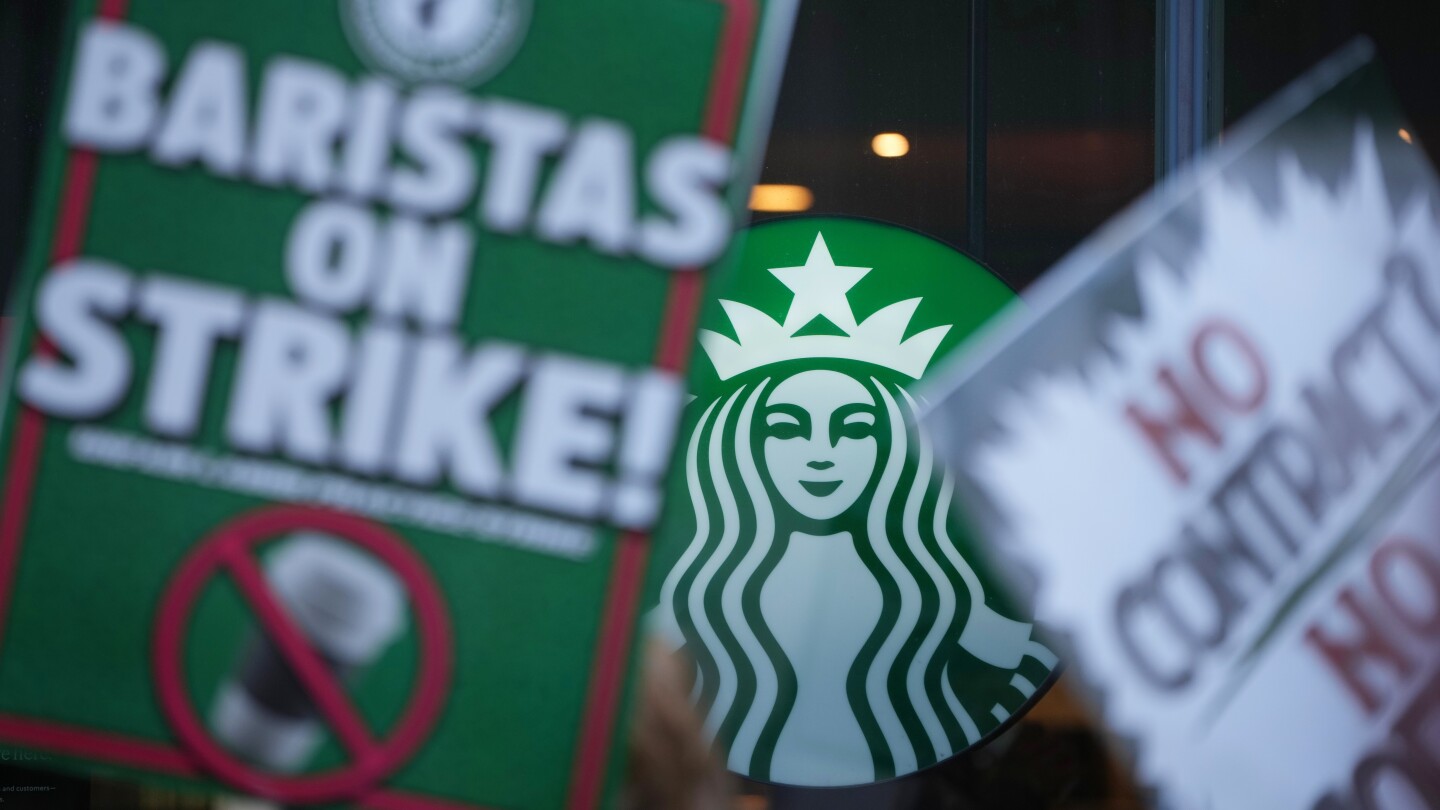
More than 1,000 unionized Starbucks workers walked off the job Thursday at 65 U.S. stores, protesting stalled labor negotiations in a strike deliberately timed to coincide with the company’s popular Red Cup Day promotion.
The annual event, where customers receive free reusable cups with holiday drink purchases, typically drives significant traffic to Starbucks locations. Union organizers claimed several stores had already closed Thursday morning, with more expected to shut down as the day progressed.
Starbucks Workers United said the strike affected locations across 45 cities, including major metropolitan areas like New York, Philadelphia, Minneapolis, San Diego, St. Louis, Dallas, Columbus, and Seattle, the coffee giant’s headquarters. The union indicated the strike has no predetermined end date and warned more stores could join if contract negotiations remain at an impasse.
Despite the labor action, Starbucks emphasized that the vast majority of its U.S. operations continued normally. With 10,000 company-owned stores and 7,000 licensed locations nationwide, the company reported it was meeting or exceeding sales expectations at its company-owned stores by midday on the East Coast.
“The day is off to an incredible start,” the company stated.
The labor dispute stems from unresolved contract negotiations that began after workers at a Buffalo, New York, location first voted to unionize in 2021. Although approximately 550 company-owned Starbucks locations are currently unionized, workers say bargaining progress has stalled since April.
In December 2023, former CEO Laxman Narasimhan had pledged to finalize union agreements by the end of 2024. However, Narasimhan was ousted in August, and workers claim negotiations have languished under current CEO Brian Niccol.
Workers are demanding improved scheduling practices, better staffing, and higher wages. They point to the stark contrast between executive compensation and barista pay, noting Niccol’s multi-million-dollar package and the company’s $81 million Las Vegas conference for store managers and regional leaders in June.
Dochi Spoltore, a Pittsburgh barista, explained during a union call that many workers struggle to get more than 19 weekly hours, just below the 20-hour threshold needed to qualify for company benefits. “I want Starbucks to succeed. My livelihood depends on it,” said Spoltore, who earns $16 per hour. “We’re proud of our work, but we’re tired of being treated like we’re disposable.”
The union also wants resolution for hundreds of unfair labor practice charges, alleging the company fired workers for organizing activities and failed to negotiate policy changes like restricting restroom use to paying customers.
Starbucks counters that it offers industry-leading compensation and benefits worth an average of $30 per hour when including perks like extended paid family leave and full college tuition coverage. In a letter to employees last week, Chief Partner Officer Sara Kelly claimed the union abandoned negotiations in spring and made unreasonable demands, such as allowing workers to shut down mobile ordering when more than five orders are queued.
Kelly maintained that Starbucks remains ready to negotiate “a reasonable deal” and noted that employee satisfaction surveys and lower-than-industry-average turnover rates demonstrate worker contentment.
This marks the third consecutive year unionized workers have targeted Red Cup Day, following similar actions in 2022 and 2023. Last year, a five-day strike before Christmas closed 59 U.S. stores. While previous strikes had minimal operational impact, the union describes this action as open-ended with potential to expand.
Labor relations expert Todd Vachon from Rutgers School of Management and Labor Relations noted that although unionized stores represent a small fraction of Starbucks locations, the high-visibility nature of the strike could effectively communicate workers’ concerns to the public. Unlike manufacturing jobs, retail positions rely on employee-customer relationships, making public perception a powerful tool for organizing efforts.
The labor dispute comes as Starbucks shows signs of business improvement under Niccol’s leadership. The July-September quarter saw a 1% increase in same-store sales, marking the first increase in nearly two years. Niccol has implemented new hospitality standards, redesigned stores for comfort, adjusted staffing for peak periods, and prioritized in-store orders over mobile ones.
The company recently launched its holiday drink menu to strong customer response, with its glass Bearista cup selling out almost immediately after release.
Fact Checker
Verify the accuracy of this article using The Disinformation Commission analysis and real-time sources.

11 Comments
This strike by Starbucks workers on a key sales day is a bold move to pressure the company. While Starbucks maintains it is meeting sales targets, the widespread nature of the labor action suggests the workers have leverage. I hope both sides can find a mutually agreeable solution.
The decision to strike on Red Cup Day is a strategic move by the union to maximize the impact. Starbucks’ claim of meeting or exceeding sales expectations is interesting, but the larger disruption to their operations is undeniable. Curious to see how this unfolds.
While Starbucks claims most stores are still operating, the fact that over 1,000 workers are on strike across 65 locations is significant. This shows the scale of worker discontent and the need for Starbucks to address their demands.
This strike is a bold move by Starbucks workers, targeting a key sales day. It underscores the depth of their frustration with stalled contract negotiations. Curious to see if Starbucks makes any concessions to end the labor action.
This strike by Starbucks workers on Red Cup Day is a strategic move to maximize impact. Unions are fighting for better labor conditions, which is crucial for workers’ wellbeing. I hope both sides can reach a fair agreement soon.
Agreed, timing the strike during a busy promotion is savvy. It will put pressure on Starbucks to address the workers’ concerns more urgently.
This nationwide strike by Starbucks workers is a strong show of collective action. The company’s response will be telling – will they engage constructively with the union, or dig in their heels? Hoping for a positive outcome for the workers.
The timing of this strike during Red Cup Day is a clever tactic to maximize disruption and pressure Starbucks. Workers are fighting for their rights, and I hope the company takes their concerns seriously and works toward a fair resolution.
The sheer scale of this nationwide strike at 65 stores is impressive. Starbucks seems to be maintaining operations, but the disruption will surely hurt their bottom line on a key sales day. Curious to see how this plays out.
Indeed, the widespread nature of this action shows the union’s determination. I wonder if Starbucks will feel compelled to return to the negotiating table in good faith to resolve this.
While Starbucks claims most stores are still operating, the union’s warning of more stores joining the strike is concerning. Workers deserve fair labor conditions, and I hope this standoff is resolved amicably for all.