


Listen to the article
South Korea is set to formally end its bear bile farming industry on January 1, marking a significant shift in the country’s approach to animal welfare despite ongoing challenges with the transition.
The Ministry of Climate, Energy and Environment announced Tuesday that breeding and possession of bears, as well as the extraction of their bile, will be prohibited beginning in the new year. Violators will face severe penalties, including prison sentences of up to five years under the revised animal rights protection law.
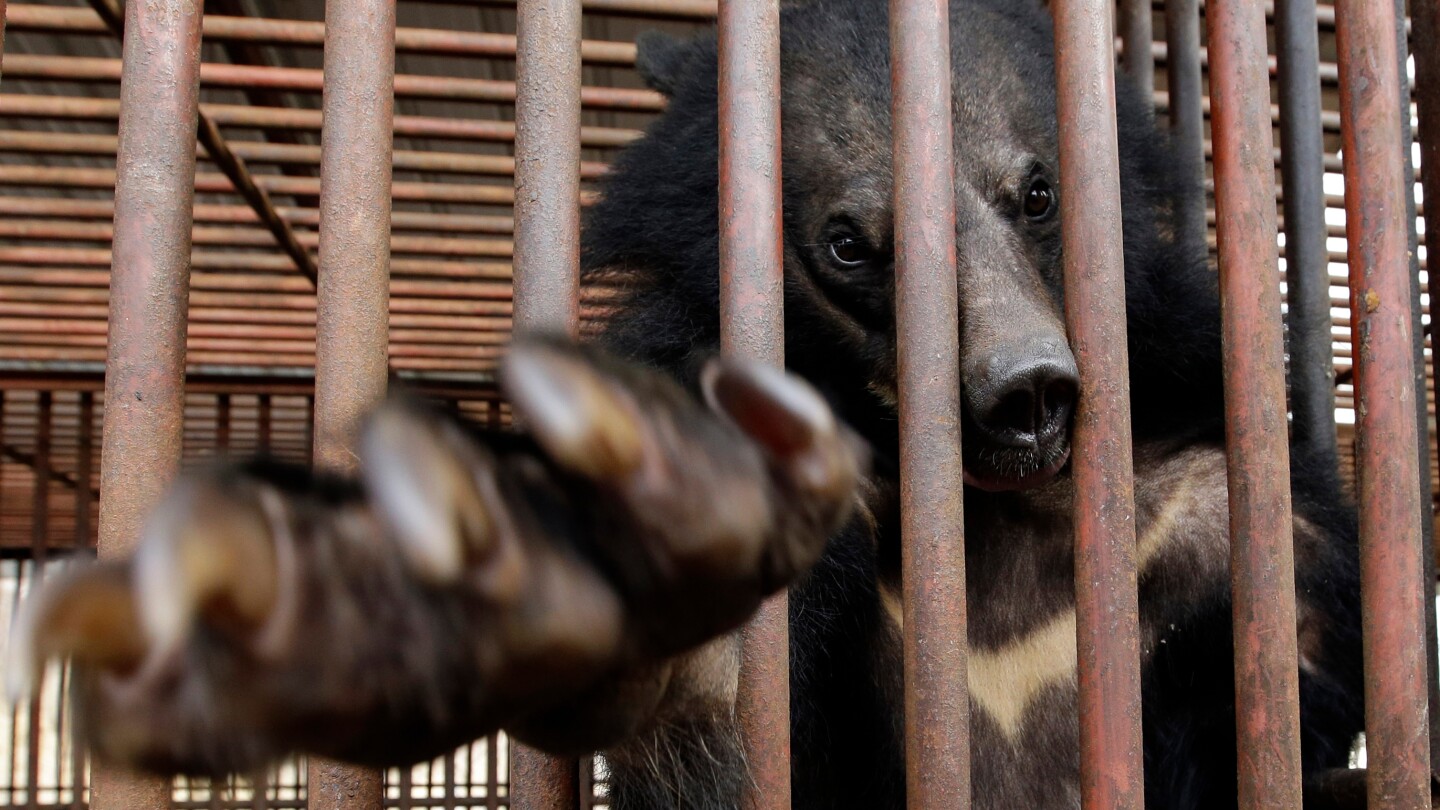
South Korea has been among the few countries that permitted the farming of Asiatic black bears, commonly known as moon bears, for bile extraction. The practice has long been associated with traditional medicine and food products believed to enhance vitality and stamina.
Over the past two decades, however, the industry has experienced a significant decline. Public awareness about animal cruelty, questions regarding the medicinal efficacy of bear bile, and the introduction of more affordable medical alternatives have all contributed to its diminishing popularity.
The ban represents the implementation of a broader agreement reached in 2022 among government officials, farmers, and animal rights advocates. Under this plan, the bear bile farming industry was originally scheduled to be completely prohibited by 2026, but the timeline has been accelerated with the new measures taking effect this coming week.
According to the current arrangement, animal rights organizations are responsible for purchasing bears from farmers, while the government is tasked with establishing facilities to house the animals. To date, only 21 bears have been successfully relocated to a government-run sanctuary in southern Jeolla province. Meanwhile, 199 bears continue to be kept in 11 farms across the country.
The slow progress in relocations stems from ongoing disputes between farmers and officials regarding compensation amounts. Many farmers claim they cannot afford to give up their bears without adequate financial support.
Environment Minister Kim Sungwhan emphasized the government’s commitment to animal welfare, stating: “Our plan to end the bear farming business is an implementation of our country’s resolve to improve welfare of wild animals and fulfill our related responsibility. We will strive to help bears protected until the last one.”
The ministry has announced a six-month grace period for existing farmers and will enforce penalties for bile extraction within the law’s limits. Additionally, the government plans to provide financial incentives to farmers who maintain their animals until they can be properly sold and relocated.
However, farmers like Kim KwangSoo, who currently raises 78 bears in Dangjin, have expressed frustration with the policy. Kim, who once had 270 bears in 2014, claims to have accumulated hundreds of thousands of dollars in debt due to the costs of maintaining his remaining animals. “This is a very bad policy,” he said, though he acknowledged he would comply with the law to avoid penalties.
The bear farming industry in South Korea dates back to the early 1980s, when bears were imported from Malaysia and other Southeast Asian countries. By 2014, approximately 1,000 bears were being raised in farms across the country.
While animal rights groups have praised the government’s commitment to ending the industry, they have also highlighted significant concerns about the lack of adequate facilities for the rescued bears. The current sanctuary in Jeolla province has a maximum capacity of 49 bears, though activists suggest the optimal number should not exceed 30 for proper care.
A second government facility, initially scheduled to open in April, has been delayed until 2027 due to flooding issues, further complicating relocation efforts.
Cheon JinKyung, head of Korea Animal Rights Advocates in Seoul, summarized the mixed progress: “It’s really good for the government to reflect on the bear bile industry and push to end it, but it’s regrettable that there aren’t sufficient measures to protect bears. There aren’t places where these bears can stay.”
As South Korea moves to close this controversial chapter in its treatment of wildlife, the transition highlights the complex balance between advancing animal welfare policies and addressing the practical challenges of implementation.
Fact Checker
Verify the accuracy of this article using The Disinformation Commission analysis and real-time sources.

7 Comments
Imposing strict penalties for violations of the new regulations is critical to ensure compliance and deter any attempts to circumvent the law. Rigorous monitoring and enforcement will be key to the success of this policy change.
This ban represents a significant shift in South Korea’s approach to animal welfare. It will be interesting to see how the government and stakeholders manage the practical challenges of implementing this new policy across the industry.
While bear bile has been used in traditional medicine, the practice is inherently cruel and the medicinal benefits are questionable. Transitioning to more humane and scientifically-proven alternatives is a positive development.
This is an important step forward for animal welfare in South Korea. Bear bile farming has long been a controversial practice that raises serious ethical concerns. Ending this industry is a welcome move, though the transition will likely face challenges.
The declining popularity of bear bile products due to public awareness and availability of alternatives is an encouraging sign. Hopefully, this ban can be effectively enforced to protect the remaining Asiatic black bears.
Kudos to the South Korean government for taking this bold step. Banning bear bile farming sends a strong message about the country’s commitment to animal rights and environmental protection.
Absolutely, this is an important milestone that could inspire other countries to follow suit and end this exploitative practice.