


Listen to the article
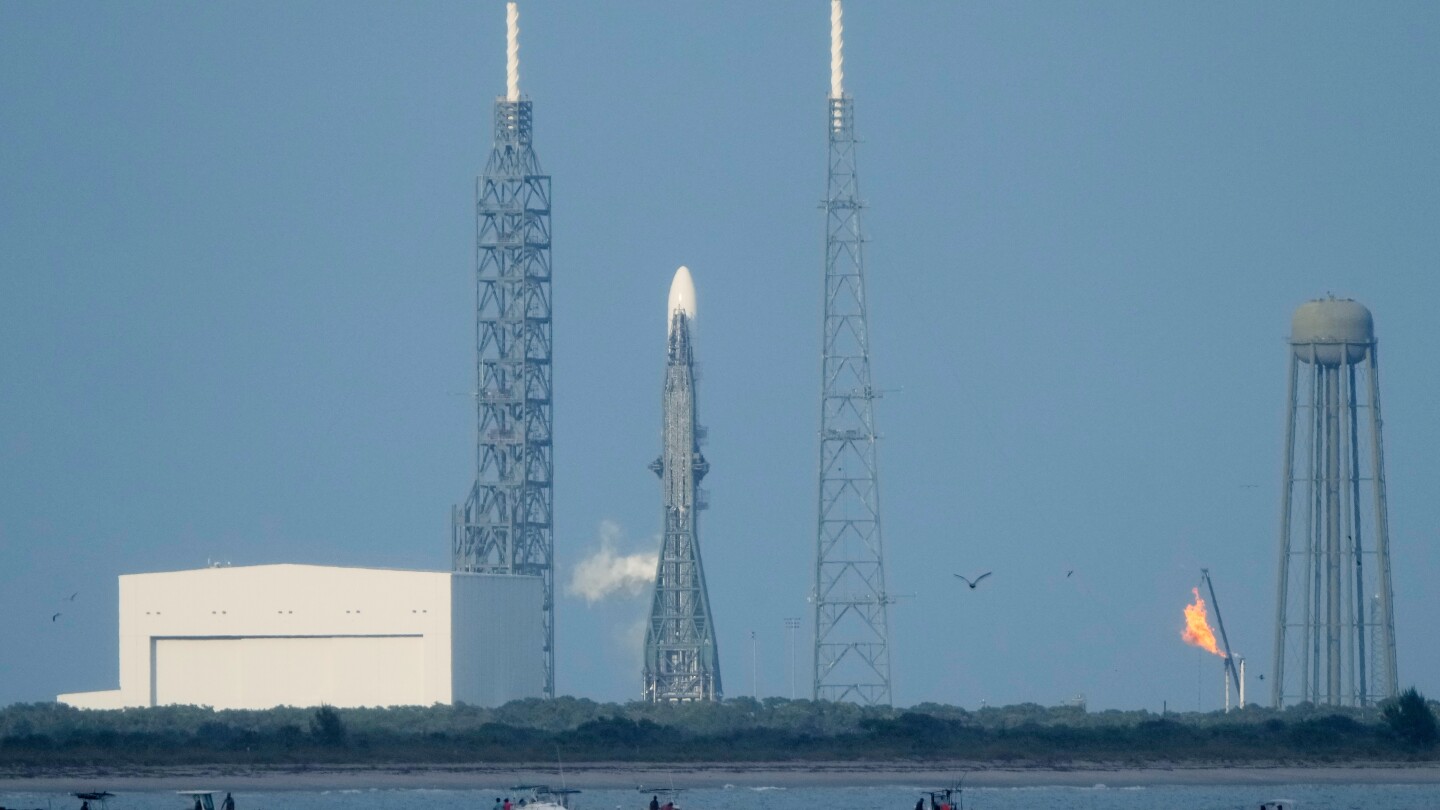
Intense solar storms that created spectacular aurora displays across the United States have forced NASA and Blue Origin to postpone the launch of the aerospace company’s massive New Glenn rocket from Cape Canaveral, Florida.
The launch, originally scheduled for Wednesday afternoon, was initially delayed due to unfavorable weather conditions. However, approximately five hours before the revised launch window, mission controllers made the decision to scrub the attempt entirely due to heightened solar activity that could potentially affect the sensitive instruments aboard the Mars-bound spacecraft.
“The decision was made out of an abundance of caution,” explained a NASA spokesperson. “When dealing with interplanetary missions, even small radiation anomalies could have significant consequences once the spacecraft are millions of miles from Earth.”
The mission represents a critical milestone for Blue Origin, the private aerospace company founded by Amazon’s Jeff Bezos. This would have been only the second flight of the towering New Glenn rocket, which successfully completed its maiden voyage in January. Standing at an impressive 321 feet (98 meters) tall, the New Glenn dwarfs the company’s New Shepard vehicle that has carried passengers on suborbital flights from its West Texas facility.
The postponed mission carries significant scientific importance as it aims to place two NASA orbiters into trajectories toward Mars. These spacecraft are designed to expand our understanding of the red planet’s atmosphere, geology, and potential for supporting future human missions.
Space weather experts note that the current solar cycle has been particularly active in recent months. The sun is approaching what astronomers call “solar maximum,” a period of increased sunspot activity and solar flares that occurs approximately every 11 years. These solar events can send massive bursts of charged particles toward Earth, creating geomagnetic storms that produce the stunning aurora displays visible across unusually southern latitudes this week.
While beautiful to observe, these same solar phenomena pose serious challenges for spacecraft operations. Radiation from solar flares can damage sensitive electronics, corrupt data, and even disable critical systems if protective measures aren’t taken. For Mars-bound missions that will spend months traversing interplanetary space, the risks are especially pronounced.
Industry analysts point out that this delay highlights the increasing importance of space weather monitoring for commercial space operations. As private companies like Blue Origin, SpaceX, and others expand their launch calendars and mission profiles, accounting for solar activity becomes a crucial component of mission planning.
“What we’re seeing is the commercial space sector facing the same challenges that NASA has dealt with for decades,” said Dr. Sarah Morningstar, a space policy expert at the University of Colorado. “As more private entities venture beyond Earth orbit, they’ll need sophisticated space weather prediction capabilities and hardware designed to withstand radiation environments.”
Blue Origin and NASA have not announced a new launch date for the mission, stating only that they will monitor solar conditions and select a more favorable launch window in the coming days or weeks.
The New Glenn represents Blue Origin’s entry into the heavy-lift launch market, competing directly with SpaceX’s Falcon Heavy and eventually with NASA’s Space Launch System. Named after astronaut John Glenn, the first American to orbit Earth, the rocket is designed to be partially reusable, with its first stage returning to Earth for refurbishment and future flights.
As both NASA and Blue Origin await improved solar conditions, mission teams will maintain the rocket and its payloads in launch-ready condition at Cape Canaveral, prepared to proceed when space weather permits.
Fact Checker
Verify the accuracy of this article using The Disinformation Commission analysis and real-time sources.

6 Comments
Delays due to solar activity are a good reminder of the challenges of space travel and the need to carefully monitor conditions. Glad to see NASA and Blue Origin prioritizing safety and risk mitigation. Looking forward to the eventual successful launch of the New Glenn.
Interesting to see solar storms impacting space launches. Wonder how often these kinds of delays happen and what precautions are taken to protect sensitive instruments on interplanetary missions. Curious to learn more about the capabilities of the New Glenn rocket.
Delays due to solar activity highlight the importance of reliable power and shielding for spacecraft on long-duration interplanetary missions. Curious to learn more about the specific Mars-bound instruments on this launch and how they are designed to withstand the space environment.
Exciting to see the progress in private space companies like Blue Origin taking on more ambitious missions. The New Glenn rocket is massive – I wonder how its capabilities compare to other heavy-lift vehicles. Solar storms are a good reminder of the unpredictable nature of space operations.
It’s fascinating to see the interplay between private and public space initiatives. The New Glenn rocket seems like an important milestone for Blue Origin. Curious to see how this mission unfolds and whether the solar storm delays lead to any design changes or additional precautions.
The New Glenn sounds like an impressive piece of engineering. Curious to see how this private-public partnership between Blue Origin and NASA develops. Solar storms are a wild card, but it’s reassuring they are taking the necessary precautions.