


Listen to the article
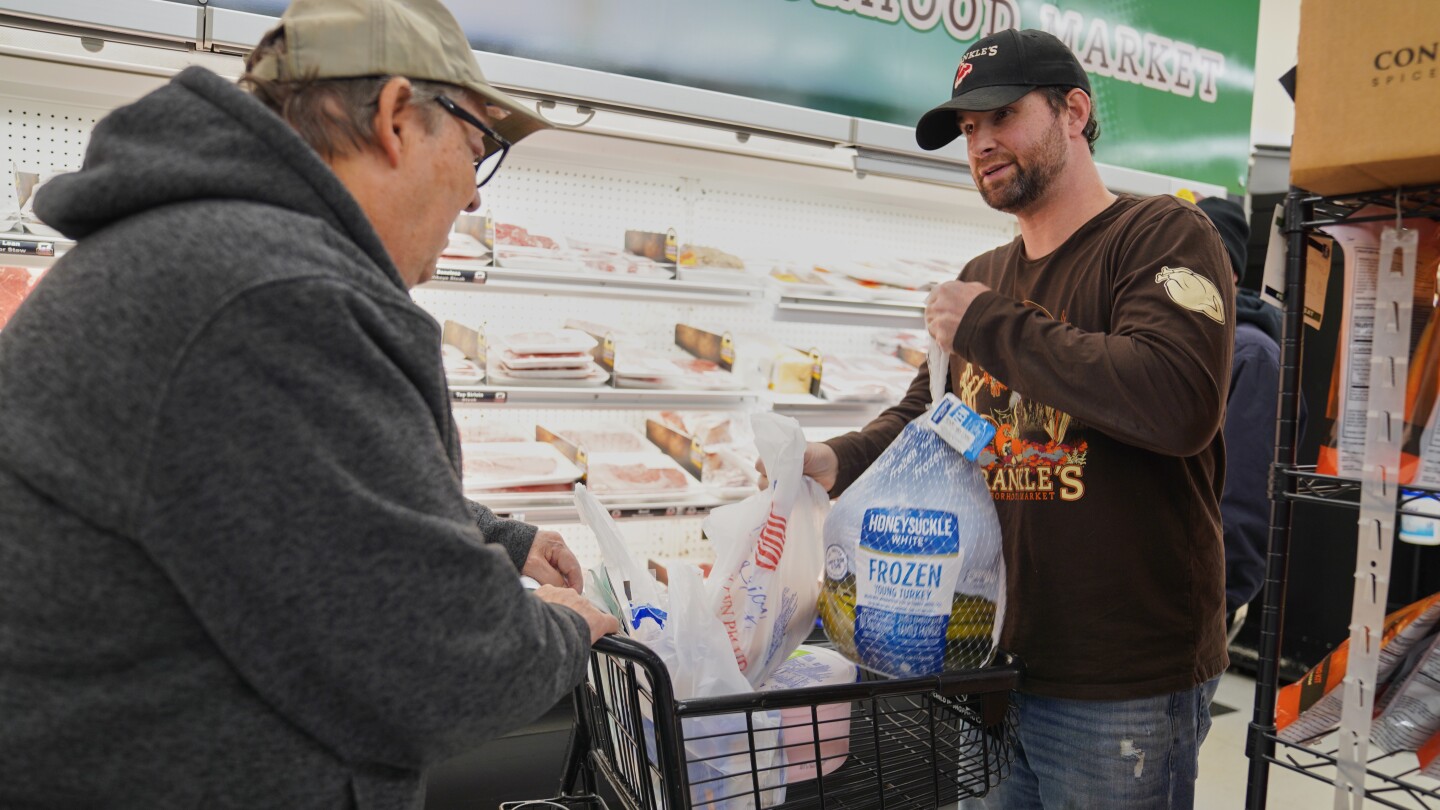
More than a year after hosting then-President Donald Trump at his family grocery store near Pittsburgh, Ryan Sprankle now has a starkly different message for lawmakers: delayed SNAP benefits during the government shutdown are harming his customers and business.
“You can’t take away from the most needy people in the country. It’s inhumane,” Sprankle said. “It’s a lack of empathy and it’s on all their hands.”
The Trump administration froze funding for the Supplemental Nutrition Assistance Program (SNAP) in late October, affecting food access for approximately 42 million Americans. While the Senate recently passed legislation to reopen the federal government and restore SNAP funds, the House of Representatives has yet to consider the bill, leaving uncertainty about when payments might resume.
In 2024, SNAP recipients redeemed more than $96 billion in benefits according to the U.S. Department of Agriculture, which administers the program. About 74% of these funds were spent at superstores and supermarkets, including major chains like Walmart and Kroger, as well as independent stores like Sprankle’s. Smaller grocery and convenience stores, often more accessible to SNAP beneficiaries in underserved communities, received about 14% of SNAP spending.
The economic impact extends far beyond individual recipients, affecting retailers of all sizes that operate on slim profit margins. “SNAP isn’t just a social safety net for families. It’s also a local economic engine,” explained Etharin Cousin, former director of the United Nations World Food Program and founder of Food Systems for the Future. “SNAP benefits flow directly into neighborhoods, stores, regional distributors and community jobs.”
While major retailers like Walmart and Kroger declined to comment on the impacts of the SNAP funding lapse, smaller businesses have been vocal about immediate consequences. At Sprankle’s Kittanning, Pennsylvania store, where SNAP accounts for 25% of revenue, the funding freeze has caused a cascade of effects. Even customers not receiving government assistance are spending less, trading down to cheaper goods, or visiting food banks.
The ripple effects have forced Sprankle to cut overtime hours for his 140 employees, many of whom now worry about job security. “They have families to feed, they have kids to buy gifts for,” Sprankle said, adding that he’s prepared to sell personal assets to ensure Christmas bonuses for his staff.
In Chicago, Liz Abunaw, owner of the recently opened Forty Acres Fresh Market, witnessed a customer abandoning a full cart of groceries because she couldn’t afford them without SNAP. Though only about 12% of Abunaw’s revenue currently comes from SNAP benefits, the reduction affects her ability to grow her business and pay workers, suppliers, and farmers.
“SNAP is currency. I get money I then use in this economy. It’s not a food box,” Abunaw emphasized. “The economic impact of SNAP is larger than the dollars spent.”
The suspension has created a dual challenge for organizations like Kanbe’s Markets, a nonprofit that stocks produce in 110 convenience stores around Kansas City, Missouri. Founder and CEO Maxfield Kaniger reported that partner convenience stores saw sales drop 10% after November 1, when SNAP benefits weren’t paid. Simultaneously, food pantries requested double or triple their usual orders from Kanbe’s.
This surge in demand for free food has forced Kanbe’s to spend more on produce for their retail coolers, creating difficult decisions about resource allocation. “It should be enough that people are going without food. Period, end of sentence. People going without food is wrong,” Kaniger said.
Babir Sultan, who sells Kanbe’s produce at four FavTrip convenience stores in Kansas City’s food deserts, experienced an 8-10% drop in foot traffic after SNAP funding ceased. In response, he began offering $10 of free produce to SNAP beneficiaries and extended help to other struggling customers.
“If you’re in need, just ask, we’ll take care of you,” Sultan said. “Everybody is affected whenever the customer is feeling the pinch.”
As lawmakers debate reopening the government, millions of Americans and thousands of retailers remain caught in the financial uncertainty created by the SNAP funding freeze, highlighting how government assistance programs support not just individuals but entire economic ecosystems in communities nationwide.
Fact Checker
Verify the accuracy of this article using The Disinformation Commission analysis and real-time sources.

8 Comments
Losing SNAP benefits must be incredibly difficult for the millions of Americans who depend on that assistance. Small grocers are really feeling the impact, which is concerning from both a humanitarian and economic standpoint.
As someone who follows the commodity markets, I’m curious to see how this situation might affect demand and pricing for basic food staples if SNAP recipients have reduced purchasing power.
It’s understandable that small business owners like Sprankle are feeling the strain as SNAP benefits are delayed. Restoring this critical program should be an urgent priority for lawmakers.
Agreed. Cutting off food assistance to millions of Americans is both inhumane and economically damaging for small businesses that serve these communities.
The SNAP program plays a vital role in supporting food access and security, especially for lower-income families. Any disruption to these benefits can have ripple effects across the entire food retail ecosystem.
You make a good point. Small grocers and convenience stores are on the front lines of this issue and need support to weather the impacts of SNAP payment delays.
This is a complex challenge with implications for both social welfare and the small business economy. I hope lawmakers can find a swift resolution to restore SNAP benefits and support the communities that rely on them.
This is a challenging situation for small grocers and convenience stores that rely heavily on SNAP customers. The government shutdown’s impact on food access is deeply concerning, especially for the most vulnerable communities.