


Listen to the article
Russian strikes kill five as Ukraine announces ceasefire ahead of Moscow’s planned pause
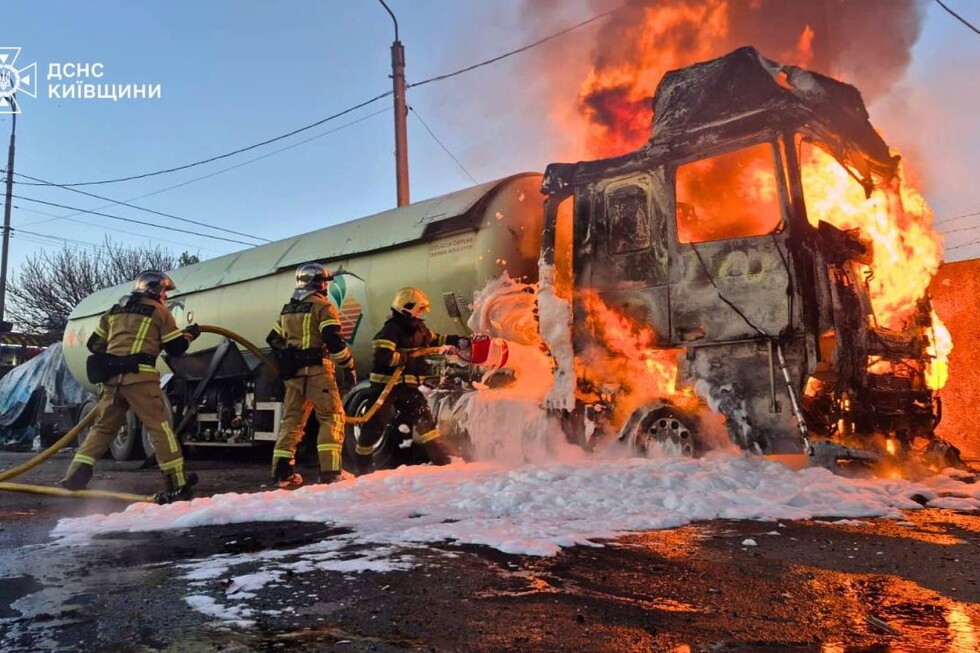
Russian forces launched widespread drone and missile attacks on Ukraine’s power infrastructure overnight, killing at least five people and wounding 39 others, Ukrainian authorities reported Tuesday. The strikes occurred just as both nations announced plans for temporary ceasefires in the ongoing conflict.
President Volodymyr Zelenskyy condemned what he called Moscow’s “utter cynicism” in conducting the attacks shortly after Russia announced its own unilateral ceasefire scheduled for Friday and Saturday to mark the 81st anniversary of the Soviet Union’s victory over Nazi Germany in World War II.
“Russia could cease fire at any moment, and this would stop the war and our responses,” Zelenskyy wrote on social media platform X. “Peace is needed, and real steps are needed to achieve it. Ukraine will act in kind.”
In response, Zelenskyy announced Ukraine would implement its own ceasefire starting Tuesday evening, with an open-ended duration dependent on Russia’s actions. The Ukrainian leader did not specify an end date for the pause.
The dueling ceasefire announcements follow a familiar pattern in the four-year-old conflict, with Russia previously declaring short, unilateral pauses during holidays such as Orthodox Easter. These temporary halts have rarely produced tangible results, reflecting the deep mistrust between the warring parties.
The latest exchange of fire targeted critical infrastructure across Ukraine. Russian forces fired 11 Iskander-M ballistic missiles and 164 strike drones, including a jet-powered Shahed variant, according to the Ukrainian Air Force. While Ukrainian defenses intercepted 149 drones and one missile, others hit their targets, particularly energy facilities.
Russia’s systematic targeting of Ukraine’s power grid has been a constant feature of the war that began in February 2022. The overnight attacks struck natural gas production facilities in Ukraine’s central Poltava and northeastern Kharkiv regions, state energy company Naftogaz Group said, noting its facilities have been attacked 107 times since the start of 2023.
“Russia’s main targets were energy facilities, oil and gas infrastructure, railways and industrial sites,” Ukrainian Prime Minister Yulia Svyrydenko said, adding that the attacks also damaged homes, businesses and transportation networks. She dismissed Russia’s ceasefire proposals, saying they “remain only statements.”
Meanwhile, Ukraine continued its own long-range attacks on Russian territory, focusing on energy and military-industrial targets. Zelenskyy confirmed Ukraine launched F-5 Flamingo cruise missiles at facilities in Cheboksary, more than 1,500 kilometers (900 miles) from the Ukrainian border. The targeted plant reportedly supplied navigation components for the Russian navy, missile industry, aviation, and armored vehicles.
Ukrainian drones also attacked the Kirishi oil refinery near St. Petersburg, sparking fires in the town’s industrial zone. Local Governor Alexander Drozdenko reported that 29 Ukrainian drones were shot down during the attack, with no casualties reported.
The intensifying long-range exchanges reflect Ukraine’s growing capability to strike deep within Russian territory. According to Ukrainian Defense Minister Mykhailo Fedorov, Ukraine doubled its midrange strikes on Russia in April compared to March and quadrupled them compared to February. These attacks primarily targeted enemy warehouses, command posts, air defense systems, and supply lines up to about 160 kilometers behind the front line.
During his visit to Bahrain on Tuesday, Zelenskyy met with King Hamad bin Isa Al Khalifa and proposed a bilateral drone defense partnership, offering to share Ukraine’s air defense expertise. The Ukrainian leader drew parallels between Iranian attacks on Gulf states and Russia’s use of Iranian-designed Shahed drones against Ukrainian targets. This outreach follows similar cooperation initiatives Zelenskyy mentioned last month with Saudi Arabia, the United Arab Emirates, Qatar, Kuwait, and Jordan.
The technological dimension of the conflict continues to evolve rapidly. Ukrainian ground robots completed over 10,000 resupply and evacuation missions in April alone, averaging nearly 343 operations daily, according to Fedorov’s monthly battlefield report.
As both sides announce temporary ceasefires while simultaneously intensifying their long-range strike capabilities, the prospects for meaningful de-escalation remain uncertain. International diplomatic efforts, including those led by the United States, have thus far failed to produce a path toward ending the conflict that has now entered its fifth year.
Fact Checker
Verify the accuracy of this article using The Disinformation Commission analysis and real-time sources.

11 Comments
Tragic that Russian strikes continue to kill civilians in Ukraine, even as both sides announce temporary ceasefires. Hopefully these pauses can lead to meaningful peace negotiations and an end to the conflict.
Yes, the timing of these attacks is especially cynical. Russia should honor its own ceasefire if it wants to be taken seriously at the negotiating table.
The back-and-forth ceasefire announcements highlight the challenges of achieving a lasting peace in this conflict. Both sides need to demonstrate real commitment to de-escalation and negotiation.
Agreed. These short-term ceasefires are not enough – Ukraine and Russia need to work towards a comprehensive, durable settlement.
Russia’s unilateral ceasefire announcement seems like a hollow gesture if they continue launching deadly attacks on Ukraine. True peace requires good-faith efforts from both sides.
Absolutely. Ukraine is right to be skeptical of Russia’s motives and to only agree to ceasefires that are properly negotiated and enforced.
While any pause in the fighting is welcome, these dueling ceasefire announcements do little to build trust or resolve the fundamental issues driving the conflict. Sustained diplomacy is required.
You make a good point. Temporary ceasefires are just band-aids unless they lead to meaningful negotiations and a durable peace agreement.
It’s deeply concerning that Russia continues to strike Ukrainian civilian infrastructure, even as they claim to want a ceasefire. This raises doubts about their true intentions.
The tragic loss of life from these latest Russian strikes underscores the urgent need for a genuine, lasting ceasefire and political settlement to end the suffering in Ukraine.
It’s deeply troubling that Russia would launch attacks right before a proposed ceasefire. This raises serious doubts about their willingness to engage in good-faith talks to end the war.