


Listen to the article
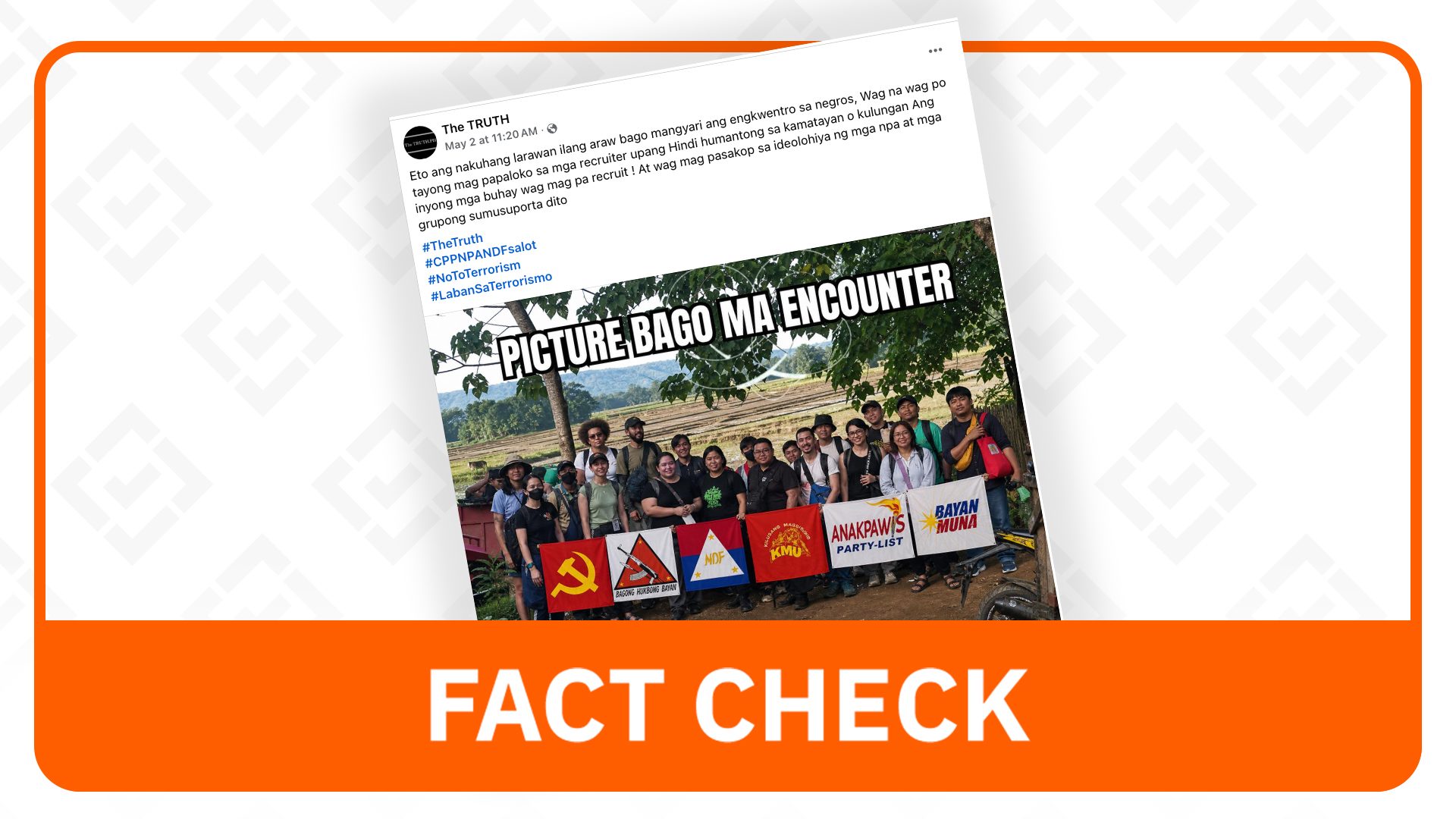
A photo circulating on social media that allegedly shows the “Toboso 19” casualties holding communist flags has been conclusively identified as a fabrication, according to multiple verification sources and advanced detection tools.
The manipulated image, which has gained significant traction with over 2,300 reactions and 668 shares on Facebook, purportedly depicts the 19 individuals killed during an armed encounter in Toboso, Negros Occidental, displaying flags of various left-leaning organizations including the Communist Party of the Philippines (CPP), New People’s Army, National Democratic Front, Kilusang Mayo Uno, Anakpawis, and Bayan Muna.
Image analysis platform SightEngine determined the photo is 99% likely to be AI-generated, showing particularly strong markers of manipulation using AI image generators Imagen and Nano Banana, with an 84% probability of such alterations.
A comparison with the authentic photograph from April 29, originally shared by a Facebook user from Negros Occidental, reveals the individuals were not holding any flags in the original image. Furthermore, facial features appear significantly altered in the manipulated version, reinforcing evidence of digital tampering.
Human Rights Advocates Negros has condemned the falsified image as a deliberate attempt at “red-tagging” – the practice of labeling individuals or groups as communist sympathizers or terrorists without evidence, which has been widely criticized by human rights organizations as dangerous and potentially life-threatening in the Philippine context.
The armed encounter in Toboso on April 19 resulted in 19 fatalities, with conflicting accounts of the victims’ identities. Military officials claim those killed were armed communist rebels, while the CPP maintains that nine were civilians, including community journalist RJ Ledesma, student leader Alyssa Alano, peasant organizer Maureen Santuyo, researcher Errol Wendel, and Filipino-American activist Lyle Prijoles.
The incident has sparked widespread protests from student groups and civil society organizations across the Philippines. In response to the public outcry, the Commission on Human Rights has initiated an independent investigation into the circumstances surrounding the armed clash. Additionally, Southeast Asian lawmakers have called on Philippine authorities to ensure accountability from military personnel involved in the operation.
The organizations whose flags appear in the doctored photo have consistently denied allegations of communist affiliation. Bayan Muna, Kilusang Mayo Uno, and Anakpawis have repeatedly rejected claims that they function as fronts for the CPP and other militant groups.
This is not an isolated incident of digital manipulation targeting progressive groups in the Philippines. Fact-checking organizations have previously debunked numerous claims attempting to link legitimate advocacy organizations with armed insurgent movements.
The proliferation of such digitally altered “evidence” underscores growing concerns about the weaponization of disinformation in Philippine political discourse, particularly as AI-generated content becomes more sophisticated and difficult for the average viewer to identify as false.
As investigations into the Toboso incident continue, human rights advocates warn that such disinformation campaigns risk prejudicing public opinion and potentially interfering with the pursuit of justice for those killed in the encounter.
Fact Checker
Verify the accuracy of this article using The Disinformation Commission analysis and real-time sources.

8 Comments
This incident serves as a stark reminder of the need for robust fact-checking processes and the importance of maintaining a healthy skepticism towards online content, especially when it carries strong political undertones.
Kudos to the verification teams for their diligent work in identifying this manipulated image. Their efforts help maintain trust in media and prevent the amplification of false narratives.
Agreed. Rigorous fact-checking is the best way to counter the rise of AI-generated disinformation and keep the public informed.
This is a concerning case of AI-generated misinformation. It’s crucial to always verify the authenticity of images, especially those with political implications. Fact-checking is essential to combat the spread of fabricated content online.
This case highlights the need for greater media literacy and awareness around the potential for AI-generated manipulations. Strengthening our ability to spot fabricated content is crucial in the digital age.
The detection of this AI-generated image is a positive step, but the proliferation of such manipulated content remains a significant challenge. Ongoing efforts to improve verification methods and educate the public are essential.
Absolutely. As AI technology advances, the battle against misinformation will only intensify. Sustained vigilance and collaborative efforts are necessary to stay ahead of these evolving threats.
It’s alarming to see how easily images can be altered using AI tools. This underscores the importance of critical thinking and cross-referencing sources when consuming information online. Fact-checking should be a routine practice.