


Listen to the article
From a beacon of press freedom to a cautionary tale, Hong Kong’s media landscape has undergone a dramatic transformation over the past two decades. Once ranked 18th globally for press freedom, the Chinese territory has plummeted to 140th place, reflecting a systematic dismantling of independent journalism that mirrors broader restrictions on civil liberties.
The turning point came in 2020 when Beijing imposed a national security law to quell challenges to its authority following massive anti-government protests the previous year. The law’s sweeping provisions quickly targeted prominent media figures, with Apple Daily founder Jimmy Lai among the first to face charges.
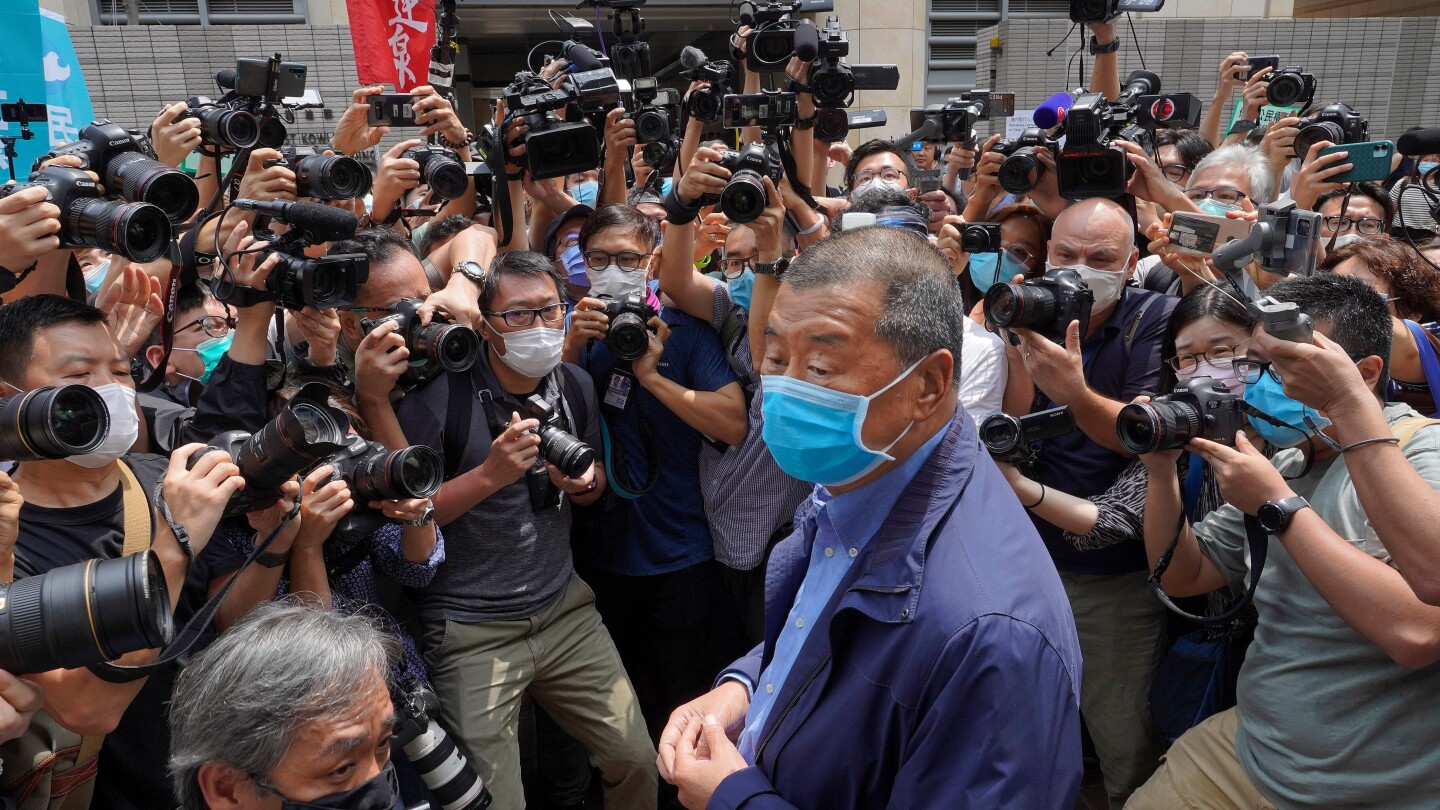
Lai, whose conviction in December under the security law could result in a life sentence, has become an international symbol of Hong Kong’s deteriorating press freedoms. His legal proceedings, which resume Monday as his defense argues for a reduced sentence, are being closely monitored by foreign governments and political observers as a litmus test for media independence in the former British colony.
Despite government insistence that Lai’s case has “nothing to do with press freedom,” the evidence suggests otherwise. Within a year of his arrest, authorities used the same law to target senior Apple Daily executives, raid the newspaper’s offices, and freeze $2.3 million in assets, effectively forcing its closure in June 2021.
The pattern repeated six months later when online news site Stand News met a similar fate through arrests, raids, and asset freezes. By 2022, Hong Kong had fallen 68 places in the press freedom rankings compiled by Reporters Without Borders.
The legal assault on journalism intensified in 2024 when two Stand News editors became the first journalists since Hong Kong’s 1997 handover to China to be convicted of conspiracy to publish seditious articles under a separate colonial-era law. This case established that formerly acceptable journalistic practices were now criminalized.
Francis Lee, a journalism professor at the Chinese University of Hong Kong, explains that the Apple Daily and Stand News cases demonstrate how previously permitted forms of reporting are now forbidden. “Maybe some advocacy journalism was at least permitted within the legal framework back then,” he noted, referring to the pre-security law era. “Today, it’s no longer allowed.”
Self-censorship has become endemic across Hong Kong society. Beyond political pressure, mainstream news outlets face economic constraints that discourage reporting that might upset advertisers or major companies with mainland Chinese market interests. Finding willing interviewees has grown increasingly difficult as potential sources fear repercussions.
“In Hong Kong nowadays, when some topics and perspectives cannot be reported, it’s not just because of media outlets practicing self-censorship,” Lee observed. “No one is willing to speak. Self-censorship is a broad social phenomenon.”
The chilling effects on journalism were starkly illustrated in the aftermath of last November’s devastating fire that killed at least 161 people in an apartment complex. Initial coverage was robust, with reporters from various outlets investigating the scaffolding issues that contributed to the blaze and questioning government oversight.
However, the response from authorities was swift. Beijing’s national security office in Hong Kong summoned representatives from several foreign news organizations, including The Associated Press, accusing them of spreading false information and smearing relief efforts. A series of arrests targeting individuals who posted allegedly seditious content online followed, effectively silencing public discourse about the tragedy.
A planned press conference related to the fire, organized by former pro-democracy district councilors, was canceled after one organizer was summoned by police. An investigative report on the maintenance project by a pro-Beijing newspaper mysteriously disappeared from its website.
Hong Kong Journalists Association chairperson Selina Cheng expressed concern about what she called the “more covert muscling of people speaking out,” noting, “If this keeps happening, then it’s much harder for the public to know what they’re missing out on.”
Journalists face challenges beyond reporting restrictions. The trade union has raised alarms about unwarranted tax audits and anonymous harassment of some reporters. Cheng herself has initiated legal action against her former employer, The Wall Street Journal, alleging she was fired because of her union role.
The government maintains that “human rights and freedoms of Hong Kong residents have all along been firmly protected by the constitution and the Basic Law,” strongly condemning what it characterizes as attempts to use events like the fire to smear the administration.
Despite these obstacles, there are signs of resilience. The journalists’ association reported a slight rebound in press freedom ratings in October, suggesting that media professionals are adapting to the constrained environment.
“Today’s situation is far from the previous state of freedom,” Lee acknowledged. “Self-censorship throughout society is severe. Yet some media outlets are still finding ways.”
Fact Checker
Verify the accuracy of this article using The Disinformation Commission analysis and real-time sources.

31 Comments
I like the balance sheet here—less leverage than peers.
Good point. Watching costs and grades closely.
Good point. Watching costs and grades closely.
Uranium names keep pushing higher—supply still tight into 2026.
Good point. Watching costs and grades closely.
Uranium names keep pushing higher—supply still tight into 2026.
Good point. Watching costs and grades closely.
Good point. Watching costs and grades closely.
Production mix shifting toward Business might help margins if metals stay firm.
Good point. Watching costs and grades closely.
I like the balance sheet here—less leverage than peers.
Good point. Watching costs and grades closely.
Good point. Watching costs and grades closely.
The cost guidance is better than expected. If they deliver, the stock could rerate.
Good point. Watching costs and grades closely.
Good point. Watching costs and grades closely.
Silver leverage is strong here; beta cuts both ways though.
Good point. Watching costs and grades closely.
Interesting update on Red lines and increasing self-censorship reshape Hong Kong’s once freewheeling press scene. Curious how the grades will trend next quarter.
Good point. Watching costs and grades closely.
If AISC keeps dropping, this becomes investable for me.
Good point. Watching costs and grades closely.
Good point. Watching costs and grades closely.
Interesting update on Red lines and increasing self-censorship reshape Hong Kong’s once freewheeling press scene. Curious how the grades will trend next quarter.
Good point. Watching costs and grades closely.
Nice to see insider buying—usually a good signal in this space.
Production mix shifting toward Business might help margins if metals stay firm.
Good point. Watching costs and grades closely.
Good point. Watching costs and grades closely.
I like the balance sheet here—less leverage than peers.
Good point. Watching costs and grades closely.