


Listen to the article
Pittsburgh Post-Gazette to Cease Publication After Nearly a Century of Block Family Ownership
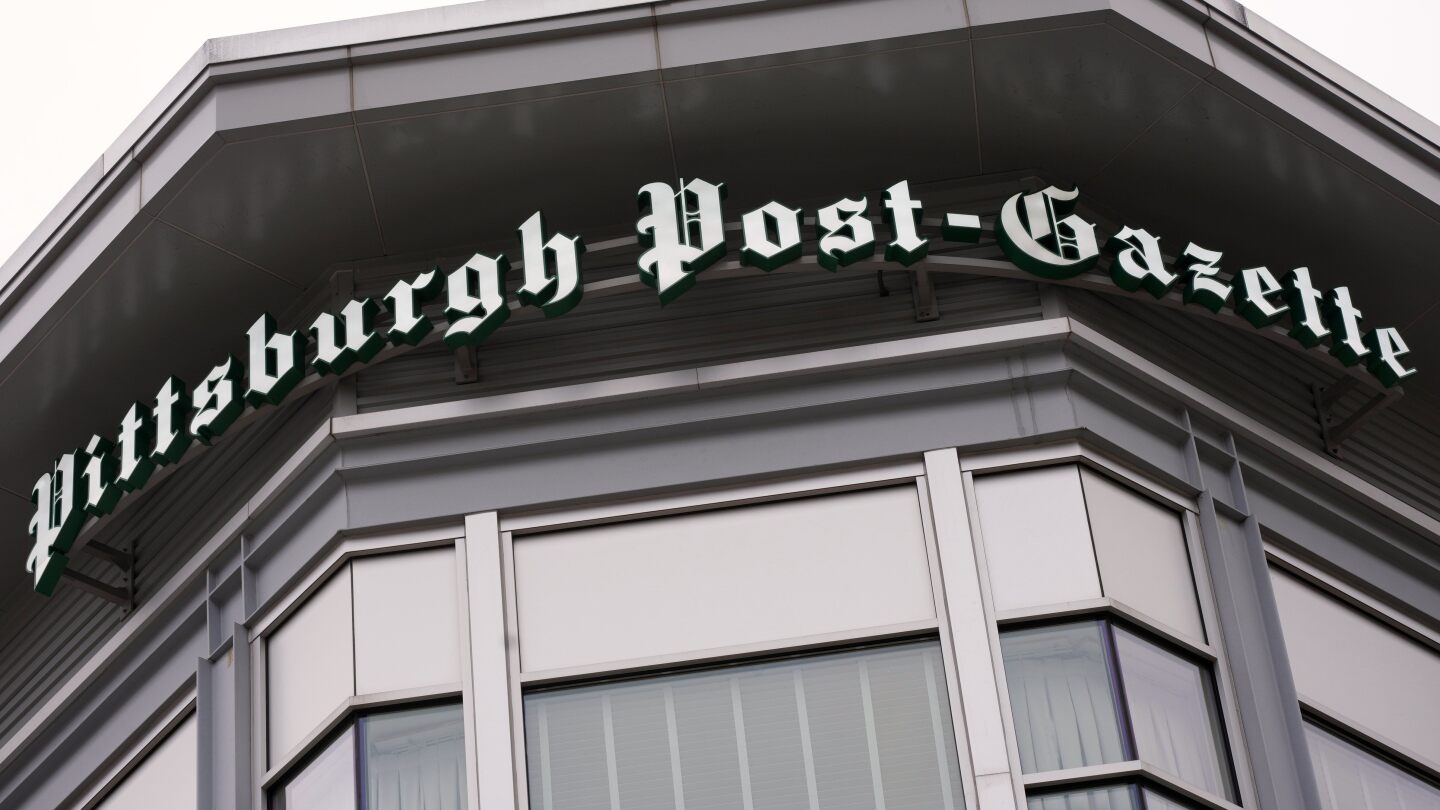
The Pittsburgh Post-Gazette, a newspaper with roots dating back to 1786, will cease publication on May 3, its owner Block Communications Inc. announced Wednesday, citing unsustainable financial losses.
The announcement marks the end of a storied publication that currently prints on Thursdays and Sundays with an average paid circulation of approximately 83,000. Block Communications stated it has lost hundreds of millions of dollars operating the newspaper over the past two decades, making continued operation financially untenable.
“Continued cash losses at this scale are no longer sustainable,” the company said in its announcement, reflecting the challenging economic realities facing print media across the United States as advertising revenue and circulation continue to decline industry-wide.
The closure announcement coincided with a significant legal development. On the same day, the U.S. Supreme Court declined to hear PG Publishing Co. Inc.’s emergency appeal to halt a National Labor Relations Board order. The order would have required the newspaper to maintain health care coverage policies outlined in an expired union contract.
The newspaper has been embroiled in labor disputes for years. A couple dozen union members had only recently returned to work in November after a three-year strike. The labor conflict began more than five years ago when the newspaper declared it had reached a bargaining impasse with the Newspaper Guild of Pittsburgh and unilaterally imposed employment terms and conditions on workers. Labor authorities later determined the paper had bargained in bad faith by making offers not intended to reach an agreement and by prematurely declaring an impasse.
Andrew Goldstein, president of the Newspaper Guild of Pittsburgh, criticized the closure decision. “Instead of simply following the law, the owners chose to punish local journalists and the city of Pittsburgh,” Goldstein said. According to the union, employees received notification via a pre-recorded Zoom video, with company officials opting not to address staff live.
The Block family, in a statement, expressed pride “in the service the Post-Gazette has provided to Pittsburgh for nearly a century.” Block Communications is headquartered in Toledo, Ohio, where requests for additional comment went unanswered Wednesday.
The Post-Gazette represents an important piece of American journalism history. It began as the Pittsburgh Gazette, a four-page weekly established in 1786, making it one of the nation’s oldest newspapers. During the 19th century, it became a prominent voice advocating for the abolition of slavery. After passing through various owners and masthead changes, Paul Block acquired the newspaper in 1927 and gave it its current name.
The closure continues a troubling trend in American journalism. Over the past 15 years, more than 2,500 newspapers have closed across the United States according to research from Northwestern University’s Medill School of Journalism, creating “news deserts” in many communities. The crisis has particularly affected local newspapers as readers migrate to digital platforms and advertising revenue shifts away from traditional media.
Pittsburgh, a major metropolitan area with approximately 300,000 residents in the city proper and over 2.3 million in the broader region, will join the growing list of American cities with reduced local news coverage, raising concerns about the impact on civic engagement, government accountability, and community cohesion.
The Post-Gazette has won multiple Pulitzer Prizes throughout its history, most recently in 2019 for its coverage of the Tree of Life synagogue shooting that claimed eleven lives in Pittsburgh’s Squirrel Hill neighborhood.
Fact Checker
Verify the accuracy of this article using The Disinformation Commission analysis and real-time sources.

9 Comments
I’m curious to know what this will mean for the Post-Gazette’s employees. Losing one’s job is always difficult, especially in an industry that has seen so much upheaval. I hope the workers are able to find new opportunities, whether in journalism or elsewhere.
That’s a good point. The human cost of these closures can be significant. Hopefully, the company will provide support and resources to help displaced workers transition to new roles.
This is a sad day for Pittsburgh and the newspaper industry as a whole. The Post-Gazette has been an institution for nearly a century. Unsustainable financial losses seem to be the driving force behind this closure, reflecting the broader challenges facing print media.
It’s a shame to see such a longstanding publication shut down. Newspaper closures are always a loss for local communities that depend on quality journalism.
Hundreds of millions in losses over two decades is a staggering figure. It’s clear the economic realities of the industry have become untenable for the Post-Gazette’s owners. This closure is a sign of the times for the newspaper business.
While the closure is unfortunate, it’s understandable that the owners can no longer sustain the financial burden. The industry-wide decline in advertising revenue and circulation has put many newspapers in a precarious position. Hopefully, digital media can fill some of the void.
The closure of the Post-Gazette is a reflection of the broader challenges facing the newspaper industry. While it’s unfortunate, the economic realities have become untenable. It will be interesting to see how the media landscape in Pittsburgh evolves in the wake of this development.
The decline of print media is a concerning trend. I wonder what this will mean for news coverage and access to information in the Pittsburgh area going forward. Hopefully, other outlets can step up to fill the void.
You raise a good point. The loss of a major newspaper like the Post-Gazette could create news deserts and leave some communities underserved. It’s crucial that alternative sources emerge to keep the public informed.