


Listen to the article
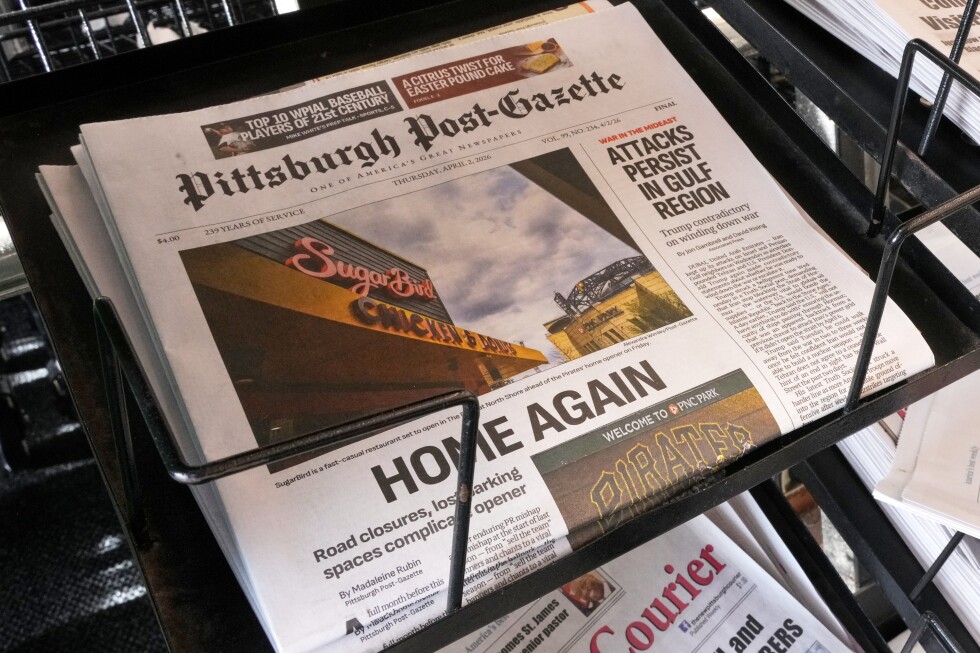
Just two weeks before its scheduled closure, the Pittsburgh Post-Gazette announced Tuesday that it has secured a last-minute buyer, ensuring the historic newspaper will continue publishing. The Venetoulis Institute for Local Journalism, which operates the successful nonprofit Baltimore Banner, has agreed to purchase the struggling publication.
This unexpected development comes as welcome news to Pittsburgh, which faced the prospect of becoming the nation’s largest city without a local newspaper. The Post-Gazette traces its roots to 1786, making it the first newspaper established west of the Allegheny Mountains and a cornerstone of western Pennsylvania’s media landscape for generations.
“For us to be a vibrant, strong city, as we are, it’s imperative that we have a newspaper that demonstrates that,” said Jay Costa, the top-ranking Democrat in the Pennsylvania state Senate, whose district encompasses about half of Pittsburgh.
The acquisition arrives during a particularly challenging period for American newspapers, which have faced devastating financial pressures since the early 2000s. The internet fundamentally disrupted traditional advertising and subscription revenue models, leading to massive job cuts, resource reductions, and numerous newspaper closures nationwide.
Block Communications, the Post-Gazette’s current owner, did not disclose financial terms of the sale. Under Venetoulis Institute ownership, the newspaper will maintain its print editions on Thursdays and Sundays while operating its website daily. The publication had previously announced it would cease operations on May 3.
“We are committed to working with exceptional journalists, along with civic and business leaders across the region, to build a new future for local journalism in Western Pennsylvania,” said Bob Cohn, CEO of the Venetoulis Institute. “We are clear-eyed about the task ahead. We have learned in Maryland that this work takes time, discipline and investment.”
The Venetoulis Institute has appointed David Shribman, who served as the Post-Gazette’s executive editor from 2003 to 2019, to its board of directors. During Shribman’s tenure, the newspaper won a Pulitzer Prize for its coverage of the 2018 Tree of Life synagogue shooting. However, recent years have seen significant labor disputes at the publication.
Block Communications had announced the newspaper’s closure in January, coinciding with the U.S. Supreme Court’s refusal to hear its appeal regarding a lawsuit over health benefits for formerly striking workers.
Despite being established only in 2022, the Baltimore Banner has quickly established itself as a journalistic force, already claiming a Pulitzer Prize and building a subscriber base of 79,500 paid readers. This success offers hope for the Post-Gazette’s future under similar nonprofit management.
“I’m more hopeful now for the future of the Post-Gazette than I was yesterday,” said Steve Mellon, a longtime photographer at the newspaper. Employees had feared acquisition by a hedge fund known for stripping assets from media companies rather than a nonprofit committed to local journalism.
Nevertheless, uncertainty remains about staffing levels and investment under the new ownership. Some Post-Gazette journalists, including Mellon, had been exploring the creation of a cooperative news website, and those plans may now be in flux.
Meanwhile, the Pittsburgh Tribune-Review, based in a Pittsburgh suburb, confirmed it will proceed with previously announced plans to expand its presence in the city. The Tribune-Review had intended to add staff and begin publishing a weekend city edition immediately following the Post-Gazette’s expected closure.
Andrew Conte, a journalism professor at Pittsburgh’s Point Park University who advocates for small local news organizations, said the sale presents a challenge to the region’s residents: Will they actively support local journalism? “It’s really in their hands,” he noted.
Sara Innamorato, Allegheny County Executive, praised the acquisition in a written statement, calling the Post-Gazette “a cornerstone of the region’s civic life for generations.” She emphasized that the transition to nonprofit ownership creates an opportunity to strengthen independent, community-centered reporting while ensuring residents maintain access to vital information.
Innamorato added that robust local news is essential for democracy, “and that must include supporting the journalists and workers who make this work possible with good-paying, family-sustaining jobs.”
Both Block Communications and the Venetoulis Institute described their agreement as reflecting “a shared commitment to sustaining local journalism in Pittsburgh,” offering a potential blueprint for preserving endangered legacy newspapers in other American cities facing similar challenges.
Fact Checker
Verify the accuracy of this article using The Disinformation Commission analysis and real-time sources.

7 Comments
Interesting that a Baltimore-based nonprofit is stepping in to acquire the Pittsburgh Post-Gazette. I wonder if they have plans to leverage their experience with the Banner to revitalize the paper.
That’s a good point. Cross-pollination of ideas and best practices between local news organizations could really benefit the Post-Gazette going forward.
It’s heartening to see the Post-Gazette find a buyer to keep it operating. Local journalism is so vital, and this historic newspaper deserves to continue serving the community.
Absolutely. Preserving local news outlets is crucial for an informed citizenry. Hopeful this purchase will put the Post-Gazette on a more sustainable path.
This is a rare bit of positive news in the otherwise gloomy landscape for local newspapers. Kudos to the Venetoulis Institute for making this deal happen and preserving a vital community institution.
The challenges facing traditional print media are well-documented, so this last-minute save is quite remarkable. Curious to see how the Venetoulis Institute approaches modernizing the Post-Gazette’s operations.
This is great news for Pittsburgh and the Post-Gazette’s long legacy. A local nonprofit buying the paper is a positive development that could help it adapt and thrive in the digital age.