


Listen to the article
U.S. energy stocks surged Monday following President Donald Trump’s announcement of plans to take control of Venezuela’s oil industry and revitalize it with American companies after the capture of President Nicolás Maduro. The news sent ripples through financial markets, with energy sector shares experiencing significant gains.
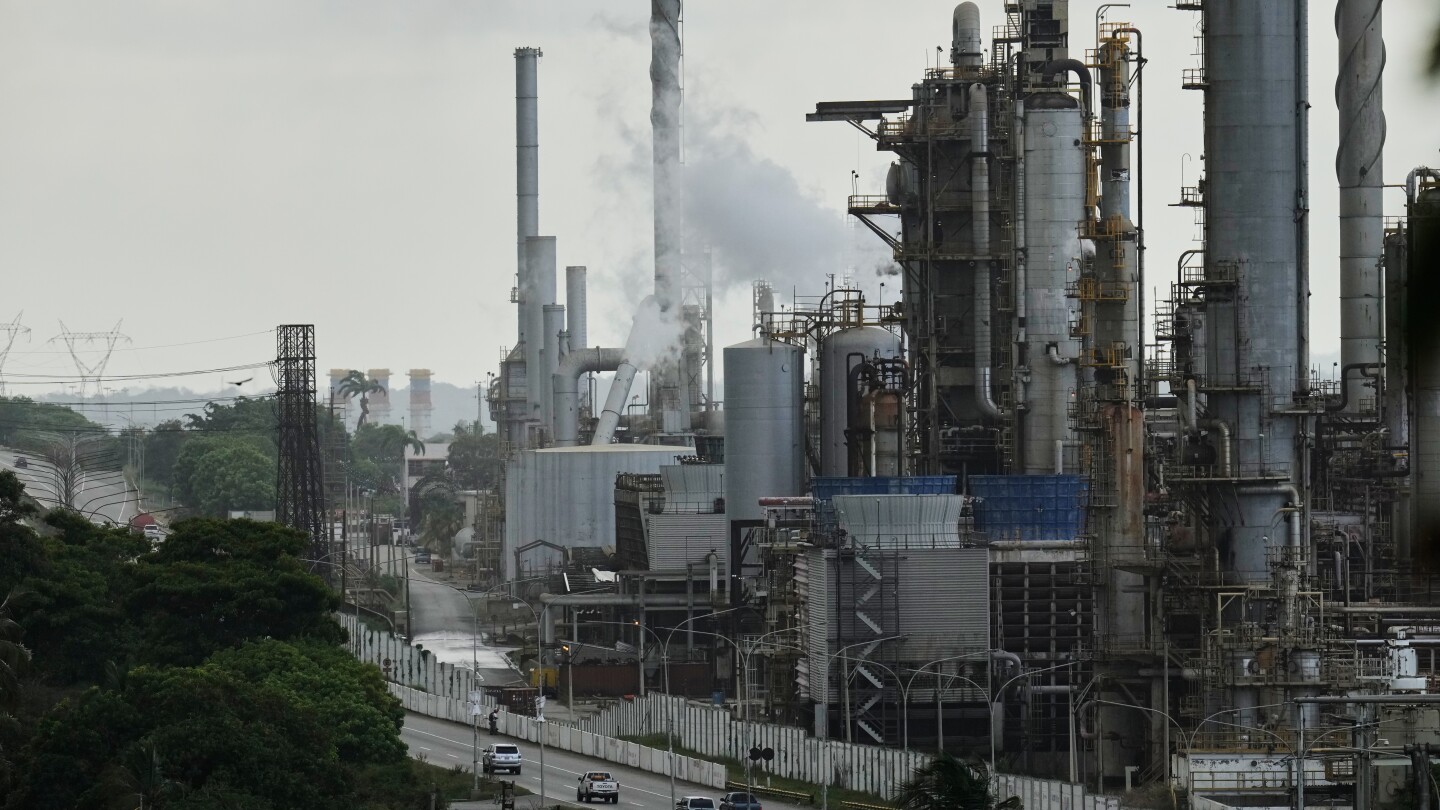
While analysts don’t expect immediate impacts on crude prices due to the current global oil glut, the move could substantially reshape energy markets in the longer term. Venezuela, once a major oil producer, has seen its energy infrastructure deteriorate dramatically under years of neglect and international sanctions.
Expert opinions vary widely on how quickly Venezuelan oil production could recover. Some industry analysts believe the nation could double or triple its current output of approximately 1.1 million barrels per day, potentially returning to historic production levels in a relatively short timeframe. Others, including Neal Dingmann of William Blair, express more cautious views.
“While the Trump administration has suggested large U.S. oil companies will go into Venezuela and spend billions to fix infrastructure, we believe political and other risks along with current relatively low oil prices could prevent this from happening anytime soon,” Dingmann noted. He emphasized that meaningful production increases would require extensive time and substantial capital investment to repair and upgrade deteriorated infrastructure.
Any investment decisions must contend with current weakened global energy market conditions. U.S. crude prices remain approximately 20% lower than last year’s levels. Benchmark U.S. crude hasn’t exceeded $70 per barrel since June and hasn’t approached $80 since mid-2024, creating a challenging environment for major capital expenditures.
JPMorgan analysts offered a more specific timeline, predicting Venezuelan production could reach 1.3 to 1.4 million barrels per day within two years of a successful political transition. “With new investments and major institutional reforms, output could potentially expand to 2.5 million barrels per day over the next decade,” according to their analysis.
John Freeman of Raymond James highlighted the numerous uncertainties surrounding the situation. Key questions include how quickly U.S. energy companies would commit to investing and what further geopolitical actions might follow. “Additionally, other areas of interest include further actions by the U.S. in Latin America (e.g., Cuba?), along with continued unrest in Iran,” Freeman wrote. “There’s plenty of uncertainty in the backdrop, and clearly 2026 is off to a ‘hot’ start.”
The market response was particularly strong for companies with significant refinery operations. Venezuela produces heavy crude oil essential for diesel fuel, asphalt, and other industrial products. This type of crude has been in global shortage due to sanctions on both Venezuelan and Russian oil supplies, with America’s lighter crude unable to serve as a direct substitute.
“A bullish production outlook would be a big boost for U.S. refiners, as much of the Gulf Coast refining capacity is designed to run heavy/sour crude like those from Venezuela,” Freeman noted.
Major refiners capitalized on this potential opportunity, with Valero, Marathon Petroleum, and Phillips 66 all rising 5-6% in early trading. Even stronger performance came from oilfield service companies that would likely be tasked with rehabilitation efforts in Venezuela’s oil fields. Industry leaders SLB (formerly Schlumberger) and Halliburton saw their shares climb 7-8%.
The largest integrated oil companies also benefited from the news, with ExxonMobil, Chevron, and ConocoPhillips gaining between 2-4% at market open.
The situation remains highly dynamic, and analysts caution that numerous political, economic, and logistical hurdles would need to be overcome before Venezuelan production could significantly impact global markets. Nevertheless, the possibility of rehabilitating what was once one of the world’s most productive oil regions has clearly captured investor attention and sparked optimism throughout the energy sector.
Fact Checker
Verify the accuracy of this article using The Disinformation Commission analysis and real-time sources.

20 Comments
While the potential upside for US oil companies is clear, I’m concerned about the human impact on the Venezuelan people. Restoring the country’s oil industry is one thing, but addressing the broader humanitarian crisis should be a priority as well.
Good point. The wellbeing of Venezuelan citizens needs to be at the forefront, not just the commercial interests of American firms. This is a delicate situation that requires a nuanced approach.
The potential for US companies to revive Venezuela’s oil industry is intriguing, but the political and economic risks are substantial. I’m curious to see how this situation unfolds and what it means for the global energy landscape.
Well said. This move by the Trump administration adds another layer of complexity to an already volatile situation. The long-term implications will be important to watch.
While the short-term gains for US oil stocks are understandable, I’m curious to see if this move by the Trump administration will have any lasting impact on Venezuela’s oil production and the wider energy landscape.
That’s a fair question. The long-term viability of this strategy remains to be seen, as the political and economic challenges in Venezuela are significant.
The surge in oil stocks is understandable given the potential implications for energy markets, but I wonder if it’s a short-term reaction. Reviving Venezuela’s oil production could be an uphill battle fraught with challenges.
That’s a fair assessment. The market may be overreacting to the news in the near-term, and the reality of the situation could dampen enthusiasm over time.
Interesting development on the Venezuela front. I’m curious to see how the oil industry and global markets respond to this move by the US. Will it help revive Venezuela’s battered energy sector, or are there too many political and economic risks involved?
You raise a good point. Venezuela’s oil infrastructure has been severely neglected, so it will likely take significant time and investment to get production back up to historic levels, if at all.
The Trump administration’s move in Venezuela is a bold gambit, but the risks are substantial. Reviving the country’s oil production could be a lengthy and costly endeavor, and the political instability adds further uncertainty.
Exactly. Even if US companies are able to invest in Venezuela’s energy infrastructure, there’s no guarantee the political situation will stabilize enough to make those investments worthwhile in the long run.
This news highlights the ongoing power struggle over access to natural resources and the geopolitical implications. It will be important to monitor how this situation evolves and what it means for global energy markets.
Agreed. The broader context of this move, including the relationships between the US, Venezuela, and other global powers, will be crucial in determining the eventual outcomes.
This development highlights the complexities of geopolitics and the energy industry. It will be interesting to see how it plays out for both US oil companies and the Venezuelan people.
Absolutely. The intersection of global power dynamics, resource extraction, and humanitarian concerns makes this a nuanced and multifaceted issue to follow.
This seems like a bold play by the Trump administration to exert influence over Venezuela’s oil industry. While it could boost US energy companies’ involvement, I’m skeptical about the long-term viability given the country’s ongoing political and economic instability.
I agree. The political risks in Venezuela are substantial, and it’s unclear if US companies will be willing to make the necessary investments to rehabilitate the industry there.
This news highlights the geopolitical complexities surrounding energy resources and the potential for shifts in global supply. It will be interesting to see how this plays out for US oil companies and the broader market.
Absolutely. The interplay of politics, economics, and energy is always fascinating to observe. This situation in Venezuela could have far-reaching implications.