


Listen to the article
Oil prices plummeted Wednesday as hopes emerged for a potential deal between the United States and Iran that would reopen the Strait of Hormuz to commercial shipping, triggering a global stock market rally.
Brent crude oil, the international benchmark, dropped 7.5% to $101.75 per barrel, down from over $115 earlier in the week. The sharp decline followed statements from President Donald Trump indicating the strait could be “OPEN TO ALL” if Iran accepts an agreement, though specific details of the proposal were not disclosed.
The narrow Strait of Hormuz has become a critical chokepoint for the global economy since the conflict with Iran began. Its blockade has prevented oil tankers from exiting the Persian Gulf, creating supply constraints that have driven inflation across numerous sectors worldwide.
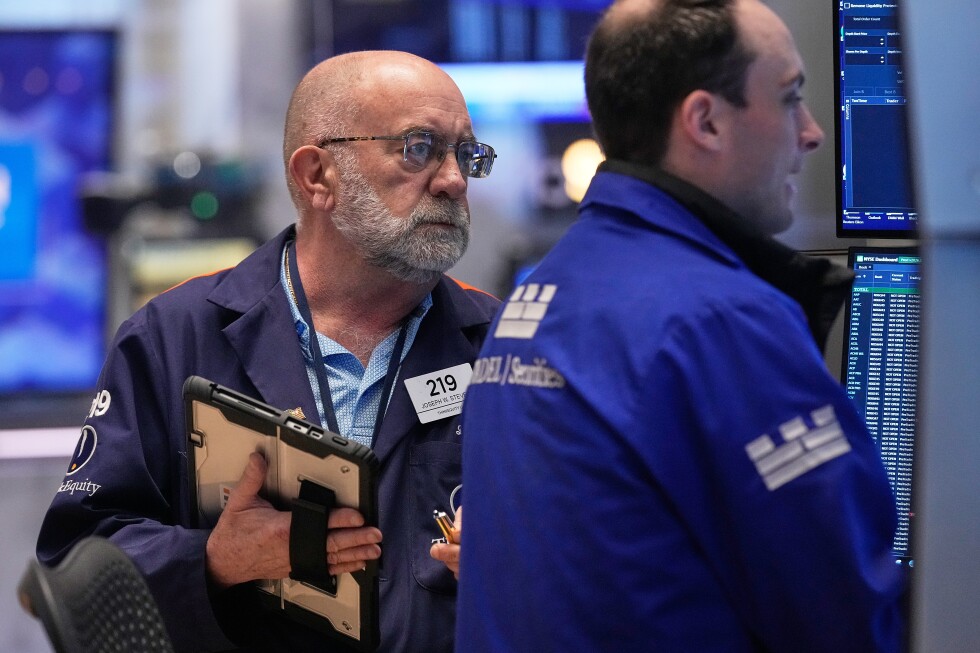
Wall Street responded enthusiastically to the possibility of resumed oil flow, with the S&P 500 climbing 1.2% toward a fresh record. The Dow Jones Industrial Average gained 580 points, or 1.2%, while the Nasdaq composite rose 1.5% by mid-morning trading. International markets saw even stronger performances, with Seoul’s index jumping 6.5%, London rising 2.1%, and Paris increasing 3.1%.
Market optimism, however, remains cautious. Previous hopes for conflict resolution have been repeatedly dashed, and oil prices partially recovered from their steepest losses after Trump threatened intensified military action if Iran rejects the agreement. The price of Brent crude briefly fell below $97 before climbing back above $100 following these comments.
Nevertheless, several developments have fueled investor confidence. Trump announced Tuesday he was pausing efforts to forcefully reopen the strait. Additionally, China’s foreign minister called for a comprehensive ceasefire after meeting with his Iranian counterpart—a potentially significant development given China’s close economic and political ties with Iran.
Corporate earnings have provided further support for the market despite ongoing geopolitical uncertainties. AMD surged 17.8% after exceeding analyst expectations for both profit and revenue. CEO Lisa Su attributed the strong performance to continued growth in artificial intelligence technology, which is driving substantial computing demands from data centers. The company projected revenue growth could accelerate to approximately 46% year-over-year in the current quarter.
Other technology companies benefiting from the AI boom also posted gains. Super Micro Computer rallied 15.8% after reporting better-than-expected earnings, while Nvidia, the prominent AI chip manufacturer, rose 5.1%, becoming the strongest single force lifting the S&P 500.
Beyond the tech sector, several major companies posted positive results. CVS Health climbed 6.5% after delivering strong first-quarter results and raising its annual financial outlook. The Walt Disney Company gained 6.3%, crediting the success of “Zootopia 2” for drawing customers to its streaming services, theme parks, and cruise ships. Uber Technologies rose 8.2% after providing a bookings forecast that exceeded analyst expectations.
Companies with significant fuel expenses also benefited from the prospect of lower oil prices. United Airlines gained 5%, while cruise operators Carnival and Royal Caribbean rose 4.9% and 6.4% respectively.
The bond market reflected the changing inflation outlook, with Treasury yields declining as oil prices fell. The 10-year Treasury yield dropped to 4.35% from 4.43%, a notable shift that could potentially lower mortgage rates and other borrowing costs for U.S. households and businesses, potentially stimulating economic activity. However, the yield remains well above its pre-war level of 3.97%.
In Asian markets, South Korea’s Kospi index surpassed 7,000 for the first time, establishing a new record driven by strong performances from AI-related stocks including Samsung Electronics and SK Hynix.
Fact Checker
Verify the accuracy of this article using The Disinformation Commission analysis and real-time sources.

5 Comments
Interesting news about the potential reopening of the Strait of Hormuz. This could be a significant development for global oil markets and the wider economy. I’m curious to see how the details of any potential deal unfold.
Dropping oil prices and a global stock market rally – this is an interesting turn of events. Unblocking the Strait of Hormuz could have a significant impact on energy supply and inflation. I’ll be watching to see how the negotiations progress.
The sharp drop in oil prices and global stock market rally are noteworthy. Reopening this critical chokepoint could help ease supply constraints and inflationary pressures. I wonder what the specific terms of the proposal might be.
This is an important geopolitical development that could have far-reaching economic implications. The Strait of Hormuz blockade has been a major factor in driving up energy costs worldwide. I hope a constructive agreement can be reached.
The potential reopening of the Strait of Hormuz is welcome news. This could help stabilize oil markets and provide some relief for consumers. I’m interested to see how this unfolds and what it means for the broader economic outlook.