


Listen to the article
U.S. and India Working on Trade Agreement Amid Oil Purchase Tensions
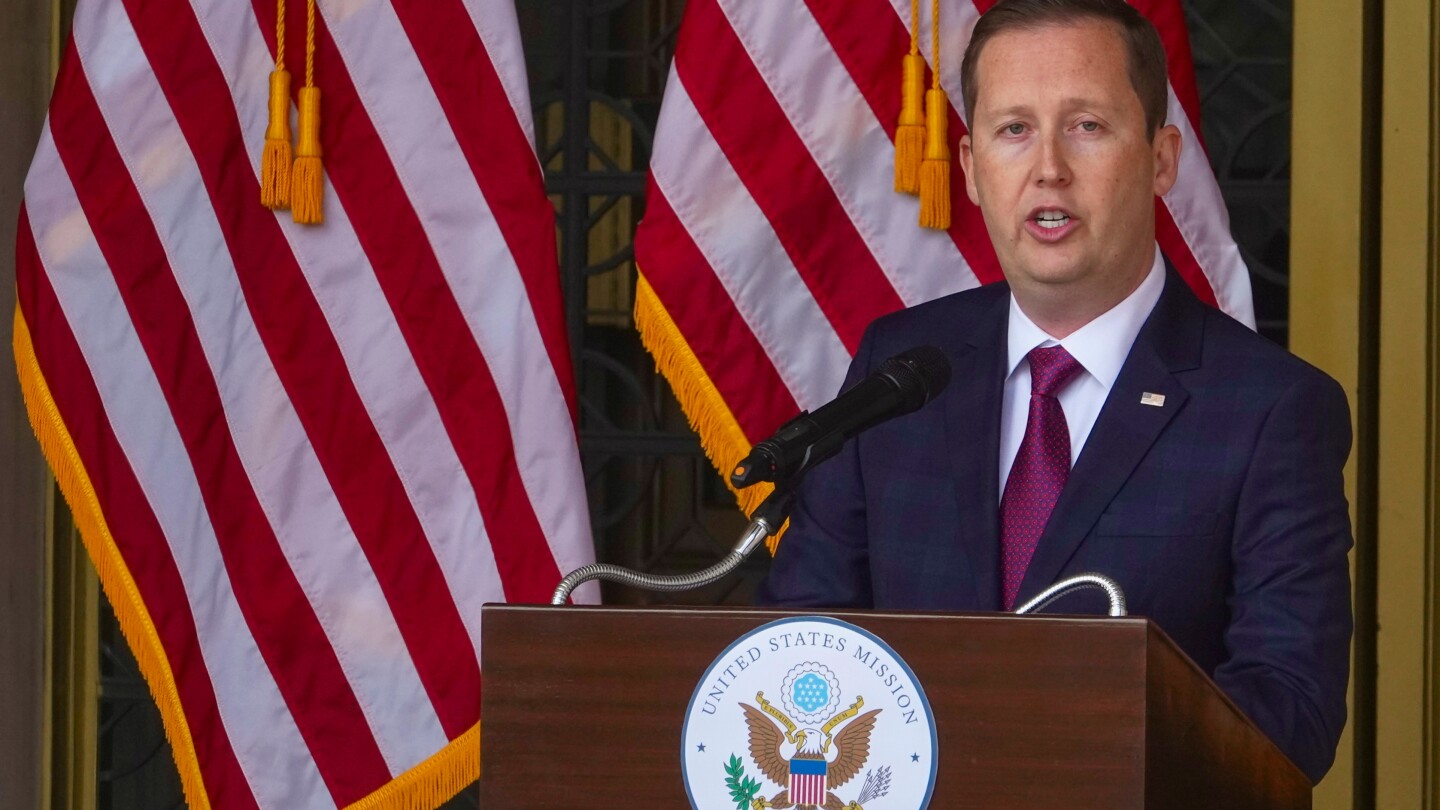
The United States and India are actively negotiating a bilateral trade agreement to strengthen their economic and strategic partnership, U.S. ambassador-designate to New Delhi Sergio Gor announced Monday during his first address at the U.S. Embassy.
“Real friends can disagree, but always resolve their differences in the end,” Gor stated, acknowledging the challenges in the relationship. “Remember India is the world’s largest nation so it’s not an easy task to get this across the finish line, but we are determined to get there.”
The renewed push for trade cooperation comes at a critical juncture in U.S.-India relations, which have been strained by India’s significant purchases of Russian oil following Moscow’s full-scale invasion of Ukraine in February 2022. India has emerged as the second-largest buyer of Russian crude after China, a position that has drawn criticism from Washington.
In August, President Donald Trump took punitive action by signing an executive order imposing an additional 25% tariff on India specifically targeting its Russian oil purchases. This measure brought the combined U.S. tariffs on India to a substantial 50%, signaling Washington’s serious concerns about New Delhi’s energy relationship with Moscow.
Despite these tensions, Gor, who also serves as U.S. special envoy to South and Central Asia and is a close Trump ally, confirmed that bilateral discussions on trade matters are continuing, with the next call between the two sides scheduled for Tuesday.
Looking to expand cooperation beyond traditional areas, Gor announced that India will receive a formal invitation next month to join the U.S.-led strategic initiative called Pax Silica. This program aims to establish a secure silicon supply chain encompassing critical minerals, energy inputs, advanced manufacturing, semiconductors, and artificial intelligence. Several key U.S. allies, including Japan, South Korea, the United Kingdom, and Israel, joined the initiative last month.
Trade negotiations between the two countries have been ongoing since early last year, with hopes to conclude an initial agreement by fall 2025. However, progress has been hampered by disagreements over India’s Russian oil purchases and India’s desire to protect its small farmers and domestic industries from foreign competition.
The stakes are high for both nations. For the United States, India represents a crucial strategic partner in the Indo-Pacific region and a potential counterweight to China’s growing influence. For India, maintaining good relations with the U.S. while preserving its strategic autonomy in foreign policy has become an increasingly delicate balancing act.
In response to the steep U.S. tariffs, India has accelerated efforts to diversify its trade relationships. New Delhi recently signed a free trade agreement with Oman and concluded negotiations with New Zealand, potentially reducing its vulnerability to U.S. trade pressure.
Gor emphasized that while trade remains a central component of the bilateral relationship, the U.S. and India will continue collaboration across multiple domains including security, counterterrorism, energy, technology, education, and health—areas where the two democracies have found more common ground.
The situation highlights the complex interplay between geopolitics and economic interests that both nations must navigate. As global supply chains realign and energy security concerns mount, the ability of Washington and New Delhi to reach accommodations on their differences while advancing their shared interests will significantly shape the future landscape of Indo-Pacific relations.
Fact Checker
Verify the accuracy of this article using The Disinformation Commission analysis and real-time sources.

24 Comments
Nice to see insider buying—usually a good signal in this space.
Good point. Watching costs and grades closely.
The cost guidance is better than expected. If they deliver, the stock could rerate.
I like the balance sheet here—less leverage than peers.
Good point. Watching costs and grades closely.
Good point. Watching costs and grades closely.
Uranium names keep pushing higher—supply still tight into 2026.
Good point. Watching costs and grades closely.
Good point. Watching costs and grades closely.
Uranium names keep pushing higher—supply still tight into 2026.
Good point. Watching costs and grades closely.
Exploration results look promising, but permitting will be the key risk.
Good point. Watching costs and grades closely.
Good point. Watching costs and grades closely.
Interesting update on New US ambassador to India pushes for deeper trade ties despite tension over Russian oil. Curious how the grades will trend next quarter.
Production mix shifting toward Business might help margins if metals stay firm.
Good point. Watching costs and grades closely.
Good point. Watching costs and grades closely.
I like the balance sheet here—less leverage than peers.
Production mix shifting toward Business might help margins if metals stay firm.
Nice to see insider buying—usually a good signal in this space.
Exploration results look promising, but permitting will be the key risk.
If AISC keeps dropping, this becomes investable for me.
Good point. Watching costs and grades closely.