


Listen to the article
For months, New York Gov. Kathy Hochul has firmly resisted progressive demands to increase taxes on the wealthy, but now appears to be shifting her stance with a strategic compromise that could generate significant revenue for New York City.
The moderate Democrat announced Wednesday she plans to push for a new tax surcharge on multimillion-dollar second homes in New York City. The proposal would target pied-à-terres valued over $5 million, potentially generating at least $500 million annually to help address Mayor Zohran Mamdani’s budget challenges.
“As Governor, I understand the importance of stabilizing the city’s finances without compromising on essential services New Yorkers count on,” Hochul said in a statement. “If you can afford a $5 million second home that sits empty most of the year, you can afford to contribute like every other New Yorker.”
Hochul’s office confirmed the measure would be included in this year’s state budget, which remains under intense negotiation in Albany after lawmakers missed the April 1 deadline. The proposal represents a calculated middle ground in the ongoing debate over taxation in one of America’s wealthiest cities.
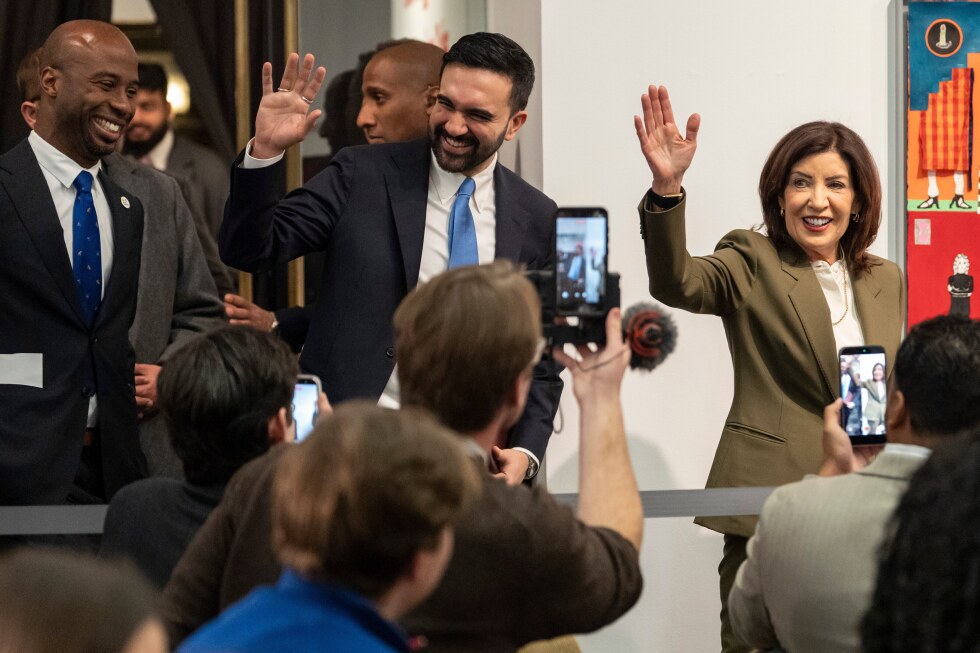
Mayor Mamdani, who has advocated for broader tax increases on wealthy residents, framed the proposal as a victory. “This places us one step closer to balancing our budget by taxing the ultra-wealthy and global elites,” he said in a statement.
At a separate tax forum, speaking in front of a “Tax The Rich” banner, Mamdani elaborated that the measure would target those who “purchase properties and use them to store their wealth to benefit from New York City’s real estate market but not have to pay back into that same city.”
The proposal comes amid intense fiscal challenges for New York City. Mamdani initially estimated a budget deficit of around $12 billion but later revised the figure to approximately $5 billion after identifying savings and securing financial assistance from the state. This significant shortfall threatens his policy agenda and potentially the broader range of city services.
Hochul has consistently rejected calls to raise personal income or corporate taxes, arguing such increases would accelerate the exodus of wealthy residents and businesses to lower-tax states, ultimately diminishing the state’s tax base. Progressive activists have persistently challenged this position, following the governor to various events—including a political conference in San Juan, Puerto Rico—with chants demanding higher taxes on the wealthy.
The timing of Hochul’s compromise carries political implications as she prepares for her reelection campaign. Taxes remain a sensitive issue in New York politics, and Hochul’s Republican challenger, Bruce Blakeman, quickly seized on the proposal to criticize her.
“Kathy Hochul’s ‘No Tax Hike’ promise has expired faster than the families fleeing New York’s affordability crisis,” said Blakeman, who serves as a county executive in New York City’s suburbs. “Unlike Hochul, I’ll actually keep my word when I’m governor: I’ll cut your taxes, slash your utility bills in half, and protect the American Dream.”
The pied-à-terre tax represents a targeted approach that could appease progressives while minimizing broader economic disruption. By focusing specifically on high-value second homes in the city, the proposal affects wealthy non-primary residents rather than full-time New Yorkers or businesses that might otherwise relocate.
At a news conference discussing the proposal, Hochul emphasized that while this measure would help address the city’s budget gap, additional work remains. “Our goal is to get the city on stable ground, to close the gap so we can take the pressure off,” she said, adding that the mayor and City Council must identify further savings as they work to balance the budget.
The proposal highlights the delicate balancing act facing leaders in high-tax states as they navigate competing demands for services, fiscal responsibility, and economic competitiveness in an environment where wealthy residents have increasing geographic mobility.
Fact Checker
Verify the accuracy of this article using The Disinformation Commission analysis and real-time sources.

10 Comments
Targeting vacant luxury properties for additional taxation makes sense as a revenue-raising measure. It’s a more surgical approach than broad-based tax increases. Curious to see the final details and implementation.
A tax on high-end vacant properties seems like a reasonable compromise. It avoids overburdening residents while generating funds for essential city services. Curious to see the details and implementation.
Interesting proposal by Gov. Hochul to target pied-à-terres as a new revenue source for NYC. It’s a nuanced approach to address the budget gap while avoiding across-the-board tax hikes. Curious to see how it plays out politically.
This pied-à-terre tax idea is an intriguing approach to generating revenue for NYC. Targeting vacant luxury properties seems like a fair way to raise funds without overly burdening primary residents. Will be interesting to see how it’s received.
A new pied-à-terre tax is an intriguing policy idea. It targets a segment of property owners who can likely afford the additional burden. Will be important to structure it carefully to avoid unintended consequences.
A new pied-à-terre tax on high-end vacant properties in NYC is an innovative approach to addressing the city’s budget challenges. It seems to strike a balance between raising revenue and avoiding overly burdensome taxes on primary residences. Will be interesting to watch the political dynamics unfold.
This pied-à-terre tax could be a smart way for NYC to raise revenue from the wealthy without impacting primary residences. It aligns with the principle of taxing luxury assets. Will be interesting to see the reaction from affected property owners.
This pied-à-terre tax proposal is an intriguing policy idea. Taxing vacant luxury properties could be an effective way for NYC to generate additional funds without broad-based tax increases. Curious to see how it’s received and implemented.
A tax on high-end vacant properties in NYC is an innovative policy proposal. It aligns with the principle of taxing luxury assets while avoiding broad-based tax hikes. Curious to see the details and implementation.
Targeting vacant luxury properties through a pied-à-terre tax seems like a sensible way for NYC to raise revenue. It aligns with the principle of taxing luxury assets without overburdening primary residents. Will be interesting to see the specifics and reactions.