


Listen to the article
NASA Cuts Space Station Mission Short Due to Medical Concern
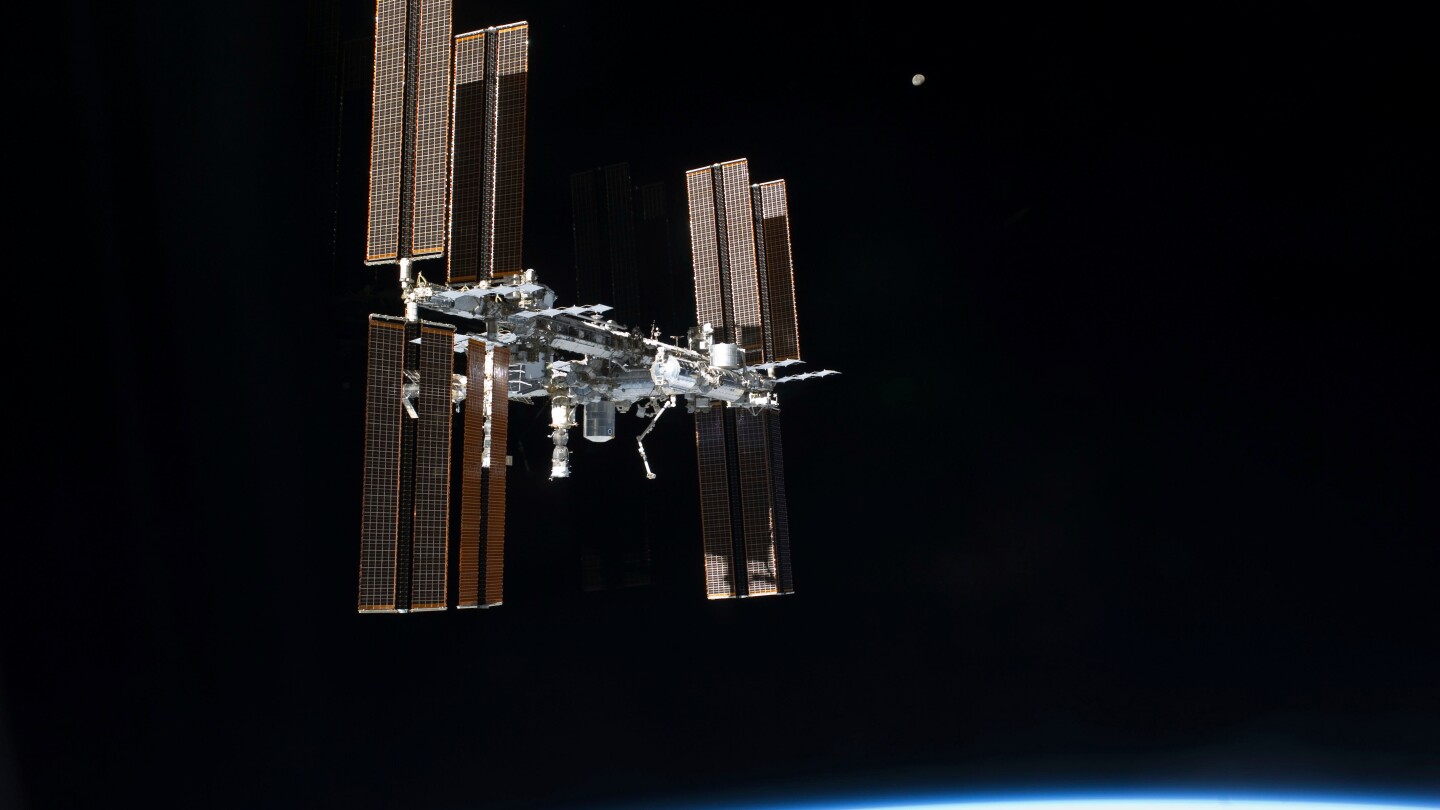
NASA announced Thursday it will bring a four-person crew home earlier than planned from the International Space Station after one astronaut developed a medical issue. The U.S.-Japanese-Russian crew, which arrived at the orbiting laboratory in August for what was intended to be at least a six-month mission, will return to Earth in the coming days.
The space agency canceled its first spacewalk of the year due to the situation but emphasized it was not dealing with an onboard emergency. Officials declined to identify the affected astronaut or specify the medical condition, citing patient privacy concerns.
“We are erring on the side of caution for the crew member,” said Dr. James Polk, NASA’s chief health and medical officer, who noted the astronaut is currently in stable condition. Polk added that while astronauts have previously received treatment aboard the station for minor issues like toothaches and ear pain, this marks NASA’s first medical evacuation from the orbiting outpost.
The returning crew includes NASA astronauts Zena Cardman and Mike Fincke, Japan’s Kimiya Yui, and Russia’s Oleg Platonov. Fincke and Cardman had been scheduled to perform the now-canceled spacewalk to prepare for the future installation of additional solar panels that would boost the station’s power capacity.
For Fincke, this marks his fourth mission to the space station, while Yui is completing his second stint in orbit. Cardman and Platonov were both on their first spaceflight, having spent approximately seven months in space since their August launch.
“I’m proud of the swift effort across the agency thus far to ensure the safety of our astronauts,” NASA Administrator Jared Isaacman said in a statement.
The International Space Station continues to operate with its remaining crew of three: NASA astronaut Chris Williams and Russian cosmonauts Sergei Mikaev and Sergei Kud-Sverchkov. This trio launched in November aboard a Russian Soyuz spacecraft and is scheduled to complete an eight-month mission, returning to Earth sometime this summer.
The medical evacuation highlights the ongoing challenges of human spaceflight and the contingency plans NASA maintains for various scenarios. While the space agency has extensive medical protocols in place, the limited medical equipment aboard the station and the inability to quickly evacuate crew members in emergencies has always represented one of the significant risks of orbital missions.
Space medicine specialists have long studied the effects of microgravity on human physiology, as extended stays in space can impact bone density, muscle mass, vision, and the cardiovascular system. NASA and its international partners continuously monitor astronaut health through regular check-ups and sophisticated biometric monitoring.
This early return comes as NASA continues preparations for the eventual retirement of the International Space Station. The agency has contracted SpaceX to develop capabilities for safely deorbiting the massive structure, with plans calling for a controlled reentry over ocean areas by late 2030 or early 2031.
The space station has maintained a continuous human presence since November 2000, serving as both a laboratory for scientific research and a test bed for technologies needed for future deep space exploration. As NASA shifts focus toward returning humans to the Moon and eventually Mars, commercial partners are expected to establish privately operated space stations to maintain a persistent human presence in low Earth orbit.
In the meantime, NASA’s immediate priority remains the safe return of the affected crew member and their colleagues as they prepare for the journey back to Earth in SpaceX’s Dragon spacecraft.
Fact Checker
Verify the accuracy of this article using The Disinformation Commission analysis and real-time sources.

26 Comments
If AISC keeps dropping, this becomes investable for me.
Good point. Watching costs and grades closely.
Silver leverage is strong here; beta cuts both ways though.
Good point. Watching costs and grades closely.
Good point. Watching costs and grades closely.
Silver leverage is strong here; beta cuts both ways though.
I like the balance sheet here—less leverage than peers.
Exploration results look promising, but permitting will be the key risk.
Good point. Watching costs and grades closely.
Good point. Watching costs and grades closely.
The cost guidance is better than expected. If they deliver, the stock could rerate.
Good point. Watching costs and grades closely.
Good point. Watching costs and grades closely.
If AISC keeps dropping, this becomes investable for me.
Good point. Watching costs and grades closely.
Exploration results look promising, but permitting will be the key risk.
I like the balance sheet here—less leverage than peers.
If AISC keeps dropping, this becomes investable for me.
Good point. Watching costs and grades closely.
Exploration results look promising, but permitting will be the key risk.
Good point. Watching costs and grades closely.
Nice to see insider buying—usually a good signal in this space.
Good point. Watching costs and grades closely.
I like the balance sheet here—less leverage than peers.
Good point. Watching costs and grades closely.
Good point. Watching costs and grades closely.