


Listen to the article
Morocco Unveils $700 Million Tower, Signaling Broader Regional Ambitions
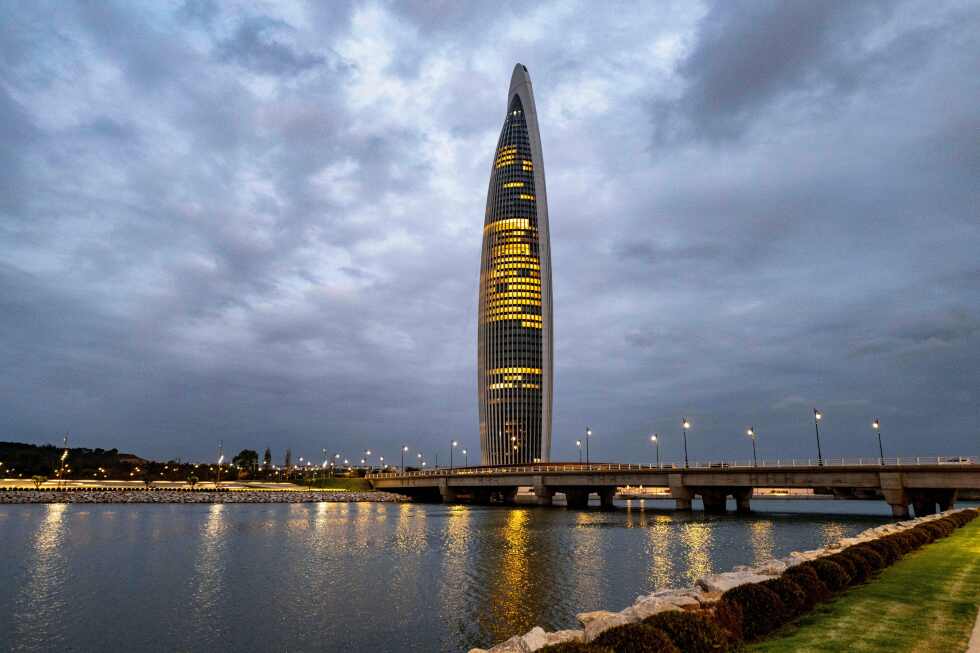
A striking new addition to Morocco’s skyline made its debut this week as the $700 million Mohammed VI Tower officially opened in Salé, adjacent to the capital city of Rabat. Standing at an impressive 820 feet with 55 stories, the skyscraper represents more than just architectural achievement—it symbolizes Morocco’s expanding influence and ambitions across Africa and the Middle East.
Named for King Mohammed VI and featuring a distinctive design inspired by a rocket on its launchpad, the tower immediately becomes one of Africa’s tallest buildings. The massive structure will house a luxury Waldorf Astoria hotel, corporate offices, high-end retail shops, restaurants, and premium residential apartments.
“This project is expected to generate 450 direct jobs and 3,500 indirect ones,” explained Leila Haddaoui, director of development company O Tower, during a press briefing. The economic impact extends beyond employment, positioning Rabat and Salé—cities often bypassed by international visitors—as emerging tourist destinations.
The tower’s construction represents a significant engineering and logistical achievement. Built over eight years, the project involved more than 2,500 workers from over a dozen countries. Its cultural significance has already been recognized nationally, with the tower featured on Morocco’s 200-dirham (approximately $20) banknote.
Situated near the Grand Theatre of Rabat, designed by acclaimed late Iraqi-British architect Zaha Hadid, the skyscraper offers panoramic views of the Atlantic Ocean and the twin cities. Its strategic location enhances the developing cultural and business corridor in the region.
The tower emerges at a pivotal moment for Morocco’s tourism industry. Already Africa’s most visited country, Morocco is actively expanding its tourism infrastructure as it prepares to co-host the 2030 FIFA World Cup. Industry analysts note that regional conflicts in neighboring areas have redirected international travelers toward Morocco, which is widely perceived as a stable destination in North Africa.
Behind the towering structure stands Othmane Benjelloun, a 93-year-old billionaire who owns Bank of Africa, a formerly state-owned Moroccan financial institution that now wields considerable influence across the continent. According to tower management, Benjelloun’s inspiration for the skyscraper came after a 1969 NASA invitation to participate in a spaceflight simulation ahead of the Apollo 12 lunar mission.
With a total area exceeding 102,800 square meters (approximately 1.1 million square feet), the Mohammed VI Tower represents Morocco’s growing “soft power” approach to regional diplomacy and influence. The country has increasingly positioned itself as a key economic and political player in both African and Middle Eastern affairs through high-profile development projects.
However, not all Moroccans view the tower with equal enthusiasm. Critics point out that development remains heavily concentrated along Morocco’s Atlantic corridor while many interior regions struggle with inadequate infrastructure and limited economic opportunities. These concerns were highlighted during Generation Z-led protests last year that focused on high unemployment rates and struggling public services.
The tower’s opening comes amid broader economic challenges in Morocco, where tourism accounts for approximately 7% of GDP and provides essential employment opportunities. Government officials hope that landmark projects like the Mohammed VI Tower will attract both visitors and international investment while elevating Morocco’s global profile.
Urban planning experts note that the project represents a growing trend across North Africa and the Middle East, where iconic architecture serves dual purposes of economic development and national prestige. Similar projects have emerged in neighboring countries, creating a competitive landscape of architectural statements throughout the region.
As visitors begin to explore the tower’s luxurious amenities in the coming months, its impact on Rabat and Salé’s urban development and tourism sectors will be closely monitored by both supporters and critics of Morocco’s development strategy.
Fact Checker
Verify the accuracy of this article using The Disinformation Commission analysis and real-time sources.

12 Comments
This massive 820-foot, 55-story skyscraper is a remarkable achievement. From luxury hotels to corporate offices, the Mohammed VI Tower appears to have a diverse range of uses that could significantly benefit the local economy.
You’re right, the economic impact in terms of direct and indirect jobs is quite substantial. This type of large-scale investment signals Morocco’s intent to position itself as a key regional player.
This is a significant investment in Morocco’s future. The Mohammed VI Tower represents the country’s growing regional influence and ambition to position itself as a key economic and tourism hub in Africa.
You make a good point. Large-scale projects like this can have ripple effects beyond the local area. It will be worth tracking how this tower contributes to Morocco’s broader development strategy in the region.
An impressive $700 million architectural feat in Morocco. The Mohammed VI Tower will boost the region’s tourism and economic prospects. I’m curious to see how it transforms the skyline and local development.
Absolutely, the tower seems like a symbol of Morocco’s growing regional influence and ambition. It will be interesting to see how it attracts new business and visitors to the area.
The distinctive rocket-inspired design of the Mohammed VI Tower is quite eye-catching. It will be interesting to see how this landmark structure impacts the skyline and urban landscape of Salé and Rabat.
Agreed, the architectural style is unique and seems to be intentionally symbolic. It will likely become an iconic part of Morocco’s built environment and visual identity going forward.
A $700 million tower project is no small feat, especially in Africa. I’m curious to see if the Mohammed VI Tower can live up to the hype and become a true landmark for Morocco and the surrounding region.
That’s a fair question. Time will tell if the tower delivers on its promise of boosting tourism and economic development. Ambitious projects like this can be transformative, but also come with risks.
At 820 feet tall, the Mohammed VI Tower will undoubtedly become a landmark for Morocco. I’m curious to see how it affects the surrounding urban landscape and whether it can live up to the lofty expectations for job creation and economic growth.
That’s a fair assessment. Any project of this scale and ambition comes with risks and challenges. But if executed well, it could be a major boost for Morocco’s profile and regional standing.