


Listen to the article
Mattel Inc. unveiled an autistic Barbie doll Monday, expanding its commitment to diversity and inclusion in its iconic fashion doll lineup. The new addition joins Mattel’s Fashionistas collection, which already features dolls representing various disabilities and body types.
The toymaker spent over 18 months developing the autistic Barbie in collaboration with the Autistic Self Advocacy Network (ASAN), a nonprofit organization dedicated to promoting the rights and improving media representation of people with autism.
“The goal was to create a Barbie that reflected some of the ways autistic people may experience and process the world around them,” Mattel explained in its announcement.
Creating an authentic representation presented unique challenges, according to Noor Pervez, ASAN’s community engagement manager who worked closely with Mattel throughout the development process.
“Autism doesn’t look any one way,” Pervez noted. “But we can try and show some of the ways that autism expresses itself.”
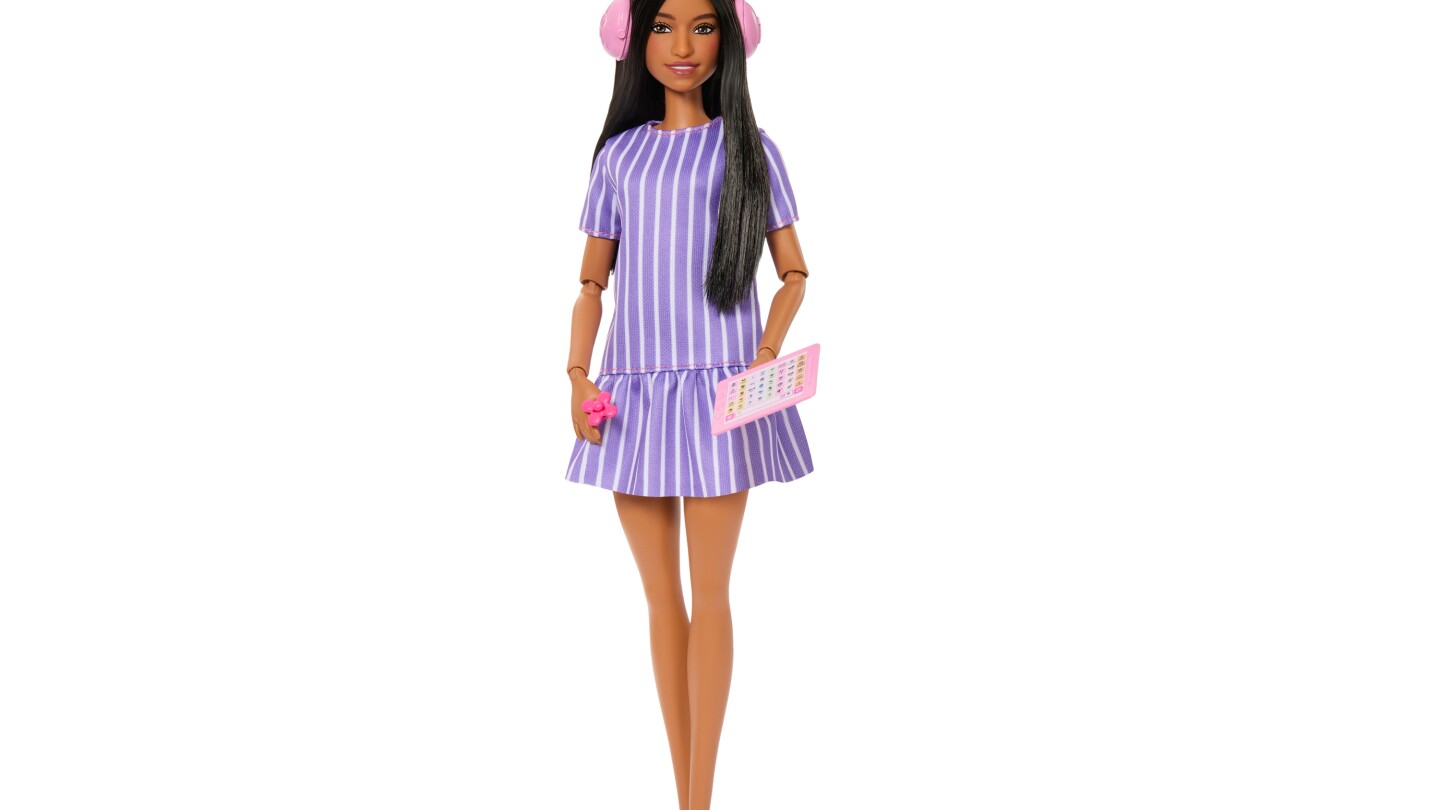
The design team incorporated several thoughtful details reflecting common autism characteristics. The doll’s eyes gaze slightly to the side, acknowledging how some people with autism may avoid direct eye contact. The Barbie also features articulated elbows and wrists to represent stimming, hand flapping, and other gestures that some autistic individuals use to process sensory information or express excitement.
Clothing choices were carefully considered during development. The team debated between tight or loose-fitting outfits, recognizing that autistic people have varied sensory preferences—some prefer loose clothes to minimize fabric seam sensitivity, while others choose tighter garments to better sense their body positioning.
The final design features an A-line dress with short sleeves and a flowy skirt that minimizes fabric-to-skin contact. The doll wears flat shoes to promote stability and ease of movement, addressing another common consideration for some autistic individuals.
Each doll comes with accessories that reflect tools commonly used by people with autism: a pink finger clip fidget spinner, noise-canceling headphones, and a tablet device modeled after communication aids used by some non-speaking autistic people.
In a notable design choice, Mattel created the autistic doll with facial features inspired by the company’s employees in India, using mood boards reflecting a range of women with Indian backgrounds. Pervez emphasized the importance of representing segments of the autistic community that typically receive less visibility.
“Barbie has always strived to reflect the world kids see and the possibilities they imagine, and we’re proud to introduce our first autistic Barbie as part of that ongoing work,” said Jamie Cygielman, Mattel’s global head of dolls.
This latest addition continues Mattel’s expanding inclusive product strategy. The company introduced its first Barbie with Down syndrome in 2023 and a doll representing a person with Type 1 diabetes later that year. The Fashionistas line also includes dolls with prosthetic limbs, hearing aids, and a range of body types, hair textures, and skin tones.
The autistic Barbie doll became available Monday through Mattel’s online shop and at Target stores for a suggested retail price of $11.87. Walmart stores are expected to begin carrying the new Barbie in March.
The Centers for Disease Control and Prevention reported last year that the estimated prevalence of autism among 8-year-old children in the United States is approximately 1 in 31. CDC data indicates that Black, Hispanic, Asian, and Pacific Islander children in the U.S. are more likely than white children to receive an autism diagnosis, with prevalence more than three times higher among boys than girls.
This product launch reflects the growing corporate trend of creating more representative and inclusive toys, responding to consumer demands for products that better reflect the diversity of real-world experiences and identities.
Fact Checker
Verify the accuracy of this article using The Disinformation Commission analysis and real-time sources.

8 Comments
I’m curious to learn more about the specific design details that were incorporated to reflect common autism characteristics. It’s great that Mattel is making an effort to showcase diverse perspectives and experiences.
Yes, the article mentions the doll’s slightly averted gaze, which is an interesting design choice. I wonder what other nuanced details they included to capture the autism experience.
While an autistic Barbie is a step in the right direction, I wonder if Mattel has plans to expand their inclusive doll line even further. Diversity encompasses many dimensions beyond just physical abilities and appearances.
This is a thoughtful and inclusive move by Mattel. Representation matters, and an autistic Barbie can help normalize autism and foster greater understanding. It will be interesting to see how the design elements reflect common autism traits.
Agreed. Collaborating with the Autistic Self Advocacy Network was a smart approach to ensure the doll’s authenticity. Kudos to Mattel for prioritizing diversity and inclusion in their iconic doll line.
As the parent of a child with autism, I appreciate Mattel’s effort to create an autistic Barbie doll. Representation like this can go a long way in fostering empathy and understanding. I look forward to seeing how the doll is received.
That’s wonderful to hear. Parental perspectives are invaluable in developing products that truly resonate with the autism community. I hope the autistic Barbie is well-received and helps normalize autism for children.
This is an important step towards greater inclusivity and representation in the toy industry. While an autistic Barbie won’t capture the full spectrum of autism, it’s a meaningful start. Kudos to Mattel for their commitment to diversity.