


Listen to the article
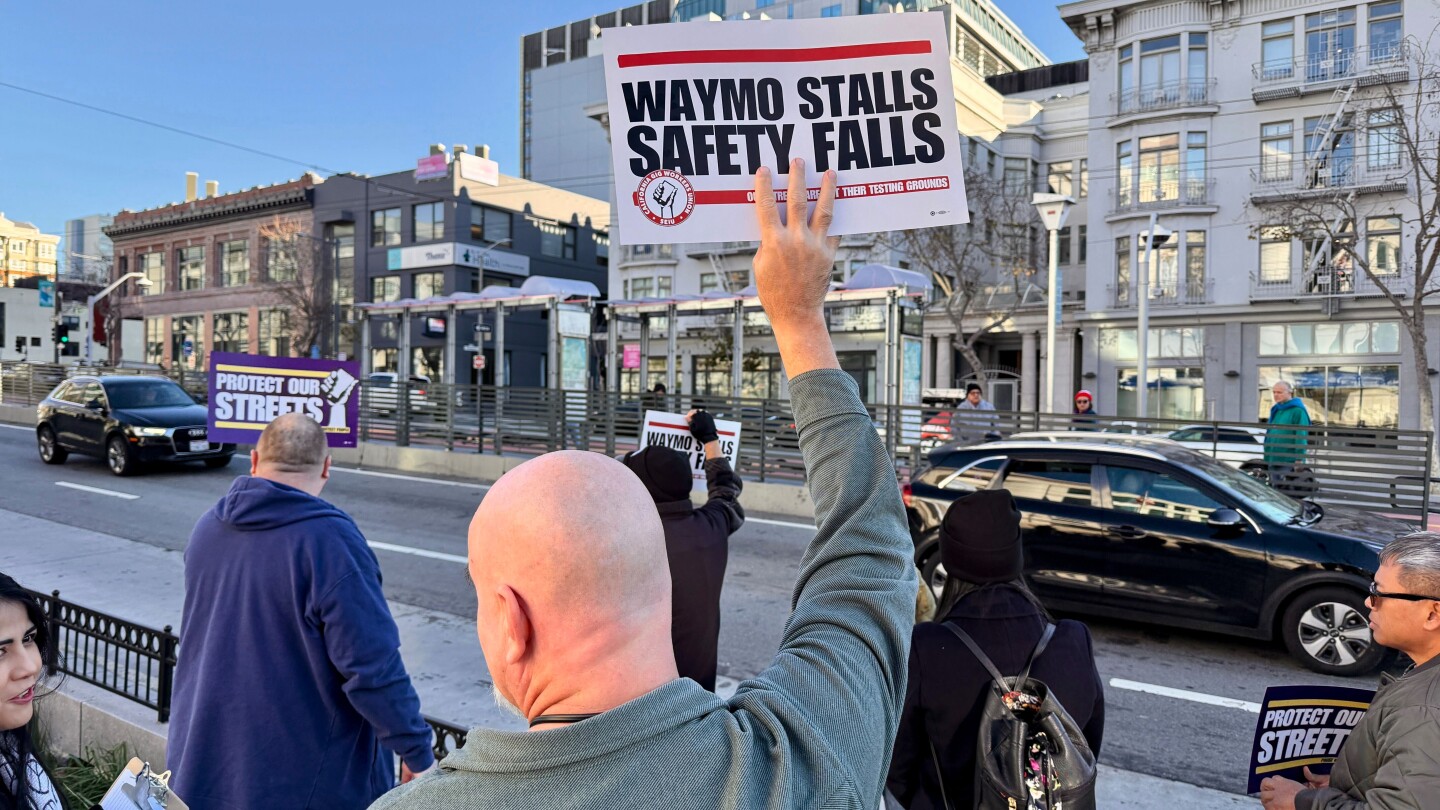
Drivers for ride-hailing giants Lyft and Uber gathered outside the California Public Utilities Commission (CPUC) offices in San Francisco on Friday to protest the proliferation of self-driving Waymo taxis. The demonstration, which attracted about two dozen participants, called for increased regulatory oversight of autonomous vehicles following a series of concerning incidents across the city.
Protesters held signs demanding safer streets and greater accountability while a steady stream of Waymo’s distinctive white vehicles drove past—an ironic visual reminder of the autonomous presence that has rapidly expanded throughout San Francisco’s neighborhoods.
“I personally am not against technology; what I am against is unfair treatment,” said Joseph Augusto, who drives for both Uber and Lyft. “We have these people, these companies, these autonomous vehicle companies who are driving around the city, and they don’t seem to be held to the same standards as us drivers.”
The CPUC, which oversees ride-hailing services like Uber and Lyft, met Friday to consider implementing additional regulations on autonomous vehicles as the industry continues its aggressive expansion. The California Gig Workers Union has taken a firm stance, calling for the complete removal of autonomous vehicles from public streets until safety concerns are adequately addressed.
When contacted about the demonstration, the state regulatory agency declined to comment on the protest or its demands.
The protest comes amid mounting public concern following several high-profile incidents involving Waymo’s autonomous fleet. Just days before Christmas, numerous Waymo vehicles stalled and blocked San Francisco streets during a widespread power outage, creating traffic chaos and raising significant questions about the technology’s ability to handle unexpected real-world situations. The incident forced Waymo to temporarily suspend its service while it addressed the issues.
Augusto recounted his firsthand experience during the December 20th blackout: “There were a lot of Waymos around. Just randomly all over the city and there’s no plan,” he said. The sight of immobilized autonomous vehicles at intersections as pedestrians navigated around them highlighted potential public safety risks.
Other incidents have further eroded public confidence. In September, a Waymo vehicle was observed making an illegal U-turn directly in front of a sign prohibiting such maneuvers. When San Bruno police responded, they found themselves unable to issue a citation due to the absence of a human driver—exposing a regulatory gap in traffic enforcement for autonomous vehicles.
Perhaps most emotionally charged was an October incident when a Waymo vehicle struck and killed a neighborhood cat named Kit Kat, raising concerns about the vehicles’ ability to detect and respond to small moving objects—a potentially serious safety concern in residential areas with children.
Waymo, owned by Google’s parent company Alphabet, defended its operations in a statement, saying the company “is on a mission to be the world’s most trusted driver, making it safe, more accessible and more sustainable for riders to get around.” However, critics argue these incidents demonstrate the technology remains unprepared for full deployment in complex urban environments.
The protest highlights the growing tension between traditional transportation workers and the rapidly advancing autonomous vehicle industry. While companies like Waymo, Cruise, and others tout the potential safety and efficiency benefits of their technology, many transportation workers see the unchecked expansion as both a threat to their livelihoods and a potential public safety risk.
The CPUC’s deliberations on expanded autonomous vehicle regulations come at a critical juncture, as cities nationwide grapple with how to integrate this transformative technology while ensuring public safety remains paramount. The commission’s decisions could set important precedents for autonomous vehicle regulation across California and potentially influence regulatory frameworks in other states.
As autonomous vehicles continue their expansion into urban landscapes, the protests underscore the need for regulatory frameworks that can properly address safety concerns, enforcement challenges, and the impacts on existing transportation jobs and infrastructure.
Fact Checker
Verify the accuracy of this article using The Disinformation Commission analysis and real-time sources.

20 Comments
Autonomous vehicles represent a significant disruption to the transportation industry, and it’s understandable that existing drivers would feel threatened by their rapid expansion. Regulators will need to carefully weigh the pros and cons as they consider new policies.
This protest highlights the need for a balanced approach that fosters innovation while also protecting the livelihoods of workers in the industry.
Interesting situation with the ride-hailing drivers protesting the expansion of autonomous vehicles. I can understand their concerns about safety and accountability, but this technology is progressing rapidly and will likely continue to be a disruptive force in the industry.
Regulators will need to carefully balance the needs and concerns of both human drivers and autonomous vehicle operators as this technology develops further.
This protest highlights the disruptive impact that autonomous vehicles can have on traditional transportation industries. The drivers’ concerns about unfair treatment and accountability are valid, and regulators will need to carefully navigate this complex issue.
As the technology continues to advance, finding the right balance between innovation and protecting workers will be an ongoing challenge.
This situation underscores the need for policymakers to carefully consider the broader implications of autonomous vehicle technology, including the impact on traditional transportation industries and their workforces. Striking the right balance will be crucial.
I’m interested to see how the CPUC’s regulatory approach evolves in response to the drivers’ concerns and the continued expansion of robotaxis in the region.
The Lyft and Uber drivers make a fair point about the need for increased regulatory oversight of autonomous vehicles. While the technology may offer benefits, it’s important to ensure that safety and accountability standards are upheld.
It will be interesting to see how the CPUC responds to the drivers’ demands and what kind of regulations they ultimately put in place.
The rapid expansion of autonomous vehicles in urban areas like San Francisco is sure to create tensions with the existing ride-hailing workforce. Regulators will need to find a balanced approach that addresses safety concerns while also allowing for technological progress.
It will be interesting to see what specific regulations the CPUC implements in response to the drivers’ protests.
The clash between human drivers and autonomous vehicles is a fascinating dynamic to watch unfold. While the technology has clear benefits, the impact on livelihoods is undeniable and deserves serious consideration from policymakers.
I’m curious to see how the CPUC’s regulatory approach evolves to address the concerns raised by the protesters.
The protest by the Lyft and Uber drivers highlights the complex challenges that come with the rise of autonomous vehicles. While the technology has potential benefits, the impact on human workers is a valid concern that regulators must address.
Finding the right balance between innovation and protecting livelihoods will be crucial as this industry continues to evolve.
I’m not surprised to see the Lyft and Uber drivers protesting the Waymo robotaxis. Their livelihoods are threatened by this emerging technology, so their concerns about safety and fairness are understandable.
However, autonomous vehicles may ultimately prove to be safer and more efficient than human drivers, so regulators will need to carefully weigh the tradeoffs.
The rise of robotaxis is an important trend to watch in the transportation and logistics sectors. While it may displace some human drivers, it could also improve safety and efficiency if implemented responsibly.
Curious to see how the California regulators approach this issue and what kind of guidelines they establish to address the drivers’ concerns.