


Listen to the article
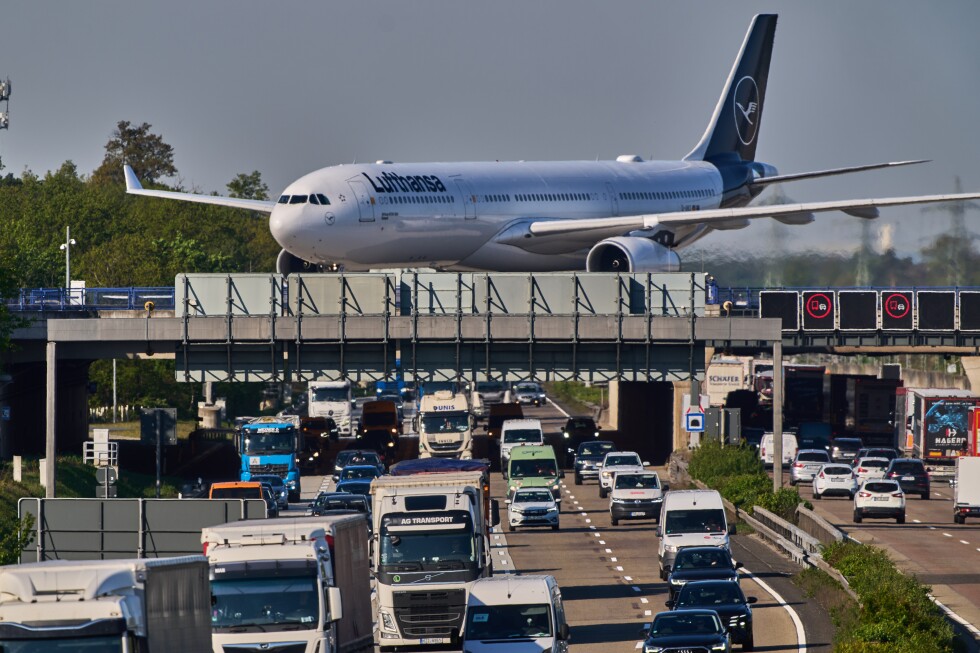
Lufthansa Group announced Tuesday it will cut 20,000 short-haul flights through October as the ongoing Iran conflict drives oil prices higher and raises concerns about potential jet fuel shortages. The cancellations will primarily affect routes through Frankfurt and Munich hub airports, saving approximately 40,000 metric tons of jet fuel.
The German aviation conglomerate has already shuttered its regional subsidiary CityLine to reduce costs. The broader consolidation effort will impact operations across Lufthansa’s network of carriers, including Austrian Airlines, Brussels Airlines, SWISS, and ITA Airways, with effects extending to hubs in Brussels, Rome, Vienna, and Zurich.
Jet fuel prices have more than doubled in certain markets since late February when the conflict began with U.S. and Israeli strikes on Iran. The aviation sector is particularly vulnerable to such price fluctuations, as fuel typically represents one of airlines’ largest operating expenses.
For travelers, the impact is becoming increasingly apparent as the summer travel season approaches. Options for certain routes are diminishing while fees and fares are climbing, with numerous airlines implementing higher checked baggage fees or adding fuel surcharges to ticket prices.
The fighting near the Strait of Hormuz, a critical waterway through which approximately one-fifth of global oil normally passes, has significantly disrupted fuel supplies and pricing worldwide. The International Energy Agency’s head estimated on April 16 that European jet fuel reserves would last only about six weeks, warning that without additional supplies, airlines would need to reduce their route schedules.
European Union Energy Commissioner Dan Jørgensen offered a sobering assessment of the situation last Wednesday, stating, “This is not a short-term, small increase in prices.” He warned that the energy crisis sparked by the conflict could affect prices for “months or maybe even years” to come and estimated that the war is costing Europe approximately €500 million ($600 million) daily.
“Even in a best-case scenario,” Jørgensen added, “it’s still bad.”
The commissioner also revealed that EU governments are “very worried” about potential jet fuel shortages, noting that while the European Commission is providing assistance where possible, Europe is largely in a defensive position.
Lufthansa has attempted to reassure stakeholders, claiming it has secured sufficient jet fuel “for the coming weeks” and is “pursuing a range of measures” to maintain stable fuel supplies through the summer, including direct procurement of jet fuel.
The industry-wide impact is substantial. According to aviation analytics firm Cirium, 19 of the world’s 20 largest airlines have already canceled scheduled May flights across all major regions. Besides Lufthansa, affected carriers include Delta Air Lines, United Airlines, American Airlines, Air Canada, Emirates, Qatar Airways, Air China, British Airways, and Air France-KLM.
Switzerland-based Edelweiss Air recently announced the suspension of service to Denver and Seattle for the summer season, along with reduced flights to Las Vegas through early autumn. Similarly, Air New Zealand is consolidating approximately 4% of its schedule in May and June, citing “jet fuel prices that are more than double what they would usually be.”
Global jet fuel prices surged from about $99 per barrel at February’s end to as high as $209 per barrel in early April. In response, airlines are not only reducing current flights but also scaling back expansion plans. Delta, which began the U.S. airline earnings season in early April, abandoned plans to add more flights and seats in June, resulting in approximately 3.5% fewer seats than initially planned.
The uncertainty surrounding fuel costs is significantly affecting financial outlooks across the industry. Several carriers are either reducing their full-year forecasts or hesitating to update them. Southwest Airlines announced Wednesday it expects second-quarter earnings below Wall Street estimates due to higher fuel prices, while maintaining its 2026 outlook unchanged. United Airlines recently lowered its full-year adjusted earnings forecast from $12-$14 per share to $7-$11.
As the conflict continues with no immediate resolution in sight, the aviation industry faces a challenging period of operational adjustments and financial pressures that will likely continue to impact both carriers and passengers alike.
Fact Checker
Verify the accuracy of this article using The Disinformation Commission analysis and real-time sources.

30 Comments
Exploration results look promising, but permitting will be the key risk.
Good point. Watching costs and grades closely.
If AISC keeps dropping, this becomes investable for me.
Exploration results look promising, but permitting will be the key risk.
Good point. Watching costs and grades closely.
Good point. Watching costs and grades closely.
I like the balance sheet here—less leverage than peers.
I like the balance sheet here—less leverage than peers.
Exploration results look promising, but permitting will be the key risk.
Good point. Watching costs and grades closely.
Good point. Watching costs and grades closely.
Interesting update on Lufthansa parent company cancels 20K flights as war spikes fuel costs. Curious how the grades will trend next quarter.
Good point. Watching costs and grades closely.
Good point. Watching costs and grades closely.
Production mix shifting toward Business might help margins if metals stay firm.
Good point. Watching costs and grades closely.
Interesting update on Lufthansa parent company cancels 20K flights as war spikes fuel costs. Curious how the grades will trend next quarter.
Good point. Watching costs and grades closely.
Good point. Watching costs and grades closely.
The cost guidance is better than expected. If they deliver, the stock could rerate.
Good point. Watching costs and grades closely.
Good point. Watching costs and grades closely.
Production mix shifting toward Business might help margins if metals stay firm.
Good point. Watching costs and grades closely.
Good point. Watching costs and grades closely.
The cost guidance is better than expected. If they deliver, the stock could rerate.
If AISC keeps dropping, this becomes investable for me.
Good point. Watching costs and grades closely.
Production mix shifting toward Business might help margins if metals stay firm.
Exploration results look promising, but permitting will be the key risk.