


Listen to the article
Colombian President Petro Visits Venezuela for Talks on Gas, Border Security
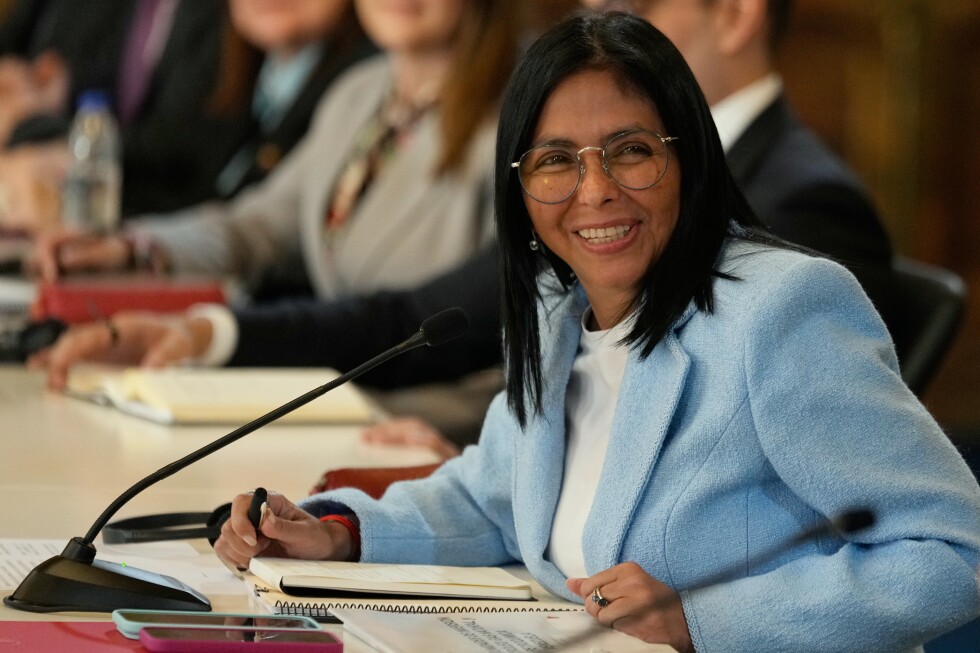
Colombian President Gustavo Petro arrived in Venezuela Friday for critical discussions with Acting President Delcy Rodríguez, marking their first formal meeting since U.S. forces removed former President Nicolás Maduro from power in January.
The high-stakes talks in Caracas are expected to focus on bilateral trade opportunities and persistent security challenges along the countries’ shared border, where illegal armed groups continue to operate with relative impunity.
Colombia has positioned itself as a potential buyer of Venezuelan natural gas and recently sought exemptions from U.S. sanctions to invest in Venezuelan energy projects. These initiatives could include revitalizing a cross-border gas pipeline, for which Colombia’s government has already reached preliminary agreements with Venezuela’s state oil company PDVSA to replace sections on Colombian territory.
“The United States has an interest in Colombia becoming the buyer of Venezuelan gas,” explained Ronal Rodríguez Durán, a researcher at the Venezuela Observatory at Universidad del Rosario. “Colombia, by virtue of its geographical position, would become the client that could quickly bring revenue into Venezuela under U.S. supervision.”
Energy cooperation between the neighboring countries represents a strategic priority for the U.S. administration, which seeks to stabilize Venezuela’s economy following years of decline under Maduro’s government. The economic collapse prompted an unprecedented exodus of approximately 7.7 million Venezuelans, creating humanitarian challenges throughout the region.
The gas partnership concept featured prominently in discussions between Petro and U.S. President Donald Trump during their February White House meeting. The cordial talks marked a surprising shift in tone after Trump had previously threatened Colombia with military action and accused Petro of facilitating cocaine trafficking into the United States.
According to Petro, his discussions with Trump included strategies to revitalize Venezuela’s economy with Colombian assistance. The Colombian leader has advocated for the U.S. to “lift sanctions” against Venezuela as part of a broader normalization process.
Border security remains another critical agenda item for the Caracas talks. Petro’s delegation includes high-ranking military and police officials who will coordinate intelligence efforts with their Venezuelan counterparts, particularly regarding the volatile Catatumbo region, where rival armed groups battle for territorial control.
“Without close collaboration on intelligence, bombs land in the wrong places… and end up killing civilians,” Petro warned ahead of the meeting, highlighting the urgent need for coordinated security operations.
Diplomatic relations between Colombia and Venezuela have been strained for years. While Petro maintained diplomatic ties with Caracas, he did not recognize Maduro as Venezuela’s legitimate president following the contested July 2024 elections, which triggered widespread protests and subsequent government repression.
Colombia’s government has framed Friday’s meeting as an effort to “contribute to a resolution of Venezuela’s political crisis,” though analysts remain skeptical about what concrete progress can be achieved.
“Petro’s leverage is limited regarding any potential mediation,” noted Rodríguez Durán, pointing out that the Colombian president’s term ends in August. Future relations between the neighboring countries will likely depend on Colombia’s upcoming presidential transition.
A previous meeting between Petro and Rodríguez, scheduled to take place at their shared border last month, was abruptly canceled by both governments citing unspecified “force majeure” circumstances. Prior to that canceled meeting, several Venezuelan non-governmental organizations had publicly urged Petro to advocate for “democratic principles and human rights” in Venezuela, including the release of political prisoners and an end to government persecution.
As both nations navigate these complex diplomatic waters, the outcomes of Friday’s talks could significantly impact regional stability, energy security, and migration patterns throughout Latin America. Success would represent a rare positive development in a relationship that has weathered decades of political turmoil and ideological differences.
Fact Checker
Verify the accuracy of this article using The Disinformation Commission analysis and real-time sources.

13 Comments
This meeting between the Colombian and Venezuelan leaders is an important step toward improved regional cooperation and security. It will be interesting to see if they can make progress on energy projects and border issues.
Absolutely. With the U.S. sanctions still in place, Colombia could be a vital trade partner for Venezuela’s natural gas and other resources.
I’m curious to see if this opens the door for more foreign investment in Venezuela’s mining and energy sectors, which have been hampered by the political turmoil. Resolving border security concerns will also be key.
Good point. Restoring stability and economic ties between these two countries could unlock significant opportunities, especially in the commodities space.
This meeting is an important step, but I remain cautiously optimistic. The historical tensions and mistrust between Colombia and Venezuela will not be easy to overcome. However, dialogue is critical to making progress.
I agree. Even small steps toward cooperation are positive, but there is still a lot of work ahead to rebuild trust and find mutually beneficial solutions.
While I’m hopeful this meeting can lead to progress, I remain concerned about the political dynamics and entrenched positions on both sides. Navigating the complexities of the U.S. sanctions regime will also be a major challenge.
The potential for reviving a cross-border gas pipeline is an intriguing development. If Colombia can secure sanctions exemptions, this could be a win-win for energy security in the region.
Absolutely. Enhancing regional energy integration would be a positive outcome from these talks.
It will be interesting to see if this meeting can lay the groundwork for more regular and substantive dialogue between Colombia and Venezuela. Improving bilateral ties is crucial for regional stability and economic development.
It’s good to see the new Colombian president reaching out to Venezuela. Improving cross-border coordination on issues like security and trade could benefit both countries’ mining and energy sectors.
This is an important moment for Colombia and Venezuela to reset their relationship. Cooperation on energy, mining, and border security could have far-reaching benefits for the economies of both countries.
Agreed. If they can find common ground, it could unlock significant commercial opportunities in key sectors like natural resources.