


Listen to the article
Canadian Prime Minister Stands Firm on Trade Deal Terms with United States
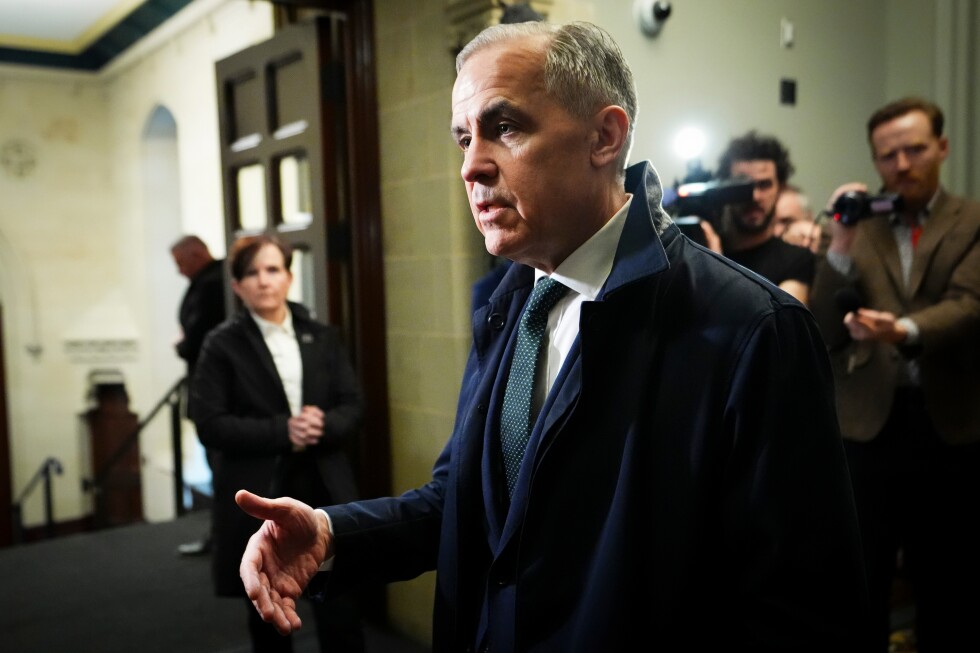
Canadian Prime Minister Mark Carney asserted Wednesday that the United States cannot unilaterally dictate the terms of the United States-Mexico-Canada Agreement (USMCA), signaling challenging negotiations ahead as the trade pact approaches its review in July.
“It’s not a case of the United States dictates the terms. We have the negotiations. We can come to a mutually successful outcome,” Carney told reporters in Ottawa. “It will take some time.”
The trilateral trade agreement, which has bound the North American economies together since the early 1990s, has faced increasing pressure amid shifting U.S. trade policies, particularly during the administration of former President Donald Trump.
Carney’s comments came in response to a Radio-Canada report suggesting American officials were imposing an “entry fee” on trade discussions, allegedly demanding concessions from Canada before formal negotiations could even begin.
When questioned about these demands, Carney maintained a pragmatic stance. “In any negotiations, people ask for concessions,” he said. “We have strengths, we have options. We’re diversifying our options.”
The rising tensions follow pointed criticism from U.S. Commerce Secretary Howard Lutnick, who recently criticized Canada’s approach to trade talks. Lutnick claimed Canada overly relies on the U.S. economy and called it “outrageous” that some Canadian provinces restrict American liquor from their shelves.
Lutnick also took aim at Carney’s recent agreement with China to reduce Chinese tariffs on electric vehicles from 100% to 6.1%, with an annual cap of 49,000 vehicles. The deal is expected to result in China lowering retaliatory tariffs on Canadian agricultural products.
The Office of the United States Trade Representative has published a report highlighting several “trade irritants” – policies creating friction in international trade – including provincial restrictions on American alcohol and high tariffs on certain U.S. dairy products.
Canada’s “Buy Canadian” policy has also drawn American criticism. The policy prioritizes Canadian products and workers on projects exceeding CA$25 million (approximately US$18 million).
In the face of these challenges, Carney has pledged to protect Canada’s dairy, poultry, and egg production sectors – historically contentious areas in North American trade negotiations.
The Prime Minister elaborated on his trade strategy in a ten-minute video released Sunday, where he acknowledged that Canada’s strong economic ties to the United States have transformed from a historical strength into a potential vulnerability. He specifically cited the impact of U.S. tariffs on Canadian workers in the automotive and steel industries.
The USMCA, which replaced the North American Free Trade Agreement (NAFTA) in 2020, represents one of the world’s largest free trade regions, covering a market of nearly 500 million people with a combined GDP exceeding $24 trillion. Any disruption to this agreement could have significant economic consequences across the continent.
Trade between Canada and the United States remains one of the world’s largest bilateral trading relationships, with approximately US$2 billion in goods and services crossing the border daily. Canada exports approximately 75% of its goods to the United States, highlighting the critical importance of maintaining stable trade relations.
As negotiations approach, Carney appears to be balancing a firm stance on Canadian interests while acknowledging the necessity of compromise in the trade relationship. His government has simultaneously been pursuing efforts to attract new investments and develop trade agreements with other global partners, potentially reducing Canada’s economic dependence on its southern neighbor.
The upcoming USMCA review in July will likely test the diplomatic and economic relationships between these longstanding North American partners during a period of shifting global trade dynamics.
Fact Checker
Verify the accuracy of this article using The Disinformation Commission analysis and real-time sources.

10 Comments
The USMCA is a critical economic agreement for North America. While negotiations can be challenging, I’m hopeful the countries can work through any differences constructively.
I agree, the USMCA is too important to the regional economy to let it unravel. Some give-and-take will be needed, but the end result should strengthen trade ties.
This trade agreement impacts a lot of important industries like mining, energy, and manufacturing. Careful negotiation is needed to protect jobs and economic stability on both sides of the border.
The review of the USMCA in July will be a crucial test. Both sides need to come to the table ready to compromise and find a mutually beneficial outcome. Posturing won’t get the job done.
Interesting to see the Canadian PM taking a firm stance on the trade deal terms. It will be important for both sides to negotiate in good faith and find a mutually beneficial outcome.
It’s encouraging to see the Canadian government standing up for its interests. The US can’t just make unilateral demands – this has to be a true negotiation between partners.
Exactly. Canada has a strong hand to play, and I hope they use it wisely to get the best possible deal for their economy and workers.
Canada has leverage in these talks, and it’s good to see the Prime Minister taking a principled stance. The US can’t simply dictate the terms – this has to be a negotiation.
Absolutely. Canada needs to protect its interests while also finding common ground. With goodwill on both sides, I’m optimistic they can reach an agreement that works for all.
Diversifying trade options is a smart move by Canada. They shouldn’t be overly dependent on the US market, especially with the unpredictable shifts in US trade policy.