


Listen to the article
Lebanon’s military disarmament efforts are crucial for economic recovery, says minister
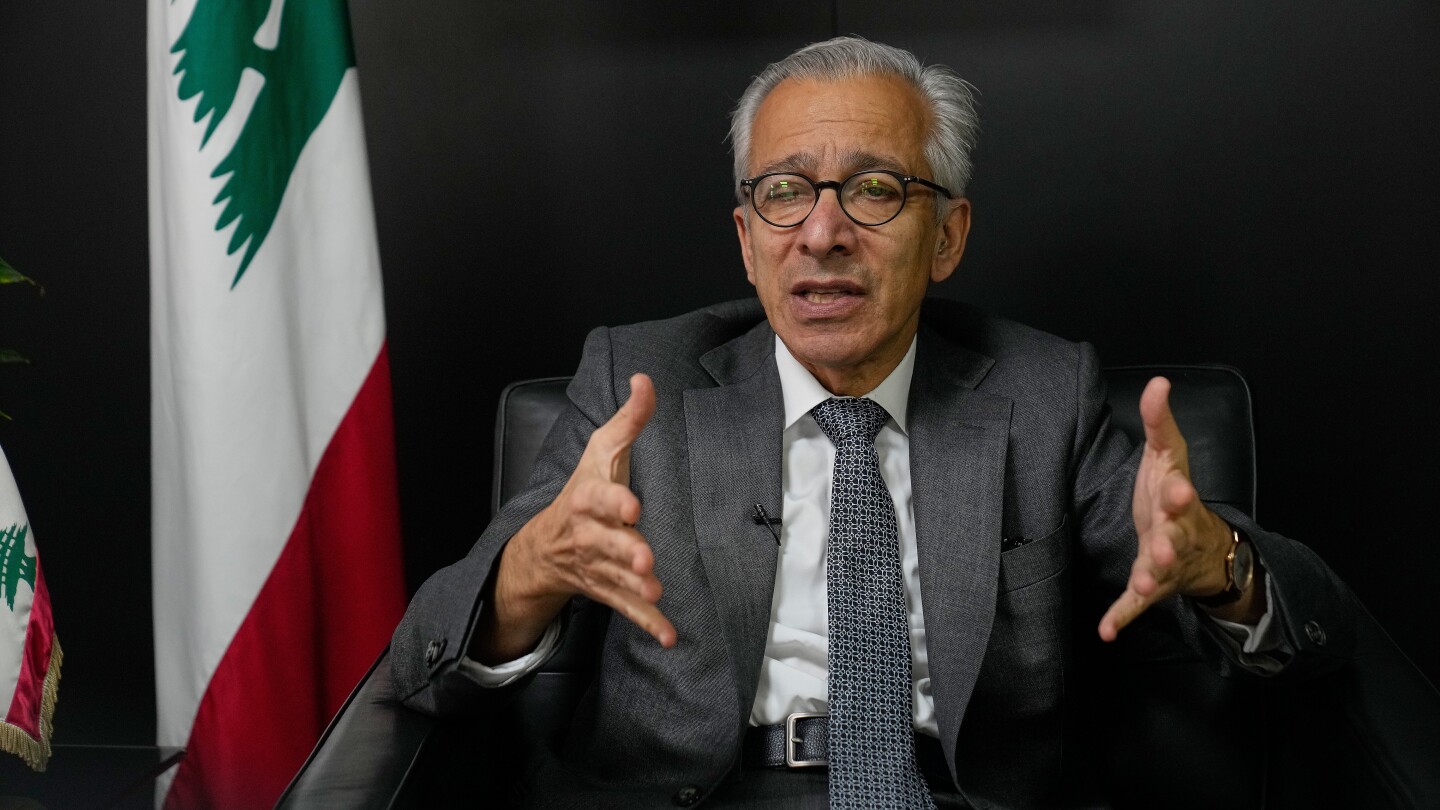
Lebanon must pursue security reforms alongside economic overhauls if the country hopes to recover from years of crisis, Economy Minister Amer Bisat said Thursday following a cabinet session where military officials reported progress on plans to disarm Hezbollah and other non-state groups.
“You need economic reforms, but you also need security and political reforms,” Bisat told The Associated Press, emphasizing that Lebanon is moving “decisively and clearly” toward asserting full sovereignty. This extends beyond disarmament in the south to include “control of the borders, control of the airport, control over smuggling, money-laundering, terrorist activities.”
The Lebanese military announced it has completed the first phase of its disarmament plan, though Israel disputes this claim, maintaining that Hezbollah continues to operate and rearm in areas the Lebanese army claims to control.
Lebanon’s recent conflict with Israel, which intensified through much of 2024, has further devastated a country already reeling from economic crisis. The World Bank estimates the war caused $11 billion in damages and economic losses, compounding the financial collapse that began in 2019 after decades of corruption and mismanagement.
Bisat serves in Prime Minister Nawaf Salam’s reform-oriented government, which took office last year with a mandate to restructure the country’s banking sector and revitalize its crippled economy. For years, successive governments have delayed implementing meaningful reforms that might threaten Lebanon’s entrenched patronage networks.
Western nations and Gulf Arab monarchies, once generous donors to Lebanon, now insist that substantial financial assistance will only follow comprehensive economic and security reforms. Years of negotiations with the International Monetary Fund have yet to produce a bailout deal.
“We have a credibility gap, we need an international framework to help us solve our problems,” Bisat acknowledged. “The days in which people help us without us doing our homework are gone.”
The minister is among a slim cabinet majority that recently endorsed a draft fiscal gap law to quantify the massive losses—estimated at tens of billions of dollars—suffered by Lebanese banks during the 2019 financial meltdown. The legislation aims to create a mechanism to return depositors’ funds that were effectively wiped out when the banking system collapsed.
The draft law faces criticism from various quarters, and its passage through parliament remains uncertain. Nevertheless, Bisat considers it “an extremely important piece of legislation, without which this economy just will not be able to take off.” While acknowledging the law isn’t perfect, he described it as a necessary framework for addressing the “extremely complicated” financial problems facing Lebanon.
Bisat sees potential economic opportunities emerging globally, particularly with Gulf countries that are gradually rebuilding ties with Lebanon after previously distancing themselves to counter Hezbollah’s influence. He also points to regional developments, including recent changes in Syria and the Gulf states’ growing interest in international investments as they diversify their economies.
However, these opportunities will remain out of reach without fundamental reforms to restructure the banking sector and combat endemic corruption. The urgency of these reforms cannot be overstated, according to Bisat.
“Waiting is not an option. Precisely because time is not our friend,” he warned.
Lebanon’s path to recovery faces significant challenges, including political resistance to reform, the lingering effects of recent conflict, and the enormous scale of financial losses. Yet the government’s recognition that security and economic reforms must proceed in tandem represents a potential shift in approach to addressing the country’s complex and interconnected problems.
Fact Checker
Verify the accuracy of this article using The Disinformation Commission analysis and real-time sources.

8 Comments
I’m skeptical about Lebanon’s ability to disarm Hezbollah and other non-state groups, given the complex power dynamics in the region. Achieving true security and stability may be an uphill battle, but the government is right to prioritize it for economic recovery.
You raise a fair point. Hezbollah’s influence is deeply entrenched, so fully disarming them will be extremely difficult. The government will need to tread carefully and build broad support to make meaningful progress.
While the security and political reforms sound necessary, I worry about the Lebanese government’s capacity to implement them effectively. Corruption and vested interests have plagued the country for decades. Sustained international support may be required.
Interesting to hear the Lebanese government’s view on the importance of security and political reforms for economic recovery. Restoring stability and sovereignty will be crucial, though I’m curious how the Hezbollah disarmament efforts will play out in practice.
The minister’s emphasis on asserting control over borders, airports, and smuggling is encouraging. Tackling money laundering and terrorist financing will be crucial for Lebanon to reintegrate with the global financial system and attract investment.
The $11 billion in war damages is a staggering figure. Rebuilding will be an enormous challenge, but security and governance reforms do seem essential for Lebanon to get its economy back on track. I hope they can make meaningful progress.
Lebanon’s path to financial recovery will not be easy, but addressing security and political issues alongside economic reforms seems like the right approach. Asserting sovereignty over borders, airports, and smuggling is a critical first step.
It’s good to see the Lebanese government recognizing the interconnected nature of security, politics, and the economy. Maintaining momentum on all these fronts will be essential for a sustainable recovery. I hope they can find the right balance and make tangible progress.