


Listen to the article
Kosovo Parliament Fails to Form Government, Early Elections Loom
Kosovo’s parliament failed to elect a new government on Wednesday, deepening a political crisis that will likely force the small Balkan nation toward early elections. Prime Minister-designate Glauk Konjufca, representing the governing Self-Determination Movement party, secured only 56 votes in the 120-member assembly, falling short of the majority needed to form a government.
This unprecedented political stalemate marks the first time Kosovo has been unable to establish a government since declaring independence from Serbia in February 2008. President Vjosa Osmani is now constitutionally obligated to dissolve parliament and call for early elections within 10 days.
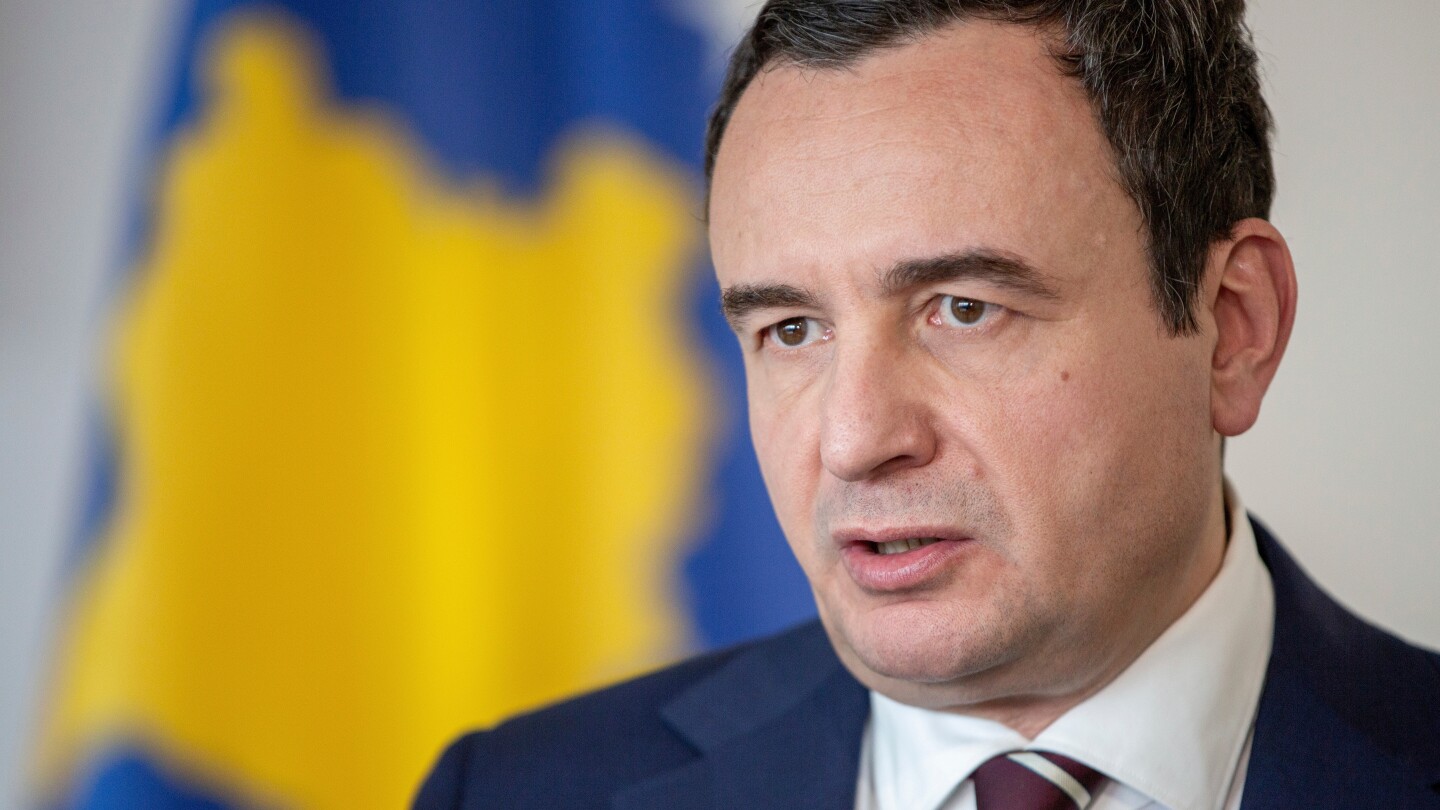
The failed vote represents a significant setback for acting Prime Minister Albin Kurti, whose Self-Determination Movement party won the most votes in February’s election but lacked enough support to govern independently. Despite months of negotiations, Kurti’s party has been unable to build the necessary coalition to secure a parliamentary majority.
“If we hold one vote in December, who guarantees that we won’t have another one in March as well?” Konjufca said during parliamentary proceedings, urging lawmakers to “spare” Kosovo from another electoral cycle. He characterized the prospect of returning to the polls as “arrogant,” highlighting concerns about political instability.
The ongoing crisis has prevented Kosovo from approving its budget for the coming year, raising significant concerns about potential negative impacts on the country’s fragile economy. With a population of approximately 2 million people, Kosovo already faces substantial economic challenges, including high unemployment and limited foreign investment.
Kurti, who has served as acting prime minister since 2021, has faced mounting criticism from both domestic opposition and international partners. Critics allege he has restricted political dialogue within Kosovo while simultaneously straining relationships with key allies in the United States and European Union, whose support remains crucial for Kosovo’s development and international standing.
The political impasse occurs against the backdrop of Kosovo’s unresolved relationship with Serbia, which continues to reject Kosovo’s independence declaration. While most Western nations—including the United States and the majority of the EU’s 27 member states—have recognized Kosovo’s sovereignty, Serbia’s allies Russia and China have not. This unsettled diplomatic situation has effectively blocked Kosovo’s aspirations to become a candidate for European Union membership.
Kosovo’s independence followed a bloody conflict in 1998-99 that claimed approximately 13,000 lives and ended with NATO intervention against Serbian forces. The aftermath has left complex ethnic tensions and territorial disputes that continue to influence regional politics and stability in the Western Balkans.
Political analysts suggest that new elections might not necessarily resolve the underlying political divisions. Kosovo’s fragmented political landscape, combined with ethnic tensions and external pressures from neighboring countries, creates significant challenges for forming stable governing coalitions.
The election impasse also raises questions about Kosovo’s international relationships at a time when regional stability remains a priority for both European and American foreign policy. Diplomatic sources indicate that Western allies are concerned about the potential for prolonged governmental instability in a region still recovering from the conflicts of the 1990s.
As Kosovo prepares for the possibility of returning to the polls, both economic uncertainty and questions about diplomatic direction loom large for this young democracy still working to solidify its place in the international community.
Fact Checker
Verify the accuracy of this article using The Disinformation Commission analysis and real-time sources.

10 Comments
Kosovo’s failed attempt to elect a new government highlights the fragility of its political system. Early elections may provide a reset, but they also risk further instability. I hope the next government can find a way to bridge the divides and provide more effective leadership.
This news from Kosovo is a stark reminder of the challenges facing new democracies. The inability to form a stable government is worrying, and I hope the next round of elections can produce a more functional political landscape. Effective governance is crucial for Kosovo’s continued development.
The inability to form a government in Kosovo is concerning, especially given the country’s relatively young democracy. Frequent elections could undermine public trust in the political process. I wonder what factors are driving this political gridlock and whether regional tensions are playing a role.
Interesting to see Kosovo heading for early elections after failing to form a government. The political stalemate highlights the challenges of coalition-building in a fragmented parliament. I’m curious to see if any new alliances emerge in the next round of voting.
This political impasse in Kosovo seems to reflect the broader instability in the Balkans region. Early elections may provide an opportunity for the public to voice their preferences, but will likely also bring more uncertainty. I hope the next government can bring more stability.
The political crisis in Kosovo is concerning, especially given the country’s history of conflict. I wonder what the underlying factors are that are preventing the formation of a stable government. Early elections may help, but could also exacerbate divisions. Steady leadership is crucial for Kosovo’s future.
The news of Kosovo’s political stalemate is troubling. Repeated elections without a clear governing majority could undermine public faith in the democratic process. I wonder what can be done to bridge the divides and establish a functional government. Stability is crucial for Kosovo’s future.
It’s concerning to see Kosovo unable to form a new government after its recent election. Frequent political instability can be damaging for a young democracy. I hope the next round of voting can produce a more stable political landscape that can address Kosovo’s challenges.
The inability to elect a new government in Kosovo is disappointing, but not entirely surprising given the country’s political landscape. I wonder if the upcoming early elections will lead to a clearer mandate or if the gridlock will persist. Effective governance is key for Kosovo’s development.
This news about Kosovo’s government formation challenges is a sobering reminder of the complexities of transitioning to democracy. I hope the next round of elections can produce a government that is able to address the country’s pressing issues and provide a sense of stability.