


Listen to the article
Japan’s economy contracted at a 1.8% annual pace during the July-September quarter, marking its first decline in six quarters as President Donald Trump’s tariffs dampened exports and residential investment plummeted, according to government data released Monday.
On a quarter-by-quarter basis, Japan’s gross domestic product shrank by 0.4%, reversing the positive growth trend seen earlier in the year. The Japanese economy had grown by 0.6% in the April-June quarter and 0.2% in the January-March period.
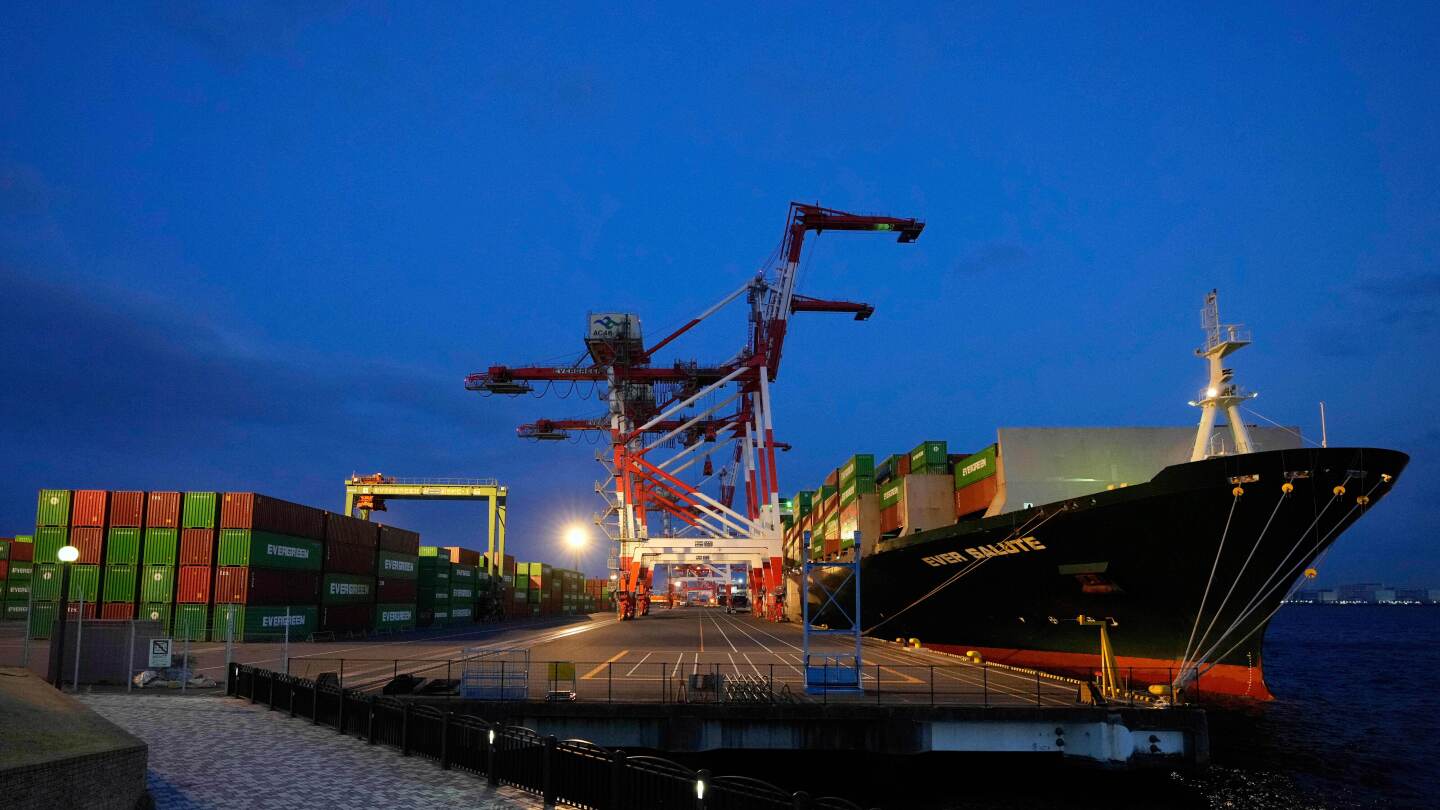
Exports, a critical component of Japan’s economy, fell by 4.5% in annual terms during the third quarter. Analysts point to a ripple effect from Trump’s trade policies, noting that businesses had previously accelerated shipments to beat tariff implementation deadlines, which artificially inflated export figures in earlier quarters. Now, those numbers are normalizing downward.
The housing sector showed particularly troubling signs, with private residential investment plunging 9.4% quarter-on-quarter—translating to a dramatic 32.5% drop on an annualized basis. Economic experts attribute this decline primarily to revisions in Japan’s building code that took effect in April, the beginning of Japan’s fiscal year, causing housing starts to collapse.
Imports declined marginally by 0.1% during the same period, while private consumption—a measure of household spending—edged up slightly by 0.1%, showing little momentum in domestic demand.
The contraction reflects the vulnerability of Japan’s export-dependent economy in the face of global trade tensions. The United States currently imposes a 15% tariff surcharge on nearly all Japanese imports—lower than Trump’s initially proposed 25% but still significant for Japanese exporters.
Major Japanese manufacturers, led by automotive giants like Toyota Motor Corp., have been particularly exposed to these trade pressures, though many have strategically shifted production facilities overseas to mitigate the impact of tariffs and other trade restrictions.
The economic slowdown poses an immediate challenge for newly appointed Prime Minister Sanae Takaichi, who took office in October. Takaichi has pledged to revitalize the Japanese economy and is expected to increase government spending as part of her policy agenda. However, this approach may complicate the Bank of Japan’s efforts to control inflation through interest rate adjustments.
The central bank has been cautiously moving away from its longstanding near-zero interest rate policy, but the weak economic performance may now delay further monetary tightening. Marcel Thieliant of Capital Economics noted in a report that the disappointing third-quarter results make a December interest rate increase highly unlikely.
Nevertheless, preliminary data for the current quarter and business sentiment surveys suggest the economy could show signs of improvement in the coming months. Thieliant predicts the Bank of Japan might resume raising interest rates in early 2025 if economic conditions stabilize.
Japan’s economic contraction highlights the broader challenges facing export-oriented economies in an era of rising protectionism and trade barriers. While the reduction in Trump’s tariff plans from 25% to 15% provided some relief, Japanese industries continue to navigate significant headwinds from global trade tensions.
As Prime Minister Takaichi’s administration formulates its economic strategy, balancing fiscal stimulus with inflation concerns will be crucial. The interplay between government spending initiatives and the central bank’s monetary policy will shape Japan’s economic trajectory in the months ahead as the country works to return to sustainable growth amid an uncertain global trade environment.
Fact Checker
Verify the accuracy of this article using The Disinformation Commission analysis and real-time sources.

8 Comments
Tough times for the Japanese economy, caught in the crossfire of the US-China trade war. Diversifying export markets and boosting domestic consumption could be paths forward, but not easy fixes.
This contraction is a concerning sign for Japan’s economic trajectory. With exports down and the housing sector struggling, I hope they can find ways to stimulate growth and shield themselves from global trade tensions.
The reliance on exports makes Japan’s economy quite vulnerable to these kinds of external shocks. Diversifying trade relationships and strengthening the domestic economy will be critical going forward.
Absolutely. Japan will need to focus on building more resilience in its economic model to avoid being overly impacted by fluctuations in global trade.
The housing sector decline is particularly troubling. A 32.5% drop in residential investment is quite steep. Curious to see if this is just a temporary blip or a more prolonged downturn.
The building code revisions certainly seem to be a major factor in the housing slump. Policymakers will need to carefully monitor the situation and potentially make adjustments if the downturn persists.
Interesting to see how the US tariffs are impacting Japan’s economy. Exports are a critical part of their growth, so this contraction is concerning. I wonder how they’ll respond to mitigate the effects of the trade tensions.
Agreed, the ripple effects of these trade policies are quite significant. Japan will likely need to find new ways to drive domestic demand and investment to offset the export slowdown.