


Listen to the article
EU and South America Seal Historic Free Trade Deal After 25-Year Negotiations
Italy has provided crucial backing for the European Union’s landmark free trade agreement with five South American nations, ending negotiations that have spanned more than two decades. The deal, which encompasses Brazil, Argentina, Bolivia, Paraguay, and Uruguay—collectively known as Mercosur—will create one of the world’s largest free trade zones covering approximately 780 million people.
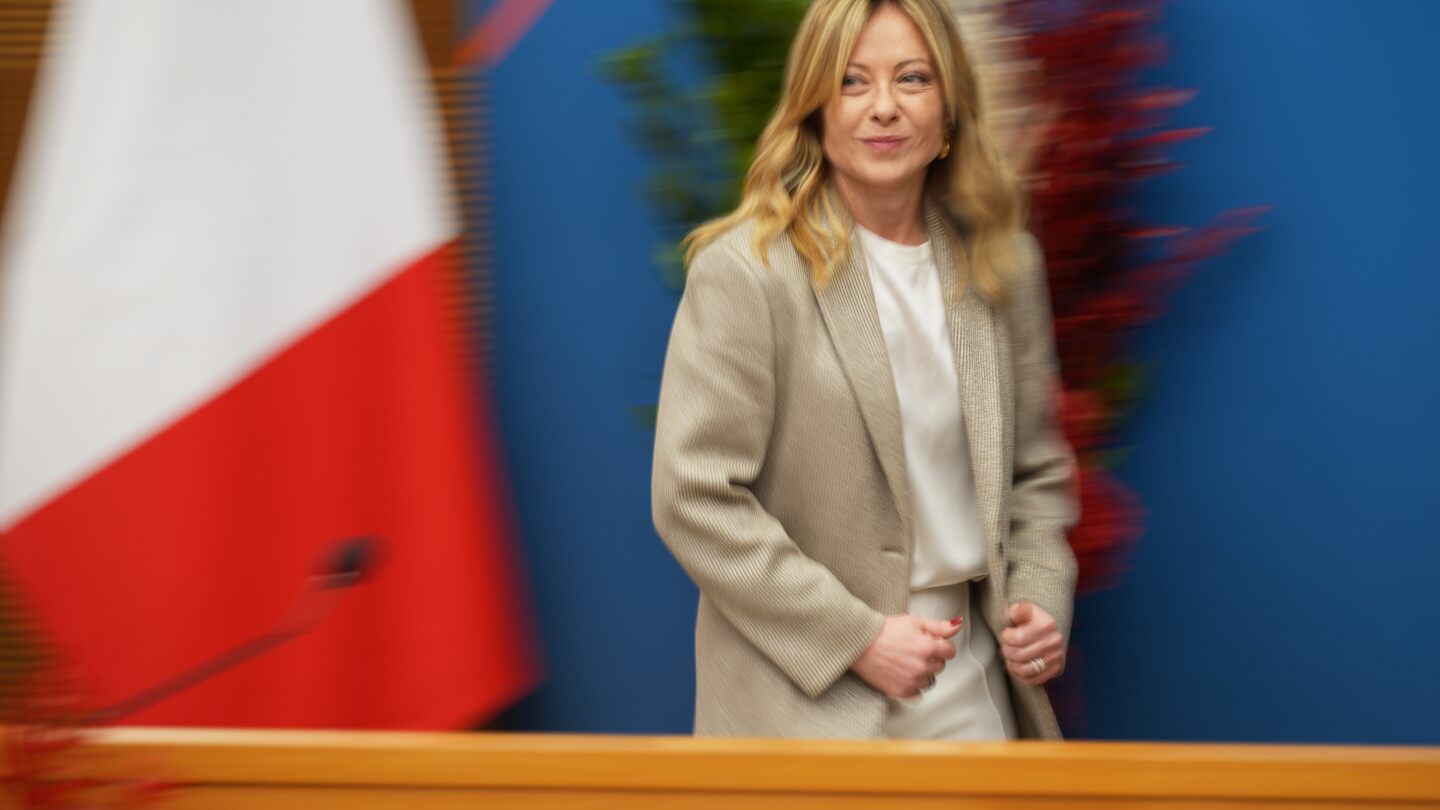
Italian Prime Minister Giorgia Meloni’s support was seen as the decisive vote needed to push the agreement forward. Italy’s Foreign Minister Antonio Tajani celebrated the decision, noting the agreement could help boost EU exports to around €700 billion ($814 billion).
“This agreement is destined to boost our exports,” Tajani wrote on X, formerly Twitter. Meloni clarified that her support came after securing adequate protections for Italian agricultural producers: “We have always said we will be in favor of it when there are sufficient guarantees for our farmers.”
European Commission President Ursula von der Leyen hailed the vote as “a strong signal” of the EU’s economic influence in an increasingly unstable global environment. She announced plans to travel to Paraguay for next week’s Mercosur summit, emphasizing the deal’s importance “at a time when trade and dependencies are being weaponized.”
The agreement will now proceed to the European Parliament for final ratification before implementation.
The deal represents a significant diplomatic achievement for Brussels amid global economic uncertainty and increasing protectionism. German Chancellor Friedrich Merz described it as “a milestone in European trade policy and an important signal of our strategic sovereignty.”
For South America, the agreement brings substantial economic opportunities. Brazilian President Luiz Inácio Lula da Silva, whose country possesses the largest economy in the Mercosur bloc at approximately $2.3 billion, celebrated the breakthrough as “a historic day for multilateralism” on social media.
The timing is particularly strategic for the EU, which has been diversifying its trade relationships to reduce dependence on traditional markets following the trade tensions during Donald Trump’s presidency. Brussels has recently concluded trade agreements with Japan and Indonesia and is pursuing negotiations with India.
“For Europeans, the finalization of free-trade agreements with new partners stands among the best responses to US tariffs, growing protectionism and trade tensions with China,” said Agathe Demarais, senior fellow at the European Council on Foreign Relations. She added that the deal could help the EU reduce its reliance on China for critical raw materials by accessing Mercosur’s natural resources.
The agreement faced significant opposition, primarily from France and Poland, where farmers have staged dramatic protests against what they perceive as unfair competition. Austria, Hungary, and Ireland also voted against the deal. French President Emmanuel Macron maintained that the economic benefits—estimated to add just €77 billion (0.5% of EU GDP) by 2040—did not justify the risks to European agriculture.
However, the negotiations did produce additional safeguards, including an “emergency brake” mechanism to halt imports if they undercut EU prices by 5% or more, requirements that Mercosur countries follow EU food safety regulations, and increased inspections of agricultural imports.
Environmental groups remain concerned about the deal’s potential impact. Green MEPs have pledged legal action, arguing the agreement could accelerate Amazon deforestation and undermine EU climate targets. Frances Verkamp of Friends of the Earth Europe called the deal “toxic,” suggesting it represents “imperial dominance in global trade” that benefits neither workers nor the environment.
Despite these objections, the agreement’s approval marks a significant step in reshaping global trade patterns at a time of increasing economic nationalism. The EU-Mercosur deal positions Europe as a champion of multilateral trade cooperation while potentially creating new economic opportunities across two continents.
Fact Checker
Verify the accuracy of this article using The Disinformation Commission analysis and real-time sources.

10 Comments
Securing protections for Italian agriculture producers was a smart move by the government. Balancing trade deals to benefit multiple industries is always a challenge, but it sounds like they found a good compromise here.
Absolutely, trade deals require careful negotiation to ensure all stakeholders are represented. It’ll be interesting to see how this agreement plays out for the various sectors involved.
Interesting to see Italy’s backing for this historic EU-Mercosur trade deal. It’s been a long time coming, and will create one of the world’s largest free trade zones. I’m curious to see how it impacts mining, metals, and energy sectors in the region.
A €700 billion boost in EU exports is nothing to sneeze at. This agreement could open up significant new opportunities for European companies, including in mining, metals, and energy. But there will likely be challenges to navigate as well.
The EU is flexing its economic muscle with this deal. In an increasingly unstable global environment, strengthening trade ties with South America could be a smart strategic move. But the devil is in the details, as they say.
A free trade zone of 780 million people is massive. I wonder what the implications will be for global commodity markets and supply chains, especially in mining and energy. Lots of potential, but also risks to navigate.
With all the geopolitical volatility these days, strengthening economic ties between the EU and South America makes a lot of sense. Curious to see how this deal shapes global commodity markets and supply chains going forward.
After 25 years of negotiations, I’m glad to see this agreement finally come to fruition. Harmonizing trade rules across such a large and diverse region is no easy task. Curious to see how it impacts commodity flows and investments going forward.
Italy’s support was seen as the crucial vote – nice to see them advocate for their domestic interests while still advancing the broader EU economic agenda. Trade deals are always a balancing act.
Absolutely, balancing domestic and regional interests is key. It’ll be interesting to see how this deal shapes up and what the real-world impacts are, especially in the mining and energy sectors.