


Listen to the article
Iranian traders staged their second day of protests in Tehran on Monday as the country’s currency reached a new record low against the U.S. dollar, deepening an economic crisis that has fueled growing public discontent.
Social media footage showed hundreds gathering along Saadi Street in downtown Tehran and in the Shush neighborhood near the Grand Bazaar, a historically significant commercial hub that played a pivotal role in the 1979 Islamic Revolution. Many merchants shuttered their businesses in solidarity with the demonstrations, encouraging others to join the economic protest.
Witnesses told The Associated Press that security forces maintained a heavy presence at the protest sites, though no police raids were reported. The semiofficial ILNA news agency confirmed that while some shops remained open, many businesses and merchants halted trading activities.
The protests expanded from Sunday’s more limited gatherings at two major mobile markets in downtown Tehran, where demonstrators openly chanted anti-government slogans.
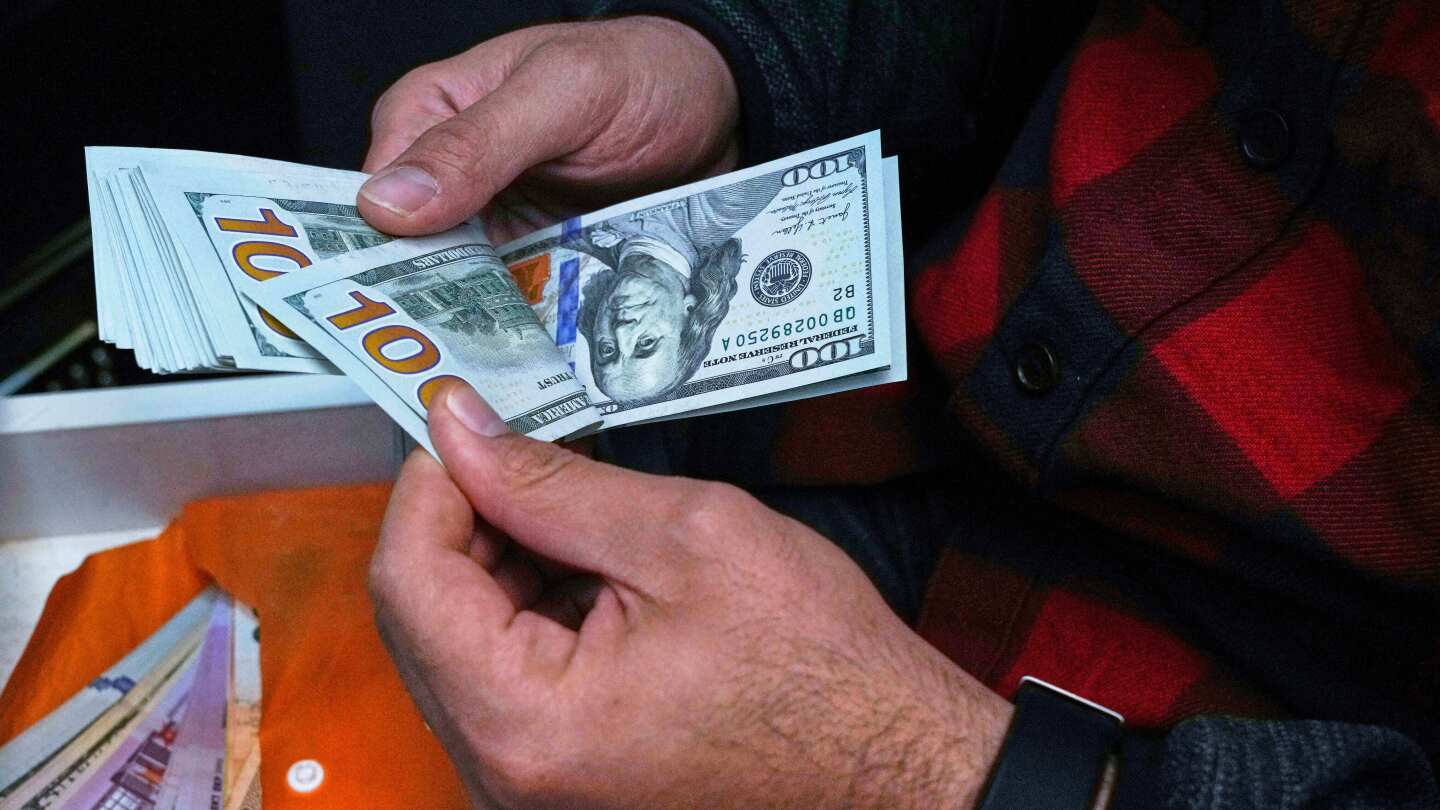
Iran’s currency, the rial, plunged to 1.42 million to the dollar on Sunday before recovering slightly to 1.38 million on Monday. This represents a catastrophic decline from the 32,000 rials to the dollar rate that existed when the nuclear accord was signed in 2015.
The currency collapse is intensifying inflation across the Iranian economy, driving up prices for food staples and essential goods. According to Iran’s state statistics center, the official inflation rate reached 42.2% in December, marking a 1.8% increase from November. Food prices have surged 72% year-over-year, while health and medical items rose 50% during the same period. Many economic analysts fear these indicators point toward potential hyperinflation.
Ordinary Iranians are bearing the brunt of this economic deterioration, with household budgets increasingly strained. The situation has been exacerbated by a recent change in gasoline pricing that has further burdened consumers. Adding to public anxiety, reports in Iranian state media indicate the government plans to increase taxes in the upcoming Iranian new year, beginning March 21.
Multiple factors have contributed to the rial’s collapse and broader economic crisis. The 2015 nuclear deal, which temporarily lifted international sanctions in exchange for restrictions on Iran’s nuclear program, unraveled after then-U.S. President Donald Trump withdrew from the agreement in 2018, reimposing severe economic sanctions.
Regional tensions have further destabilized Iran’s economy. June’s 12-day conflict with Israel and fears of a potential broader confrontation involving the United States have intensified market anxiety. Many Iranians view the deteriorating geopolitical situation as a significant driver of economic instability.
In September, the United Nations reimposed nuclear-related sanctions through the “snapback” mechanism, further isolating Iran’s economy. These measures again froze Iranian assets abroad, halted arms transactions, and imposed penalties related to Iran’s ballistic missile program.
The currency crisis represents a significant challenge for Iran’s leadership, as economic hardship often translates into political discontent. The involvement of the Grand Bazaar merchants in these protests carries particular symbolic weight, given the bazaar’s historical role in mobilizing against the Shah’s regime during the 1979 revolution.
With inflation spiraling, currency values plummeting, and international isolation deepening, Iran faces a complex economic predicament that appears increasingly difficult to resolve without significant policy changes or diplomatic breakthroughs.
Fact Checker
Verify the accuracy of this article using The Disinformation Commission analysis and real-time sources.

10 Comments
The economic crisis in Iran seems to be reaching a critical point, with the currency collapse driving widespread protests. The government will face pressure to take decisive action, but it remains to be seen whether they can restore confidence in the rial and the broader economy.
The dramatic plunge in the rial’s value must be fueling a lot of uncertainty and anxiety among Iranian citizens. Protests spreading from the mobile markets to the broader bazaar area suggests deep public discontent with the economic conditions.
It will be crucial for the government to find ways to stabilize the currency and provide relief to struggling businesses and households. Suppressing the protests may backfire if the underlying economic problems remain unresolved.
This currency crisis in Iran seems dire, with the rial hitting an all-time low. Protests by traders and merchants shutting their shops is a worrying sign of the economic hardship people are facing. It will be interesting to see how the government responds to maintain stability.
The heavy security presence at the protest sites is concerning. The government will likely try to clamp down on dissent, but that may only further inflame the situation if the economic woes continue unabated.
This currency crisis is likely to have ripple effects across various sectors of the Iranian economy, from trade and commerce to everyday household budgets. The government’s ability to stabilize the rial will be crucial in restoring confidence and preventing further unrest.
The heavy security presence at the protest sites suggests the government is taking the situation seriously, but a heavy-handed crackdown may only worsen the situation in the long run. Finding a balanced approach will be key.
This currency crisis highlights the fragility of Iran’s economy and the vulnerability of its citizens to macroeconomic shocks. The government will need to carefully balance maintaining stability with addressing the root causes of the discontent.
Cracking down on the protests may provide short-term control, but could further erode public trust in the government’s ability to manage the economy effectively. Sustainable solutions will require a nuanced, multi-faceted approach.
The scenes of traders and shopkeepers protesting in the streets of Tehran are a stark reminder of the real human toll of Iran’s economic woes. The government will face tough choices in how to respond, with both economic and political implications.