


Listen to the article
Iran Appoints New Central Bank Governor Amid Currency Crisis and Protests
Iran has appointed Abdolnasser Hemmati as the new governor of the Central Bank of the Islamic Republic of Iran, as the country grapples with an economic crisis that has triggered widespread protests following a record currency devaluation.
President Masoud Pezeshkian’s cabinet announced the appointment on Wednesday, according to the official IRNA news agency. Hemmati, 68, who previously served as minister of economic and financial affairs under Pezeshkian, replaces Mohammad Reza Farzin, who resigned on Monday.
Farzin’s resignation came just one day after some of the largest protests in three years erupted across the country in response to the Iranian rial’s collapse. The currency has plummeted to historic lows, with the U.S. dollar trading at 1.38 million rials on Wednesday, compared to 430,000 rials when Farzin took office in 2022—representing a devastating 220% devaluation during his tenure.
Economic experts attribute the civil unrest to Iran’s soaring inflation rate of 40%, which has severely eroded purchasing power for ordinary citizens. The rapid currency depreciation, combined with inflationary pressures, has driven up prices for food and daily necessities, creating an unbearable burden for many households already struggling under Western sanctions.
Government spokeswoman Fatemeh Mohajerani outlined Hemmati’s priorities on social media platform X, stating his agenda will focus on controlling inflation, strengthening the currency, and addressing widespread mismanagement in the banking sector.
Hemmati’s appointment comes with significant baggage. In March, the Iranian parliament dismissed him from his ministerial position, citing mismanagement and accusing his policies of contributing to the rial’s weakness against hard currencies.
The currency crisis has deep roots in Iran’s fraught international relations. The rial was trading at just 32,000 to the dollar at the time of the 2015 nuclear accord, which temporarily lifted international sanctions in exchange for restrictions on Iran’s nuclear program. That agreement collapsed after then-U.S. President Donald Trump unilaterally withdrew from it in 2018, triggering a renewed economic downturn.
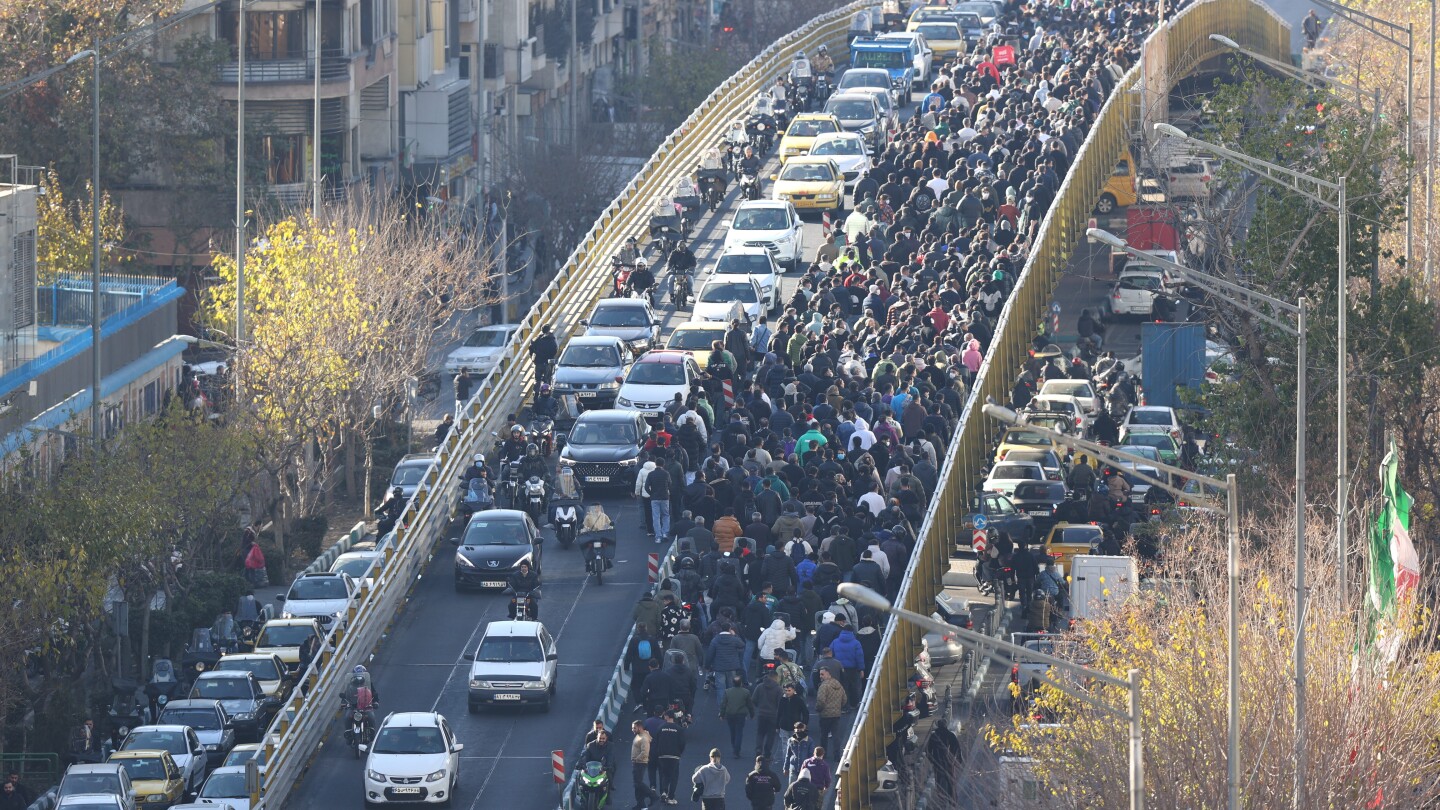
The current protests have shut down major commercial centers across the country. Witnesses report that merchants and traders have kept their shops closed in Tehran’s main bazaars, as well as in the southern city of Shiraz and western city of Kermanshah. Many traders and shopkeepers closed their businesses on Sunday to join street demonstrations in Tehran and other cities.
The situation has been further complicated by recent changes to gasoline pricing, which economists predict will only worsen inflation. This comes at a particularly sensitive time as public patience with economic hardship appears to be reaching a breaking point.
Iranian authorities have responded with a mix of economic promises and warnings against disorder. Prosecutor General Mohammad Movahedi Azad issued a stern caution on Wednesday, stating that “any effort to turn protests over economic issues to insecurity, damage to public properties or carrying out foreign scenarios, will face a strong reaction.”
Tensions have already flared in some areas. In the southern city of Fasa, local judiciary official Hamed Ostevar reported that protests had turned violent after crowds broke into the governor’s office, resulting in injuries to three policemen and the arrest of four protesters. Ostevar denied reports that a young man had been killed during the demonstrations.
The currency crisis represents one of the most serious economic challenges facing Iran’s leadership in recent years, testing both public patience and the government’s ability to stabilize the economy amid ongoing international isolation.
Fact Checker
Verify the accuracy of this article using The Disinformation Commission analysis and real-time sources.

20 Comments
Interesting update on Iran appoints new central bank governor after mass protests as currency hits record low. Curious how the grades will trend next quarter.
The cost guidance is better than expected. If they deliver, the stock could rerate.
Interesting update on Iran appoints new central bank governor after mass protests as currency hits record low. Curious how the grades will trend next quarter.
Good point. Watching costs and grades closely.
Good point. Watching costs and grades closely.
Uranium names keep pushing higher—supply still tight into 2026.
If AISC keeps dropping, this becomes investable for me.
Good point. Watching costs and grades closely.
Production mix shifting toward Business might help margins if metals stay firm.
If AISC keeps dropping, this becomes investable for me.
Uranium names keep pushing higher—supply still tight into 2026.
Good point. Watching costs and grades closely.
If AISC keeps dropping, this becomes investable for me.
Good point. Watching costs and grades closely.
If AISC keeps dropping, this becomes investable for me.
Good point. Watching costs and grades closely.
Good point. Watching costs and grades closely.
If AISC keeps dropping, this becomes investable for me.
Silver leverage is strong here; beta cuts both ways though.
Exploration results look promising, but permitting will be the key risk.