


Listen to the article
Iran Cuts Internet as Exiled Crown Prince’s Call Ignites Mass Protests
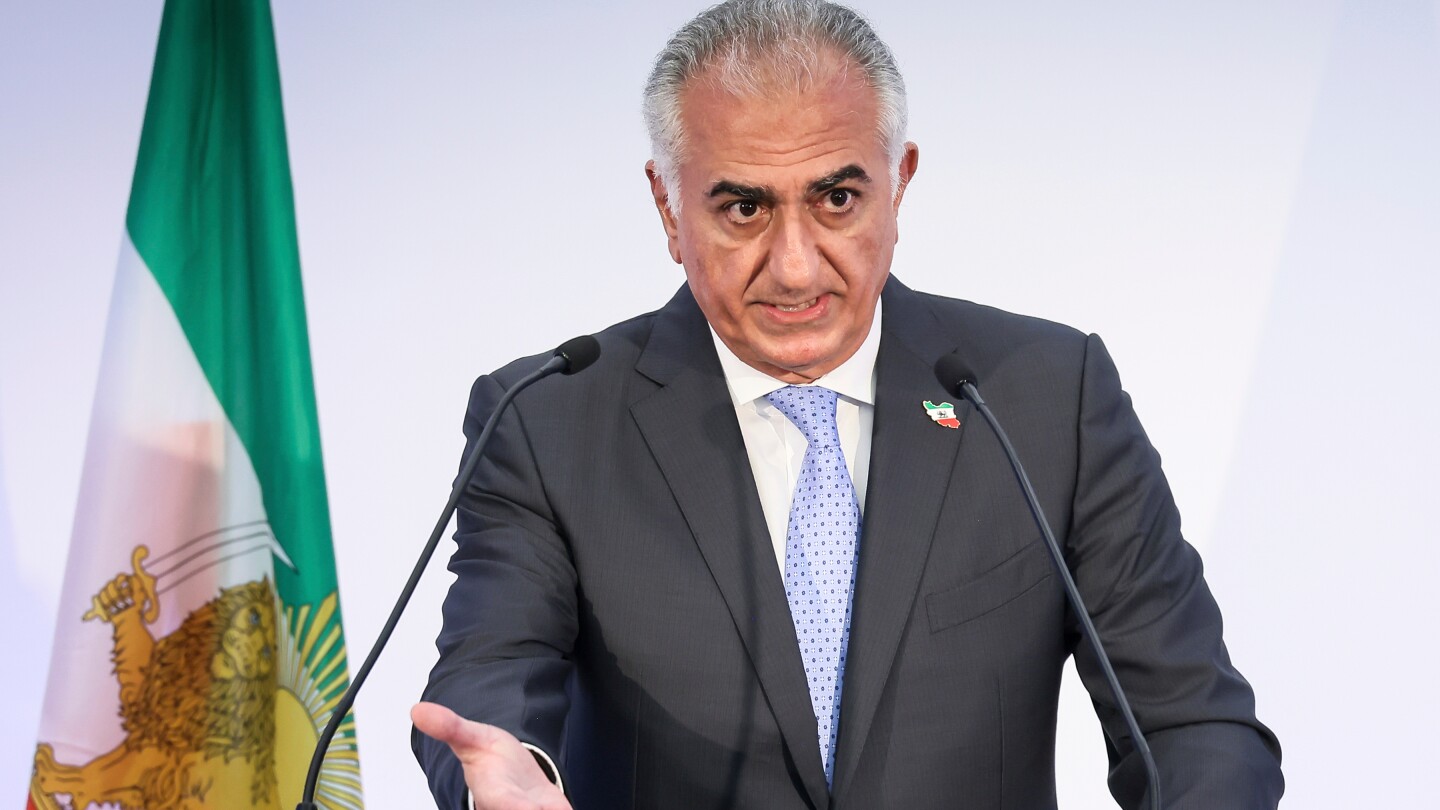
Iran’s government severed internet and international telephone connections Thursday night as thousands of protesters took to the streets following a call to action by exiled Crown Prince Reza Pahlavi. The demonstrations, which continued into Friday morning, marked a significant test of Pahlavi’s influence over the Iranian public nearly five decades after his father, the late Shah Mohammad Reza Pahlavi, fled the country on the eve of the 1979 Islamic Revolution.
The protesters stormed streets across Tehran and other cities, with many shouting from windows and balconies once the designated protest hour of 8 p.m. arrived. Demonstrators could be heard chanting “Death to the dictator!” and “Death to the Islamic Republic!” Some even praised the former monarchy, shouting: “This is the last battle! Pahlavi will return!”
The protests have intensified in recent days, with more markets and bazaars shutting down in solidarity with demonstrators. According to the U.S.-based Human Rights Activists News Agency, at least 42 people have been killed in the violence surrounding the demonstrations, while more than 2,270 individuals have been detained.
As the demonstrations expanded, Iranian authorities responded by implementing a nationwide internet blackout. CloudFlare, a prominent internet security firm, and NetBlocks, a digital rights watchdog, both attributed the outage to government interference. Attempts to contact Iranian landlines and mobile phones from outside the country failed entirely. Such digital crackdowns have historically preceded severe government repression of dissent.
Despite the communications blackout, Iranian state television continued its regular programming, with the 24-hour news channel highlighting food subsidies in its Friday morning broadcast without acknowledging the internet shutdown or the widespread unrest.
The growing protests present a mounting challenge to both Iran’s civilian government and Supreme Leader Ayatollah Ali Khamenei, who has led the country since 1989. Notably, the government’s response has been more measured than in past crackdowns, possibly influenced by U.S. President Donald Trump’s warning last week that if Tehran “violently kills peaceful protesters,” America “will come to their rescue.”
“Iran has been told very strongly, even more strongly than I’m speaking to you right now, that if they do that, they’re going to have to pay hell,” Trump told talk show host Hugh Hewitt in a recent interview.
The demonstrations began in December after Iran’s currency, the rial, collapsed to 1.4 million to $1, following tightened international sanctions and economic fallout from the recent 12-day war with Israel. What began as economic protests quickly evolved into anti-government demonstrations challenging the theocratic regime.
The current protests are unique in that they feature growing expressions of support for the pre-revolutionary monarchy, sentiments that in the past could have resulted in death sentences. This indicates a significant shift in public willingness to openly criticize the Islamic Republic’s leadership.
After the internet blackout, Pahlavi issued a statement calling on European leaders to join the U.S. in holding the Iranian regime accountable. “Iranians demanded their freedom tonight. In response, the regime in Iran has cut all lines of communication,” he said. “I call on them to use all technical, financial, and diplomatic resources available to restore communication to the Iranian people so that their voice and their will can be heard and seen.”
Analysts note that one challenge facing the protest movement has been its broadly leaderless nature. “The lack of a viable alternative has undermined past protests in Iran,” wrote Nate Swanson of the Washington-based Atlantic Council. “There may be a thousand Iranian dissident activists who, given a chance, could emerge as respected statesmen, as labor leader Lech Wałęsa did in Poland at the end of the Cold War. But so far, the Iranian security apparatus has arrested, persecuted and exiled all of the country’s potential transformational leaders.”
Meanwhile, Iranian officials have acknowledged isolated incidents of violence. The judiciary’s Mizan news agency reported that a police colonel suffered fatal stab wounds in a town outside Tehran, while the semi-official Fars news agency reported that gunmen killed two security force members and wounded 30 others in the city of Lordegan. A deputy governor in Khorasan Razavi province told state television that an attack at a police station killed five people in Chenaran, and the Revolutionary Guard reported two of its members were killed in Kermanshah.
The hard-line Kayhan newspaper published a video claiming security forces would use drones to identify protest participants, suggesting authorities are preparing for a potential escalation in their response.
Notably, Nobel Peace Prize laureate Narges Mohammadi remains imprisoned after her arrest in December. Her son, Ali Rahmani, drew parallels between the current unrest and previous protest movements: “Since Dec. 28, 2025, the people of Iran have taken to the streets, just as they did in 2009, 2019. Each time, the same demands came up: an end to the Islamic Republic, an end to this patriarchal, dictatorial and religious regime, the end of the clerics, the end of the mullahs’ regime.”
Fact Checker
Verify the accuracy of this article using The Disinformation Commission analysis and real-time sources.

5 Comments
The scale of these protests, with people chanting against the Islamic Republic, is quite remarkable. While the government’s crackdown is concerning, it shows the depth of discontent. I’m curious to see if the protesters can sustain the momentum and pressure the regime.
Cutting off communications is a heavy-handed tactic to silence dissent. However, the fact that these protests are continuing despite the crackdown shows the depth of popular discontent. I’ll be following this story closely to see if the demonstrations can gain more traction and force concessions from the regime.
This is a tense situation with the regime resorting to internet shutdowns. The protesters seem emboldened by the exiled prince’s call, but the regime is also likely to use force to try to quell the unrest. It will be important to monitor how this unfolds and the human rights implications.
Cutting off internet and communications to suppress dissent is a common tactic used by authoritarian regimes. The people of Iran are bravely standing up for their rights despite the risks. Exiled Prince Pahlavi seems to be rallying them, but it remains to be seen if the protests will lead to meaningful change.
The reported deaths and mass arrests are deeply troubling. While I appreciate the protesters’ bravery, I worry about the risks they are taking. I hope the international community can apply pressure to prevent further violence and human rights abuses by the Iranian government.