


Listen to the article
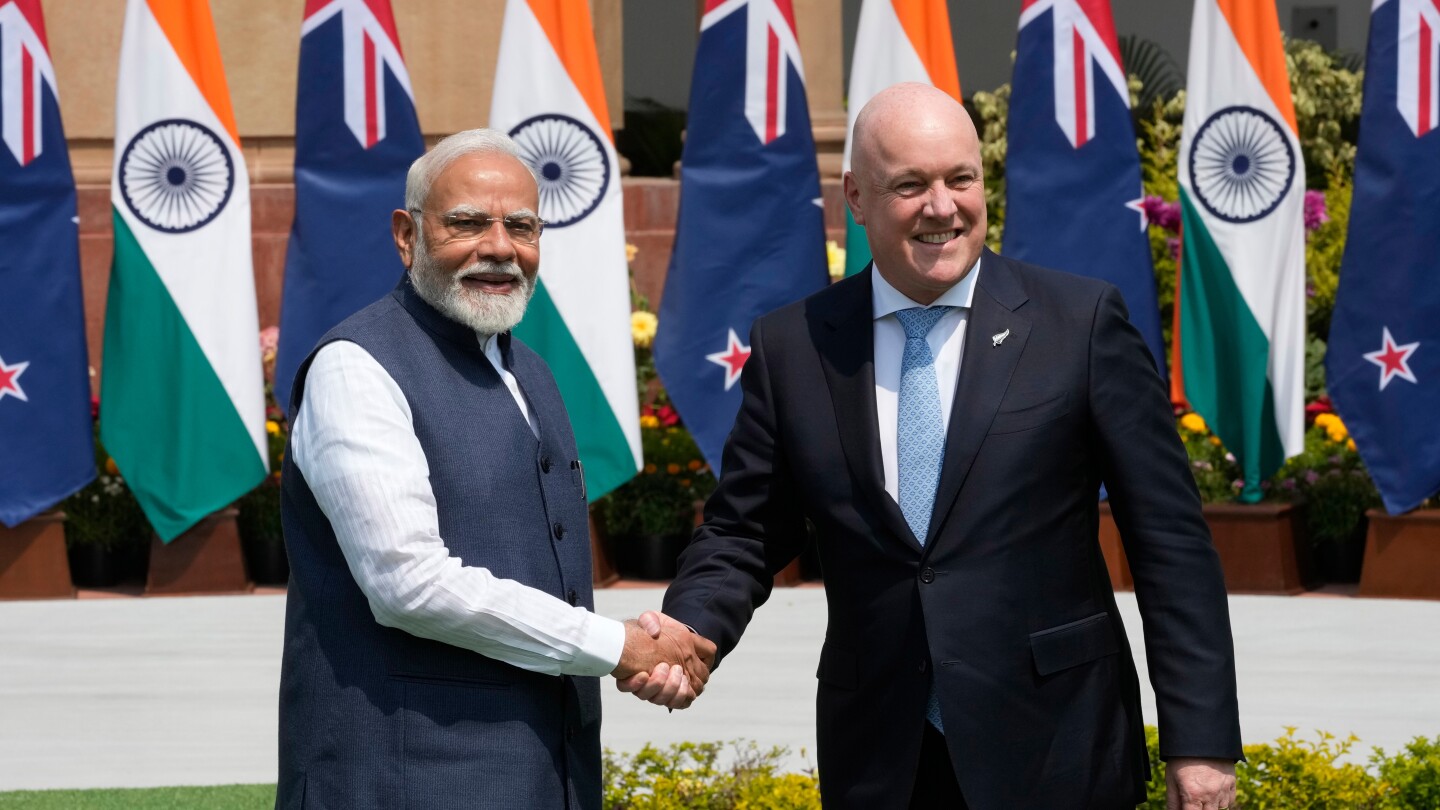
India and New Zealand have finalized a free trade agreement, officials from both countries announced Monday, marking a significant step toward strengthening economic ties amid growing global trade uncertainties.
The agreement, which comes after nine months of negotiations, is expected to be formally signed in the first quarter of next year following legal review of the negotiated text, according to India’s chief negotiator Petal Dhillon.
Under the terms of the deal, India will gain zero-duty export access for all its goods to New Zealand, while Wellington will receive duty concessions and market access for approximately 70% of India’s tariff lines. These concessions will cover about 95% of New Zealand’s exports, to be implemented in phases, Indian officials said.
The pact highlights India’s accelerating efforts to diversify its export destinations as part of a broader strategy to offset the impact of steep U.S. import tariffs imposed earlier this year. In August, the United States implemented additional tariffs, including a 25% levy on Indian goods in response to India’s continued purchases of discounted Russian oil, bringing the combined tariffs to 50%.
“This agreement demonstrates India is rapidly expanding its trade relations with countries that complement the Indian economy rather than competing with it,” said Indian Trade Minister Piyush Goyal.
Key Indian sectors expected to benefit from tax-free exports include textiles, apparel, engineering goods, leather and footwear, and marine products. For New Zealand, major gains will come in horticulture, wood exports, coal, and sheep wool and meat, among others.
New Zealand has committed to investments worth $20 billion in India over a 15-year period as part of the agreement, according to India’s Trade Ministry. New Zealand Prime Minister Christopher Luxon said in a social media post that he had spoken with Indian Prime Minister Narendra Modi about the conclusion of talks, noting that New Zealand’s exports to India are forecast to increase by $1.1 billion to $1.3 billion annually over the next two decades.
“Boosting trade means more Kiwi jobs, higher wages, and more opportunities for hard-working New Zealanders,” Luxon stated.
New Zealand Trade Minister Todd McClay emphasized the unprecedented market access gained through the deal: “New Zealand is the first country to secure any access for apples and honey into India in an FTA. We have secured the best access for kiwifruit into India of any country in the world.”
India has notably excluded several sensitive agricultural products from the agreement, including dairy imports such as milk, cream, whey, yogurt, and cheese, along with various animal and vegetable products like goat meat, onions, and almonds, citing “domestic sensitivities.”
Current bilateral trade between India and New Zealand, including merchandise goods and services, stands at $2.4 billion as of 2024. Both countries hope to double this figure within approximately five years, according to Trade Secretary Rajesh Agarwal.
Trade analyst Ajay Srivastava offered a measured assessment of the agreement, stating, “Given the limited scale of bilateral trade, the agreement is less a trade breakthrough than a framework for deeper cooperation.”
The India-New Zealand deal is part of India’s broader push to secure trade partnerships beyond traditional markets as global commerce faces pressures from unpredictable tariffs, geopolitical tensions, slowing growth, and rising protectionism.
In recent years, India has signed comprehensive economic cooperation agreements with the United Arab Emirates, Australia, and most recently, Oman. In May, Britain and India announced a significant free trade agreement reducing tariffs on products including Scotch whisky and English gin exported to India, and Indian food and spices sent to the UK.
India continues to pursue additional trade agreements, with negotiations in advanced stages with the European Union and Chile. The country also hopes to finalize terms of reference soon for negotiations with Canada.
This flurry of trade activity reflects India’s strategy to build a wider network of international agreements to help cushion against external economic shocks while supporting its ambitious export goals in an increasingly uncertain global trade environment.
Fact Checker
Verify the accuracy of this article using The Disinformation Commission analysis and real-time sources.

17 Comments
This free trade deal between India and New Zealand is timely given the current global economic uncertainties. Reducing trade barriers and diversifying partnerships could be a strategic move for both nations. Curious to see the specifics on tariff concessions and market access.
The India-New Zealand free trade agreement is an interesting development. India’s efforts to diversify its export markets amidst tensions with the US are noteworthy. Looking forward to seeing how this agreement is implemented and the effects on both economies.
The India-New Zealand FTA is an interesting development. India’s efforts to diversify its export destinations amid trade uncertainties with the US are noteworthy. Looking forward to seeing how this agreement is implemented and the impacts on both economies.
Interesting to see India and New Zealand finalizing this free trade agreement. It could boost economic ties and export opportunities for both countries as they navigate global uncertainties. I’m curious to see how the phased implementation of tariff concessions unfolds.
Yes, the strategic timing of this deal is noteworthy given the current global trade landscape. Reducing barriers and diversifying trade partnerships is prudent for both countries.
This FTA could be a strategic win-win for India and New Zealand as they seek to bolster economic ties. The details on tariff concessions and market access will be crucial. Curious to see how it affects trade flows between the two countries.
Yes, the phased implementation plan is an intriguing aspect. It will be important to monitor how the tariff reductions and increased market access play out over time.
A free trade agreement between India and New Zealand is an encouraging sign amidst global economic uncertainties. Diversifying trade partnerships is prudent, and this deal could open new opportunities for exporters in both countries.
Finalizing this free trade deal is an encouraging sign for India and New Zealand amidst global economic turbulence. Diversifying trade partnerships is prudent, and this agreement could open new avenues for exporters in both nations.
Intriguing to see India and New Zealand finalizing this FTA. Reducing trade barriers and finding new growth avenues will be crucial as both countries navigate global headwinds. The specifics on tariff concessions and market access will be worth following.
Agreed. This deal seems timely given the current global trade landscape. It will be interesting to see how the phased implementation impacts trade flows between the two nations.
This FTA seems like a positive step for India and New Zealand to strengthen commercial relations. With global headwinds, finding new growth avenues is crucial. The details on duty concessions and market access will be important to monitor.
Agreed. Especially interesting to see India gain zero-duty export access for all its goods to New Zealand. That could open up new opportunities for Indian exporters.
This FTA could be a strategic move for India and New Zealand to strengthen economic ties as global uncertainties persist. The details on tariff concessions and market access will be crucial. Curious to see how it affects trade in goods and services between the two countries.
Agreed, the phased implementation plan is an intriguing aspect that bears close monitoring. How the tariff reductions and increased market access evolve over time will be important to track.
The India-New Zealand FTA is an interesting development. India’s efforts to find new growth opportunities by diversifying its export destinations amid tensions with the US are notable. Looking forward to seeing how this agreement is implemented and its impacts on trade flows.
Yes, the phased approach to tariff concessions and market access is an intriguing aspect. It will be important to monitor how this evolves and affects commercial relations between the two countries.