


Listen to the article
In the lush countryside near Novo Repartimento, Brazil, cattle rancher Maria Gorete is implementing a pioneering approach to livestock management just three years into her ranching career. She’s tagging her 76 cattle with electronic ear tags, joining a groundbreaking initiative aimed at curbing deforestation in Para state – a region at the heart of Brazil’s environmental challenges.
The initiative requires all cattle in Para to be electronically tagged and tracked throughout their lives, creating an unprecedented monitoring system for the state’s approximately 20 million cattle. This program arrives at a critical moment as nearby Belem hosts the annual United Nations climate talks, where solutions to slow global warming are urgently sought.
“With this identification, it opens doors to the world,” said Gorete, who previously cultivated acai and cacao. “It adds value to the animals.”
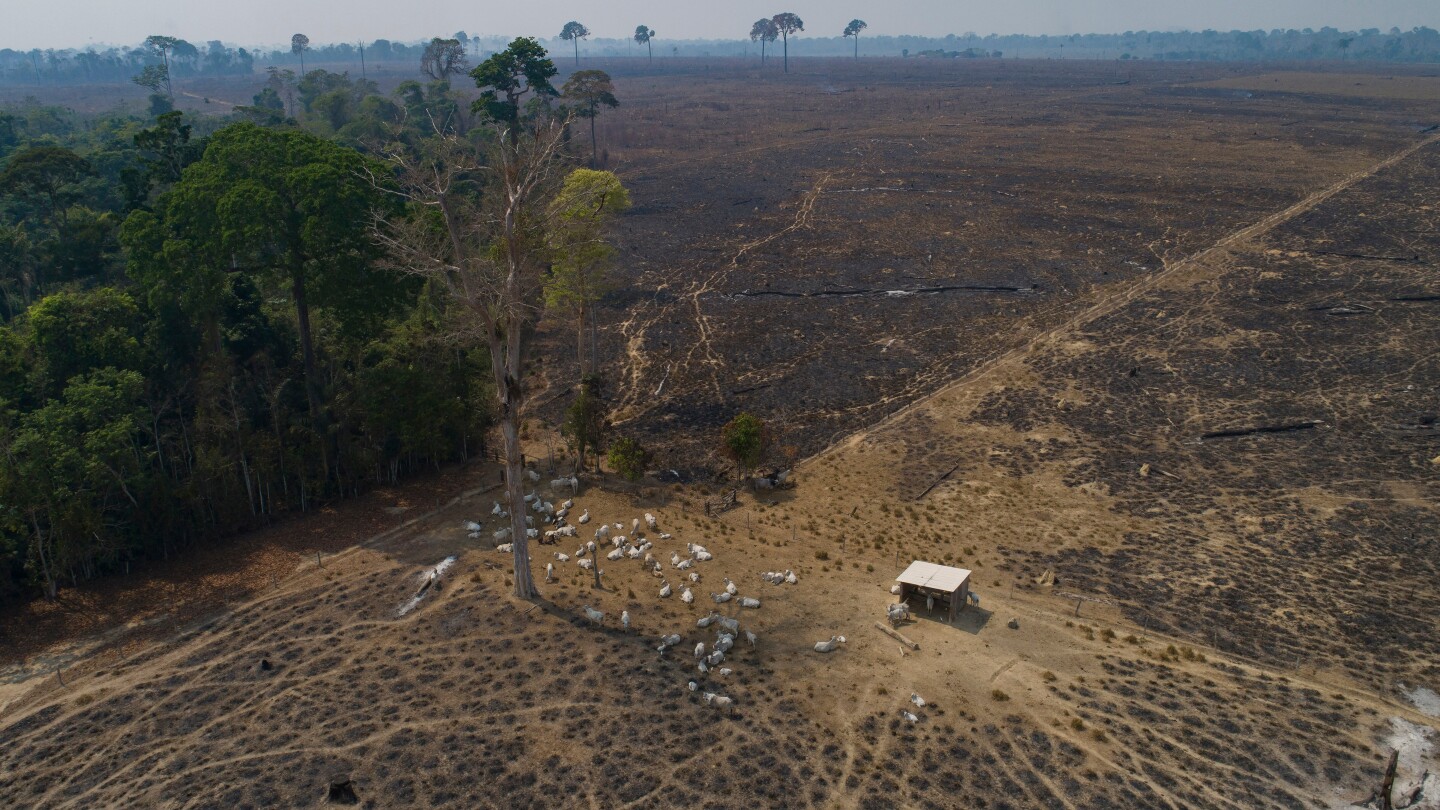
The stakes couldn’t be higher for the Amazon rainforest. Brazil has lost about 339,685 square kilometers of mature rainforest since 2001 – an area roughly the size of Germany – with more than a third of that loss occurring in Para alone. This single Brazilian state accounts for approximately 14% of global rainforest loss recorded over the past 24 years, according to Global Forest Watch.
The tracking system addresses a fundamental challenge in Brazil’s cattle industry: monitoring animals that often move between multiple farms during their lifetime. Starting next year, all cattle transported in Para must be tagged, and by 2027, every animal in the state, including those born on Para ranches, must have identification.
The tagging system is comprehensive by design. Each animal receives two tags – one with a visible identification number registered in an official government database, and a second containing an electronic chip linked to detailed information about the animal’s history, including birth date, location, ownership, and movements. Once removed, tags break and cannot be reused, reducing the risk of fraud.
Marina Piatto, executive director of Imaflora, a Brazilian agriculture and conservation NGO, explains that the system enables verification of cattle movements against satellite imagery and maps of protected areas. “The only solution is individual cattle traceability because then you can know for each movement where that cattle has been and if it has been in a place that has been deforested in the past,” added José Otavio Passos, the Brazilian Amazon director with The Nature Conservancy.
For established ranchers like Mauro Lucio, who manages 2,600 cattle on his farm in Paragominas about 290 kilometers south of Belem, the transition is straightforward. He has voluntarily tagged his herds since 2000. “For me, this is the same tool,” he said.
The financial burden of implementing this system is being carefully managed. The Brazilian government will cover tagging costs for small farmers with 100 head of cattle or fewer, while larger operations will bear their own expenses. Lucio reports recent tag costs at about 9 Brazilian reals (US$1.70) each.
Major industry players are backing the initiative. JBS, the world’s largest meatpacker – which has previously faced fines and lawsuits for buying cattle raised on illegally deforested land – is donating 2 million tags to the program. The company has stated a “zero-tolerance policy” for illegal deforestation and sees traceability as essential to addressing supply chain concerns.
“We have never had such a unique window of opportunity where you have all the sectors, the cattle ranchers, the meatpackers, the industry, the government, the NGOs, all hurtling around the same objective,” Passos observed.
Despite this unprecedented collaboration, challenges remain. Piatto cautions that illegal operations will always seek workarounds because “illegal is cheaper, it’s easier.” Christian Poirier of Amazon Watch points out that much deforestation is driven by “well-funded crime syndicates, not by small landholders,” and suggests that determined actors might still circumvent the new regulations.
To address these concerns, a coordinating committee of government, industry, and producer representatives is developing fraud prevention measures and strategic law enforcement protocols. Fernando Sampaio, sustainability director of the Brazilian Association of Meat Exporting Industries, notes they’re creating systems to identify suspicious patterns, such as farms selling more animals than their size would logically support.
“These are the guys that need to be excluded from the supply chain,” Sampaio said of the minority of operations run by criminal enterprises.
As the world watches Brazil’s environmental policies, this cattle tracking initiative represents a significant test case for balancing agricultural production with conservation imperatives in one of Earth’s most critical ecosystems.
Fact Checker
Verify the accuracy of this article using The Disinformation Commission analysis and real-time sources.

6 Comments
Monitoring the cattle supply chain is crucial to halt the alarming Amazon deforestation rates. Integrating technology like ear tags can enhance visibility and accountability, though implementation challenges remain.
Agreed, the scale of this program across 20 million cattle is ambitious but necessary. Strong enforcement and buy-in from all stakeholders will be key to its success.
It’s encouraging to see efforts like this that aim to balance economic development and environmental protection in the Amazon. Tracing cattle origins and movements could be an important step, if done transparently and equitably.
This electronic cattle tracking initiative in Brazil’s Para state is a promising approach to curb deforestation and improve transparency in the beef industry. Providing traceability for cattle could incentivize sustainable practices and open new markets for ranchers.
While technological solutions like cattle tracking can assist in slowing deforestation, broader policy reforms and stakeholder engagement will be essential for long-term, sustainable change in the Amazon region.
The electronic tagging program presents an opportunity to transform the beef industry in Para state, though challenges like cost and farmer adoption will need to be addressed. Careful monitoring and incentives will be crucial.