


Listen to the article
Hyundai-owned Boston Dynamics made waves at the CES tech showcase in Las Vegas on Monday with the first public demonstration of its humanoid robot Atlas, intensifying competition in the rapidly evolving humanoid robotics market that includes rivals like Tesla.
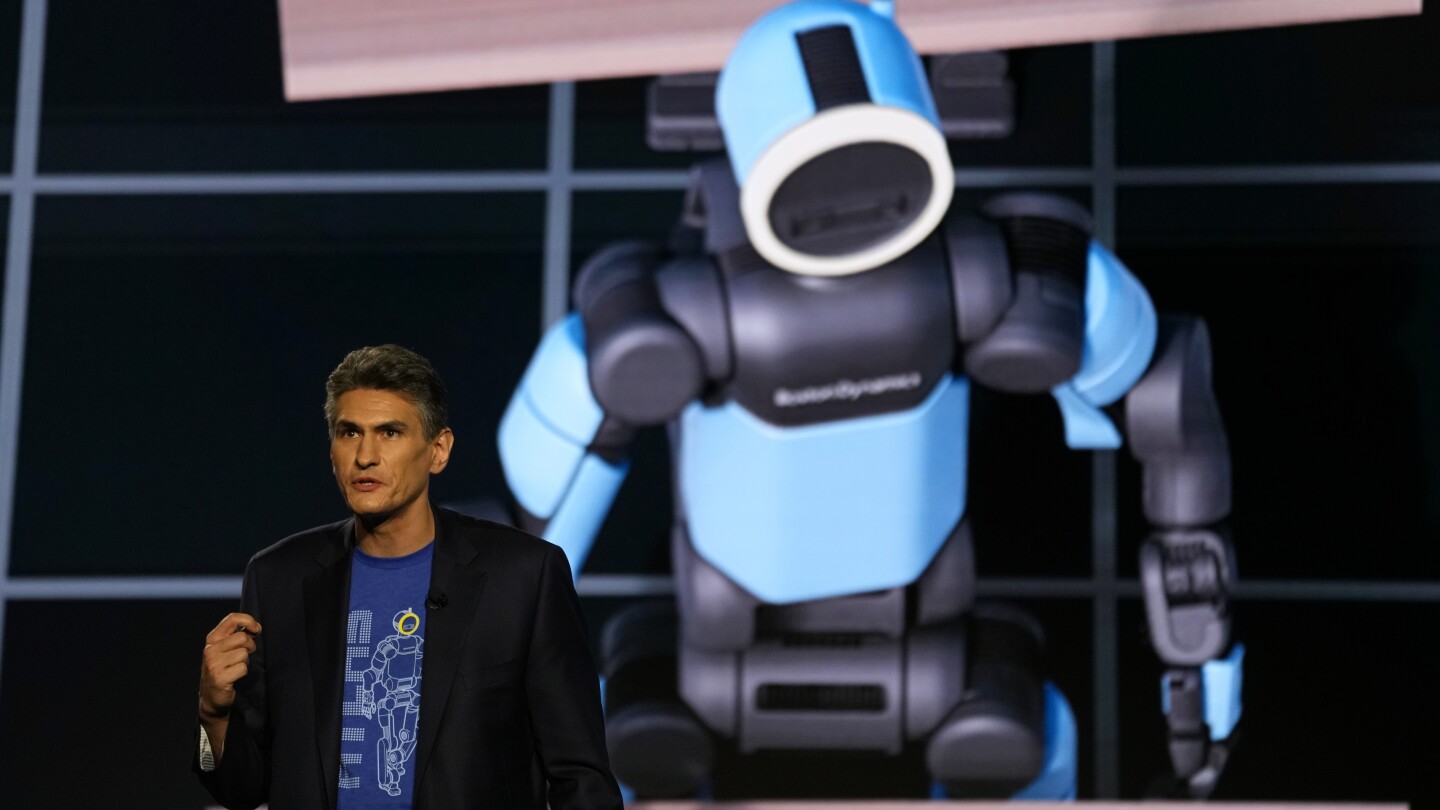
“For the first time ever in public, please welcome Atlas to the stage,” announced Zachary Jackowski, Boston Dynamics’ general manager for humanoid robots, as the life-sized machine rose from the floor of a Las Vegas hotel ballroom.
The robot captivated the audience with fluid movements around the stage, waving to spectators and rotating its head with owl-like precision. While an engineer remotely controlled Atlas during this demonstration, Jackowski explained that the robot is designed to operate autonomously in real-world applications.
Boston Dynamics revealed that a production version of Atlas is already being manufactured and will be deployed by 2028 at Hyundai’s electric vehicle facility near Savannah, Georgia. There, the robots will assist with automobile assembly operations, marking a significant step in industrial automation.
The Massachusetts-based robotics firm, controlled by South Korean automotive giant Hyundai since 2021, has been developing advanced robotics for decades. The company first gained commercial success with Spot, its four-legged robot that resembles a dog. In a choreographed opening sequence at the event, a group of Spot robots performed a synchronized dance to K-pop music.
Alongside the Atlas unveiling, Hyundai announced a strategic partnership with Google’s DeepMind, which will integrate its artificial intelligence technology into Boston Dynamics robots. This collaboration represents a reunion of sorts—Google acquired Boston Dynamics in 2013 before selling it to Japanese conglomerate SoftBank. Hyundai later purchased the company from SoftBank in 2021 for approximately $1.1 billion.
Public demonstrations of humanoid robots remain uncommon in the industry, largely because technical failures can attract negative publicity. This caution was illustrated last November when a Russian humanoid robot fell face-first during a demonstration. Most robotics startups prefer controlled video presentations on social media, where they can highlight successful operations and edit out malfunctions.
The Atlas demonstration concluded without any apparent issues as the prototype used dramatic arm gestures to introduce a static model of the production version, which featured a slightly different design in blue coloration.
The robotics sector has experienced substantial investment growth, fueled by enthusiasm from the commercial AI boom and recent technological breakthroughs. However, many experts believe truly versatile humanoid robots capable of performing diverse tasks in workplaces or homes remain years away from widespread adoption.
“I think the question comes back to what are the use cases and where is the applicability of the technology,” said Alex Panas, a McKinsey partner who moderated a robotics panel at CES. “In some cases, it may look more humanoid. In some cases, it may not.”
Panas added that “the software, the chipsets, the communication, all the other pieces of the technology are coming together, and they will create new applications.”
Current humanoid robots still lack the dexterity required to perform many human jobs effectively. Nevertheless, debates about their potential impact on employment are expected to intensify as their capabilities improve. Notably, the same Hyundai facility in Georgia where Atlas will be tested was the subject of a federal immigration raid last year, resulting in the arrest of hundreds of workers, including over 300 South Korean citizens.
The demonstration represents a significant milestone in humanoid robotics development, as major companies increasingly compete to create machines that can work alongside humans in manufacturing, logistics, and potentially service industries. As this technology advances, questions about economic impact, regulatory frameworks, and human-machine collaboration will likely become increasingly prominent in public discourse.
Fact Checker
Verify the accuracy of this article using The Disinformation Commission analysis and real-time sources.

13 Comments
The fluid movements and autonomous capabilities of the Atlas robot are truly remarkable. I’m curious to see how this technology will evolve and be applied in various industries beyond just automotive manufacturing. The potential for humanoid robots is both exciting and a bit daunting.
The Atlas robot from Boston Dynamics looks like a significant advancement in humanoid robotics. I’m interested to learn more about the specific safety features and fail-safes that have been implemented to ensure the reliable and responsible operation of these machines in an industrial setting.
While the Atlas robot is an engineering marvel, I have some concerns about the implications of advanced humanoid robots in industrial settings. How will this affect human jobs and the labor force? Careful consideration of the social and economic impacts will be crucial as this technology evolves.
While the unveiling of the Atlas robot is an impressive technological feat, I can’t help but wonder about the potential job displacement that could occur as a result of increased industrial automation. How will Hyundai and Boston Dynamics address the socioeconomic impacts of deploying these advanced robots?
It’s exciting to see Boston Dynamics and Hyundai collaborating on this humanoid robot project. Atlas could be a game-changer for automotive assembly, boosting efficiency and precision. I’m curious to see how the robots perform in real-world factory conditions.
Wow, the new Atlas robot from Boston Dynamics looks incredibly advanced! The fluid movements and autonomous capabilities are really impressive. I wonder how this technology will impact industrial automation and the future of manufacturing.
The unveiling of the Atlas robot at CES is a significant milestone for the robotics industry. I’m curious to learn more about the specific applications Hyundai has planned for these machines in their electric vehicle facility. Integrating autonomous robots into manufacturing processes will be a complex challenge.
Good point. The integration of Atlas robots into Hyundai’s EV plant will be an interesting case study to follow. Balancing automation and human labor will be key to ensuring a smooth transition.
I’m impressed by the technological advancements showcased in the Atlas robot. However, as with any transformative technology, there are bound to be social and ethical considerations that need to be addressed. I hope Hyundai and Boston Dynamics are thoughtfully considering the broader implications of this technology.
Absolutely. The responsible development and deployment of advanced robotics like Atlas will be crucial. Careful stakeholder engagement and thorough risk assessments should be priorities.
The fluid movements and autonomous capabilities of the Atlas robot are really impressive. I’m curious to see how this technology will be applied in Hyundai’s electric vehicle facility and what kind of performance and efficiency gains they can achieve. Careful integration with human workers will be key.
The unveiling of the Atlas robot at CES is an exciting development, but it also raises important questions about the future of work and the role of automation in industrial settings. I hope Hyundai and Boston Dynamics are proactively addressing the potential societal and economic impacts of this technology.
Integrating advanced humanoid robots like Atlas into Hyundai’s manufacturing processes is a bold move. I’m curious to see how this technology performs in real-world conditions and whether it can truly enhance productivity and efficiency without compromising worker safety and job security.