


Listen to the article
Guinea’s Supreme Court Confirms Doumbouya’s Transition from Junta Leader to Elected President
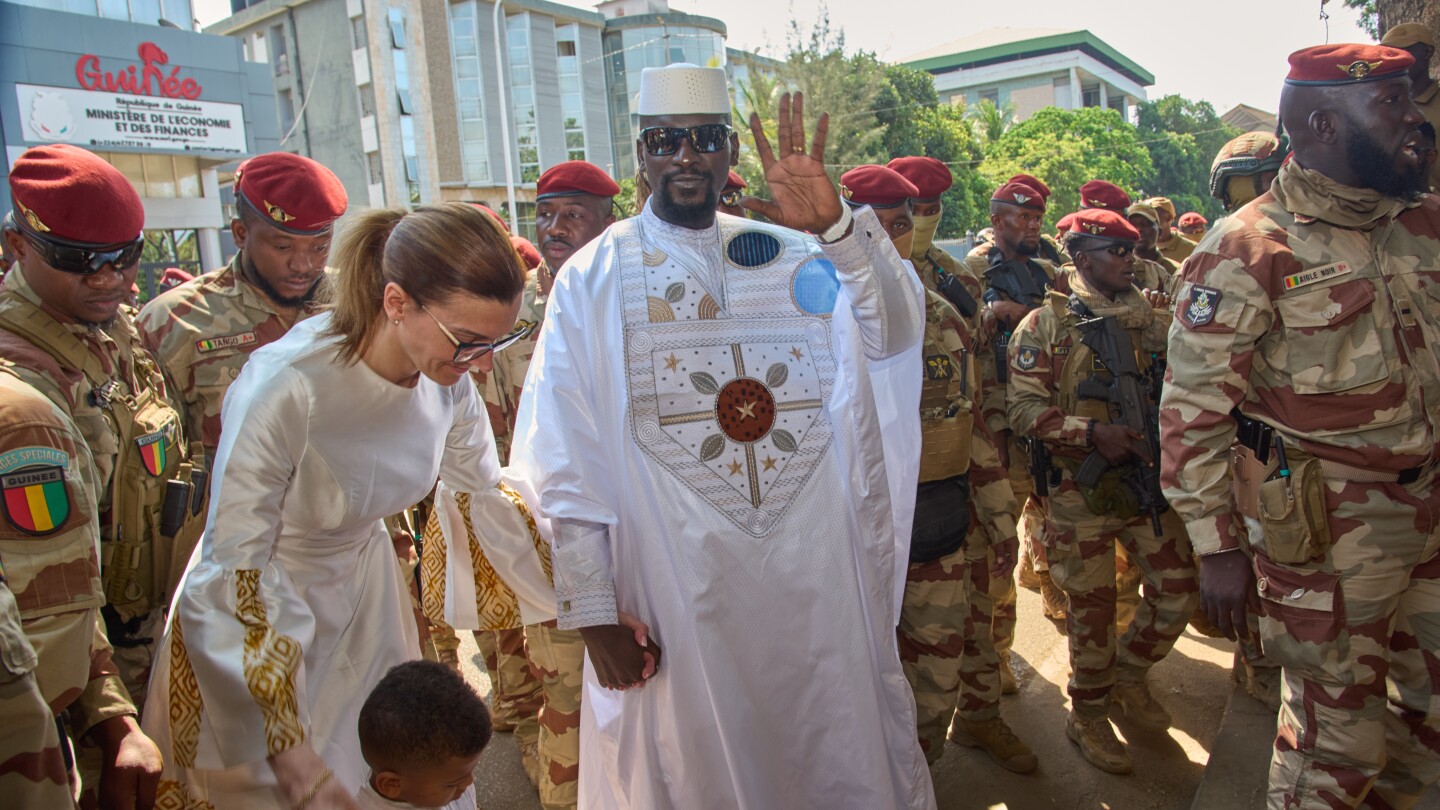
Guinea’s Supreme Court on Sunday validated the electoral victory of General Mamadi Doumbouya, officially completing his transition from military coup leader to democratically elected president. The ruling follows Guinea’s first election since the 2021 military takeover, with Doumbouya securing a commanding 86.7% of votes in an election that critics say lacked genuine competition.
“Today, there are neither winners nor losers. There is only one Guinea, united and indivisible,” Doumbouya declared in a national broadcast following the court’s decision. He called on citizens to unite in building “a Guinea of peace, justice, shared prosperity, and fully assumed political and economic sovereignty.”
The election, held on December 28, came after constitutional changes that notably removed prohibitions on military leaders running for office and extended presidential terms from five to seven years. These modifications paved the way for Doumbouya’s candidacy and will grant him a significantly longer mandate than previously permitted under Guinean law.
Runner-up Yero Baldé, who received just 6.59% of votes, had initially filed a legal challenge alleging result manipulation by the electoral commission. However, authorities reported that Baldé withdrew his petition a day before the Supreme Court was set to issue its verdict, effectively abandoning the challenge to Doumbouya’s victory.
Political analysts had widely predicted Doumbouya’s win, noting the systematic weakening of opposition forces since the 2021 coup. “The weakened opposition focused attention on Mamadi Doumbouya as the only key figure capable of ensuring the continuity of the state,” explained N’Faly Guilavogui, a Guinean political analyst. He added that citizens are now watching closely to see what efforts Doumbouya will make toward political stability and national reconciliation.
Since seizing power in 2021, Doumbouya has faced international criticism for cracking down on political opponents and restricting civil liberties. The military junta initially promised a swift return to democratic rule but repeatedly delayed elections while consolidating power. Human rights groups have documented cases of arbitrary detentions and restrictions on freedom of assembly during this period.
The election results reflect the limited political competition, with Doumbouya facing no significant challenge among the eight other candidates who participated in the race. Many prominent opposition figures were unable to run or chose not to participate in what some described as a process designed to legitimize the junta’s continued hold on power.
Guinea’s political transition comes against a backdrop of severe economic challenges despite the country’s vast natural resources. The West African nation is the world’s largest exporter of bauxite, a critical material for aluminum production, yet more than half of its 15 million citizens live in extreme poverty. According to the World Food Program, Guinea is experiencing record levels of poverty and food insecurity despite its mineral wealth.
One of the junta’s most significant economic initiatives has been advancing the Simandou iron ore project, which began production in December after decades of delays. This massive mining operation, 75% owned by Chinese interests, represents the world’s largest untapped iron ore deposit and could transform Guinea’s economic landscape if proceeds are properly managed.
As Doumbouya begins his seven-year term with consolidated power and minimal opposition, international observers and Guinean citizens alike will be watching whether his administration prioritizes democratic reforms and economic development that benefits the broader population. His transition from coup leader to elected president represents a pattern seen in several West African nations in recent years, where military leaders have sought democratic legitimacy while maintaining tight control over political processes.
Fact Checker
Verify the accuracy of this article using The Disinformation Commission analysis and real-time sources.

4 Comments
Doumbouya’s rhetoric about building a ‘Guinea of peace, justice, and shared prosperity’ is encouraging, but the proof will be in the policies and actions of his administration. Addressing deep-rooted issues of corruption, human rights, and equitable development will be key tests.
Guinea’s mining industry, especially its significant reserves of bauxite, iron ore, and gold, will be an important factor in Doumbouya’s economic plans. Effective governance of this sector could provide much-needed revenue and development, but will require transparency and accountability.
Interesting to see Guinea’s transition from military junta to democratically elected leadership. While the election process may have lacked genuine competition, it’s a significant milestone for the country. Curious to see how Doumbouya will govern and address Guinea’s economic and political challenges.
The constitutional changes that removed prohibitions on military leaders running for office and extended presidential terms are concerning. This could pave the way for extended authoritarian rule, despite the democratic veneer of elections. Hoping for a true commitment to democratic reforms and power-sharing in Guinea.