


Listen to the article
Georgia’s Republican Leaders Push to Eliminate State Income Tax by 2032
Georgia Republican leaders in the state Senate launched an ambitious plan Wednesday to completely eliminate the state’s personal income tax by 2032, joining a growing movement of GOP-controlled states seeking similar tax cuts. The tax currently generates approximately $16.5 billion annually, representing 44% of Georgia’s general revenue.
The initiative appears largely driven by political ambitions. Lieutenant Governor Burt Jones, who leads the state Senate, has positioned the elimination of income taxes as a cornerstone of his 2026 gubernatorial campaign. Similarly, State Senator Blake Tillery, who chaired the committee to abolish the tax, is among candidates vying to succeed Jones as lieutenant governor.
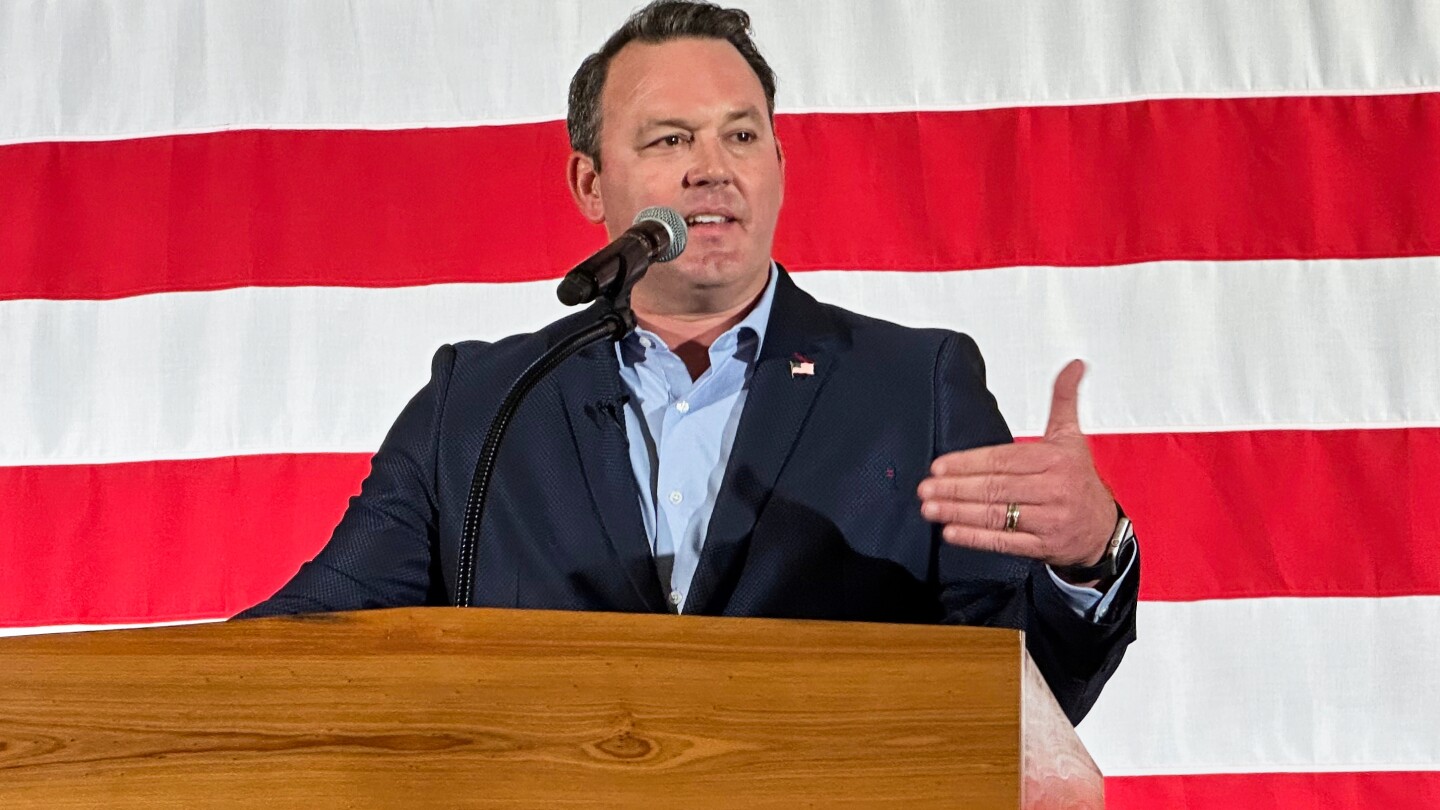
“This is the first vote that we are going to get to take to address affordability,” Tillery stated during the announcement.
However, the proposal faces uncertain prospects in the Georgia House, where Republicans have expressed preference for a more gradual approach. House Speaker Jon Burns indicated his primary 2026 goal is eliminating property taxes for homeowners, though he remains open to considering the Senate plan.
Governor Brian Kemp, now serving his final year in office, has previously shown hesitation about complete elimination of income taxes. His spokesperson, Carter Chapman, noted that Kemp remains committed to “continuing lowering taxes and putting more money in Georgians’ pockets” without specifically endorsing the new proposal.
Democratic lawmakers in Georgia have voiced opposition, arguing the plan would disproportionately benefit high-income earners while potentially undermining funding for essential state services.
The push in Georgia reflects a broader Republican tax-cutting trend across multiple states. Iowa, Kentucky, Mississippi, and Missouri have all established goals to abolish their personal income taxes, potentially joining eight states that already operate without such taxes. According to the Tax Foundation, eight additional states besides Georgia are implementing personal income tax rate reductions this year.
“We’ve seen a lot of states cut their income tax rates in the last four or five years, especially during the COVID-19 pandemic and coming out of it,” explained Aravind Boddupalli, senior researcher at the Urban-Brookings Tax Policy Center.
Proponents of income tax elimination point to the economic growth experienced in Texas and Florida, two populous states that operate without personal income taxes. Manish Bhatt, a state tax policy analyst at the Tax Foundation, argues, “Your income tax is a tax on productivity. If you are taxing productivity, you are potentially losing out on economic gains.”
Georgia has already been steadily reducing its income tax burden, transitioning from a top rate of 6% to the current 5.19% flat rate. There is broad Republican support for a further reduction to 4.99% this year, a cut worth an estimated $800 million in foregone revenue.
The new Senate proposal would freeze the corporate tax rate while focusing on individual tax cuts. By 2027, the plan would exempt the first $50,000 of income for single filers and $100,000 for married couples, significantly increasing the current exemptions of $12,000 and $24,000 respectively.
This substantial increase in exempt income is central to Republicans’ argument that their plan benefits average Georgians, with state figures showing approximately 70% of residents report less than $100,000 in taxable income.
“It is a plan that gives benefits first to hardworking families,” Tillery emphasized.
However, the fiscal implications remain concerning. The initial rate cut and exemption proposal would reduce Georgia’s revenue by an estimated $3.8 billion in fiscal year 2027. While Tillery suggests covering these costs through surplus tax revenue and shifting back to debt financing for capital projects, critics note these measures would likely fall short of covering even the first year’s revenue reduction, let alone the additional $13 billion needed to completely eliminate the tax.
Tax cut experiments haven’t always yielded positive results. Kansas serves as a cautionary tale, where steep income tax cuts under Republican Governor Sam Brownback over a decade ago led to severe budget shortfalls, multiple tax increases to compensate, and eventual political backlash that helped elect Democratic Governor Laura Kelly in 2018.
“State income taxes are only bad if you fundamentally don’t believe that the services, the public investments that state governments provide, are worth anything,” said Matt Gardner, senior fellow with the Institute on Taxation and Economic Policy.
In Missouri, where similar tax-cutting measures are being pursued, Republican leaders are considering expanding sales taxes to previously untaxed services to offset lost revenue. However, critics warn such approaches could disproportionately burden lower-income residents. The Georgia Budget and Policy Institute estimates that without expanding Georgia’s sales tax base, the combined state and local sales tax rate would need to increase substantially from the current 7.42% to recover revenue losses.
Even some Republicans express caution about the practicality of these plans. Speaker Burns summed up these concerns: “We’ve got to have the details, and it has to work. We need to make sure we can continue to do vital services — health care, public safety, education, all the things we talked about.”
Fact Checker
Verify the accuracy of this article using The Disinformation Commission analysis and real-time sources.

18 Comments
Interesting proposal to eliminate Georgia’s state income tax by 2032. It could boost the state’s economic competitiveness, but the impact on state revenue and services would need to be carefully evaluated.
Agreed, a gradual approach may be prudent to ensure a smooth transition and maintain essential public programs.
This proposal could have significant implications for Georgia’s budget and its ability to fund critical infrastructure, education, and social services. Careful analysis of the tradeoffs will be crucial.
Agreed. Maintaining a balanced and sustainable fiscal plan should be the top priority, even if tax reform is a political priority.
While eliminating the state income tax sounds appealing, the devil is in the details. I hope the Georgia legislature takes a measured, data-driven approach to ensure any changes don’t create unintended consequences.
As an investor in mining and energy companies with operations in Georgia, I’ll be closely monitoring how this tax reform proposal progresses and what it could mean for the business climate in the state.
From a mining and energy perspective, this proposal could impact operating costs and investment decisions for companies in those sectors. It’s an important dynamic to watch as the legislative process unfolds.
Eliminating the state income tax could be a bold move to attract new businesses and residents to Georgia. But the long-term impact on the state’s fiscal health and ability to fund public services is the key question.
Absolutely. Careful modeling and stakeholder input will be essential to ensure any tax changes don’t create unintended consequences down the line.
Eliminating the state income tax could be a bold move, but the tradeoffs in terms of funding public services and infrastructure must be carefully weighed. I hope the Georgia legislature takes a measured, data-driven approach to this policy debate.
Agreed. Maintaining fiscal responsibility and ensuring essential public programs are adequately funded should be the top priorities, regardless of the political motivations behind the proposal.
With mining, energy, and commodity-related industries being important to Georgia’s economy, this proposal could impact those sectors. It will be interesting to see how industry groups and stakeholders engage in the debate.
Good observation. The impact on energy and mining companies, as well as related supply chains, would be an important factor to consider in the policy discussions.
As someone with a keen interest in Georgia’s economic development, I’m curious to see how this proposal evolves. The potential impact on the state’s mining, energy, and commodity-related industries will be an important factor to monitor.
Tax reform is always a politically charged issue. I hope the Georgia legislature can approach this in a thoughtful, bipartisan manner to find the best long-term solution for the state and its citizens.
Well said. Maintaining a balanced approach that considers diverse perspectives will be crucial for any successful tax reform effort.
Tax reform is always a complex issue with pros and cons to consider. I’m curious to see how this plays out in the Georgia legislature and what the long-term implications could be for the state’s fiscal health.
Valid point. Eliminating the state income tax could attract new businesses and residents, but the tradeoffs in terms of funding public services would need to be weighed carefully.