


Listen to the article
Former Google executives testified Monday that the tech giant’s investment in Indonesian ride-hailing company GoTo was entirely separate from the country’s Education Ministry’s decision to purchase Chromebooks during the COVID-19 pandemic, contradicting a central claim in a high-profile corruption case.
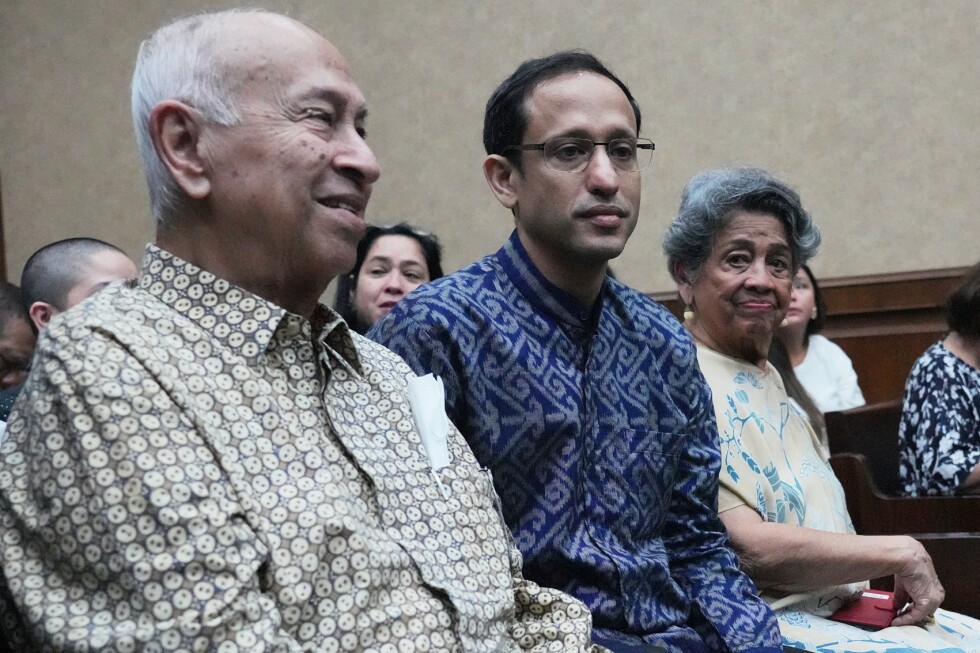
The testimony came during the trial of Nadiem Anwar Makarim, the 41-year-old co-founder of Gojek and former education minister, who was arrested in September following an investigation into the procurement of Chromebook laptops that prosecutors allege caused $125 million in state losses.
Scott Beaumont, former president of Google Asia Pacific, Caesar Sengupta, former general manager and vice president, and William Florence, a former executive, all appeared via Zoom at Jakarta’s Corruption Court to refute allegations that Google’s investments were linked to preferential treatment in government contracts.
“There was no connection at all between Google’s investment in GoTo and any of the conversations with the Ministry of Education,” Beaumont told the three-judge panel, directly challenging prosecutors’ claims that Makarim had pressured Google to invest in PT Aplikasi Karya Anak Bangsa (PT AKAB), Gojek’s parent company.
The case has drawn significant attention in Indonesia’s business and political circles. Prosecutors allege that Makarim “enriched himself” through the procurement program, which saw the purchase of more than 1.2 million Chromebooks for schools during the pandemic when remote learning became necessary. According to the indictment, Makarim favored Google’s Chromebook despite a ministry research team determining the laptop model was ineffective in regions with limited internet access.
Lead prosecutor Muhammad Fadli Paramajeng has argued that the program was strategically designed to strengthen Google’s dominance in Indonesia’s education sector and was directly linked to Google’s investments of approximately $787 million in PT AKAB through Google Asia Pacific. Prosecutors claim Makarim personally received about 809 billion rupiah ($48.2 million) in connection with the program.
Google has consistently maintained that Chromebooks are specifically designed for classroom environments, including those in remote areas. While the laptops are optimized for cloud computing, the company says they remain functional offline even without internet connectivity. Google has also emphasized that it only licenses software and does not control Chromebook pricing.
Makarim’s journey from tech entrepreneur to cabinet minister and now defendant highlights Indonesia’s complex intersection of business and politics. A Harvard University graduate, he co-founded Gojek in 2009 and helped build it into a technology unicorn valued at over $10 billion by 2019. That year, he stepped down from his corporate roles to join then-President Joko Widodo’s cabinet as education minister, a position he held until his arrest.
Prosecutors have characterized Makarim’s resignation from PT AKAB and Gojek as a “strategic concealment” intended to mask conflicts of interest. They allege that while Makarim officially divested from his companies, he appointed close associates as directors and “beneficial owners,” allowing him to maintain indirect control over company decisions while serving as minister.
The stakes for Makarim are extremely high. If found guilty, he faces a potential life sentence. Throughout the proceedings, he has maintained his innocence, stating he never personally received funds from the Chromebook procurement or related services. His defense team argues that he properly divested from PT AKAB upon taking office and that his personal wealth actually decreased by more than 50% during his term as minister.
The defense has also emphasized that procurement decisions were made by technical teams and officials rather than the minister himself, challenging the prosecution’s characterization of Makarim’s involvement in the contracting process.
Two former Education Ministry officials and a former tech consultant have also been charged in connection with the case, while another staff member remains at large. A verdict in this closely watched corruption trial could come as early as this month, potentially setting important precedents for cases involving conflicts of interest between government officials and the technology sector in Indonesia.
Fact Checker
Verify the accuracy of this article using The Disinformation Commission analysis and real-time sources.

10 Comments
It’s good to see the former Google executives testifying and providing their perspective on this case. Maintaining the integrity of government procurement processes is crucial, especially for critical technologies like Chromebooks.
Absolutely. Transparency and accountability are essential, regardless of the companies or individuals involved.
Interesting to see former Google execs testify and refute the claims made in this corruption case. It’s important to have a clear separation between corporate investments and government procurement decisions.
Agreed, transparency is key in these types of cases. The testimony appears to directly challenge the prosecutors’ allegations.
This case touches on the complex interactions between technology companies, government procurement, and allegations of improper influence. I’ll be following the trial closely to see how the evidence unfolds.
Same here. It’s a nuanced issue that requires careful examination of the facts and potential conflicts of interest.
The alleged $125 million in state losses is a significant figure. I’m curious to learn more about the specifics of the Chromebook procurement and how it may have been influenced, if at all, by Google’s investments.
This case highlights the complexities around technology procurement, especially in emerging markets. It will be important to see how the trial plays out and whether the evidence supports the prosecutors’ claims.
Indeed, these are sensitive issues where the lines can get blurred. The testimonies from the former Google execs provide an important counterpoint.
The allegations of corruption in this case are concerning, but it’s encouraging to see the former Google executives challenging the claims. Separating corporate investments from government contracts is a delicate balance.