


Listen to the article
Federal Government Selects Contractors to Modernize Aging Air Traffic Radar Systems
The U.S. federal government has awarded contracts to RTX and Spanish firm Indra to replace 612 aging radar systems across the nation as part of an extensive overhaul of America’s air traffic control infrastructure. The announcement came Monday from Transportation Secretary Sean Duffy and the Federal Aviation Administration, setting an ambitious completion date of summer 2028.
“Our radar network is outdated and long overdue for replacement. Many of the units have exceeded their intended service life, making them increasingly expensive to maintain and difficult to support,” FAA Administrator Bryan Bedford said in the announcement.
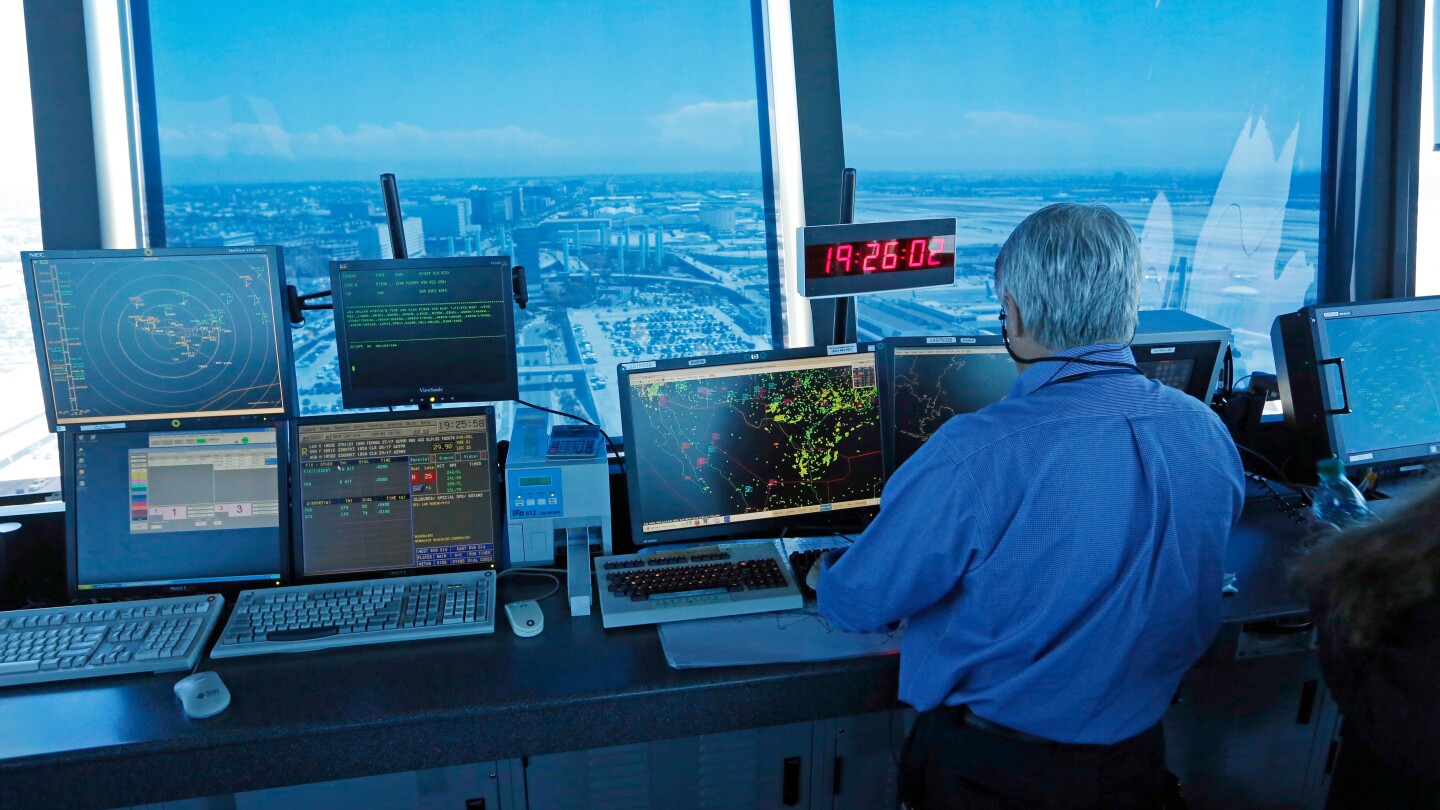
The current radar systems date back to the 1980s, with many components no longer in production. The situation has become so dire that the FAA occasionally searches online marketplaces like eBay to locate spare parts for the obsolete equipment. The agency currently allocates most of its $3 billion equipment budget simply maintaining the fragile legacy systems, which in some locations still rely on outdated technology such as floppy disks.
The modernization initiative comes in response to increasing system failures that have disrupted air travel across the country. Last spring, technical breakdowns twice disabled radar systems for air traffic controllers managing airspace around Newark Liberty International Airport, a major transportation hub. These outages resulted in thousands of flight cancellations and delays, highlighting the urgent need for modernization.
While the FAA’s current system incorporates redundancy measures to ensure safety, there have been multiple incidents where both primary and backup systems failed simultaneously. A notable example occurred at the Philadelphia facility responsible for directing air traffic into and out of Newark airport, leaving controllers without critical tools.
The administration has established an aggressive timeline to complete the overhaul by late 2028, which would coincide with the end of President Donald Trump’s current term. The new radar infrastructure will replace 14 different existing radar systems currently in operation nationwide, with standardization expected to simplify maintenance and repair operations.
Although the FAA did not immediately provide a specific cost estimate for the radar replacement portion of the project, the agency has already allocated more than $6 billion of the $12.5 billion Congress approved for the overall modernization effort. Transportation Secretary Duffy has indicated that an additional $20 billion will ultimately be needed to complete the entire air traffic control system overhaul.
Progress is already underway on other aspects of the modernization project. The FAA reports having replaced over one-third of the outdated copper wire infrastructure with modern fiber optic connections. The agency has also contracted with national security firm Peraton to oversee the complex transformation.
The selection of RTX and Indra represents a significant milestone in the project. RTX, formerly known as Raytheon Technologies, brings extensive defense and aerospace expertise to the initiative. Indra, a multinational technology company headquartered in Spain, specializes in air traffic management systems and has implemented similar solutions internationally.
Aviation industry analysts have long advocated for this modernization, arguing that the aging infrastructure not only causes delays and disruptions but also limits the system’s capacity to handle increasing air traffic volumes. The new radar systems are expected to enhance safety, improve efficiency, and provide controllers with more reliable tools to manage the complex national airspace.
The overhaul comes at a critical time for the U.S. aviation industry, which has faced growing criticism over infrastructure limitations as air travel has rebounded to pre-pandemic levels. Airline executives have repeatedly called for technological improvements to reduce delays and increase system capacity.
Fact Checker
Verify the accuracy of this article using The Disinformation Commission analysis and real-time sources.

8 Comments
It’s good to see the federal government investing in modernizing the nation’s air traffic control systems. The current radar technology is clearly outdated and unsustainable. I’m curious to learn more about the specific improvements the new systems will bring in terms of accuracy, resilience, and ease of maintenance.
The FAA’s radar network modernization is a complex and costly undertaking, but it’s essential for the future of air travel in the US. I wonder if the agency will consider incorporating any emerging radar technologies or AI-powered systems to improve monitoring and decision-making capabilities.
The FAA’s decision to award the radar replacement contracts to RTX and Indra seems sensible. These firms likely have the expertise and resources to handle such a large-scale overhaul of the nation’s air traffic control radar network. I’m hopeful the new systems will be more reliable and easier to maintain.
Replacing 612 radar systems across the country by 2028 is an ambitious timeline. I hope the FAA and its contractors can stay on schedule and avoid any major delays or cost overruns. Reliable and up-to-date air traffic control infrastructure is critical for the traveling public.
This radar system replacement is an important step in ensuring the safety and efficiency of US air travel. Upgrading aging infrastructure is always challenging, but the FAA seems to have a solid plan in place. I’m curious to learn more about the specific technologies they’ll be implementing.
Replacing 612 radar systems is a massive undertaking. I wonder if the FAA will face any challenges with the modernization project, like budget constraints or integrating the new systems with existing infrastructure. Keeping air traffic running smoothly during the transition will be key.
Interesting to see the FAA investing in updating the aging radar infrastructure. Modernizing the air traffic control systems is critical for improving safety and efficiency. I’m curious what new technologies they’ll be using to replace the 1980s-era equipment.
It’s concerning to hear the FAA has resorted to scouring online marketplaces for spare parts to keep the current radar systems running. That’s a clear sign the existing infrastructure is outdated and in dire need of an upgrade. This modernization project is long overdue.