


Listen to the article
EU-Mercosur Trade Deal to Launch May 1 After Decades of Talks
After more than 25 years of complex negotiations, the European Union’s landmark free trade agreement with four South American countries will finally take effect on May 1. The deal arrives at a critical time of global economic uncertainty marked by rising tariffs, restrictions on critical minerals, and geopolitical tensions including the war in Iran.
The European Commission announced Monday that the final trigger for implementation came when Paraguay delivered official notification of its approval. This agreement represents a cornerstone of the EU’s broader strategy to reduce its economic dependencies on both China and the United States.
The comprehensive pact connects the 27-nation EU bloc with Mercosur members Uruguay, Brazil, Paraguay, and Argentina – linking more than 700 million people and encompassing roughly 25 percent of global GDP. Bolivia, which joined Mercosur more recently, wasn’t part of the negotiations but will have the opportunity to enter the agreement in coming years.
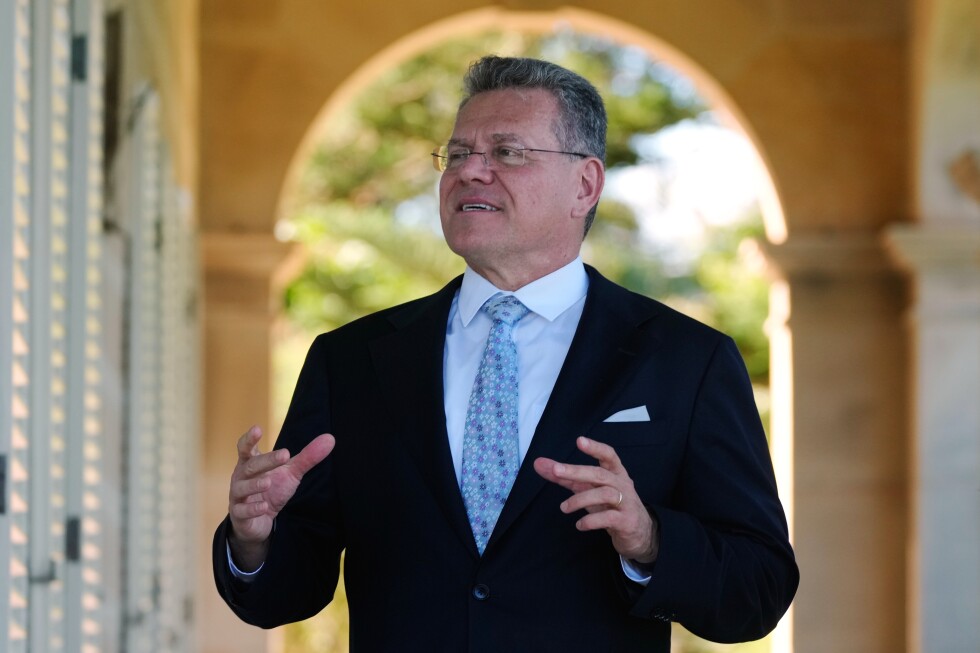
“The priority now is turning this EU-Mercosur agreement into concrete outcomes, giving EU exporters the platform they need to seize new opportunities for trade, growth and jobs,” said European Trade Commissioner Maroš Šefčovič in a statement.
The road to implementation hasn’t been smooth. The agreement faced significant obstacles in December when European farmers and environmental activists mounted fierce opposition. Critics argued the deal would flood European markets with agricultural products not subject to the same environmental and quality standards as those in the EU.
Further complications arose when EU lawmakers voted to refer the agreement to the bloc’s judiciary for review. In a controversial move, the European Commission responded by announcing it would provisionally enact the deal, effectively bypassing the European Parliament’s concerns.
Under this approach, trade provisions will begin in May and would only be halted if the European Court of Justice rules against the agreement. This maneuver has sparked significant pushback, particularly from France and Poland, which had led efforts to either block the deal entirely or at least strengthen provisions protecting European consumers and agricultural producers.
French President Emmanuel Macron described the Commission’s decision as “a bad surprise,” reflecting deep divisions within the bloc about trade liberalization at a time when many European farmers are already struggling with economic pressures.
European Commission President Ursula von der Leyen has dismissed such criticisms, framing the agreement as essential for Europe’s future in an increasingly unpredictable global economic landscape. “This is about resilience, this is about growth, and Europe shaping its own future,” she told reporters at a February news conference. More recently, she has avoided taking questions about the controversial agreement.
The EU-Mercosur deal comes as Europe actively pursues a diversified trade strategy. Von der Leyen is currently in Australia for discussions on another potential free trade agreement, along with talks on defense cooperation and securing supply chains for critical minerals – further evidence of the EU’s push to strengthen its global economic position and reduce dependencies on dominant players.
For the Mercosur nations, the agreement opens significant opportunities for agricultural exports and industrial development by reducing tariffs and creating more predictable trade rules with one of the world’s largest economic blocs. Brazil, as the largest Mercosur economy, stands to gain particularly in sectors like beef exports, soybeans, and manufactured goods.
Market analysts suggest the implementation may face initial adjustment challenges as industries on both sides adapt to new competitive conditions, but the long-term economic benefits are expected to be substantial, potentially adding billions in trade value over the coming decade.
Fact Checker
Verify the accuracy of this article using The Disinformation Commission analysis and real-time sources.

12 Comments
After so many years of negotiation, I’m glad to see this EU-Mercosur trade pact finally come to fruition. The economic and geopolitical implications will be worth monitoring closely.
Agreed. This has the potential to reshape global supply chains and commodity flows in significant ways.
This EU-Mercosur agreement is certainly a milestone, but I wonder how it will affect the existing trade relationships and investment flows that Mercosur countries have with China. That dynamic bears close watching.
Absolutely. China’s role as a major trading partner for the Mercosur region introduces an interesting dynamic that could complicate things.
While the scale of this deal is impressive, linking 700 million people, I’m a bit skeptical about how quickly it can translate to tangible benefits for the mining and energy sectors. There are still many details to be worked out.
That’s a fair point. The implementation and real-world impact will likely take time to fully materialize.
Interesting to see the EU and Mercosur countries finalizing this major trade deal. It will be crucial to watch how this impacts the global commodities landscape, especially with the ongoing geopolitical tensions.
Yes, this has major implications for the mining and energy sectors. The access to a massive consumer market of 700 million people will be a game-changer.
The timing of this deal is quite notable, coming amidst rising tariffs and supply chain disruptions. I wonder how it will affect the trade and investment flows for critical minerals like lithium, copper, and uranium.
Good point. This could open up new sourcing opportunities for the EU, reducing reliance on China for some key commodities.
This is a bold move by the EU to reduce economic dependencies on the US and China. I’m curious to see how the Mercosur countries leverage this agreement to grow their mining and energy exports.
Absolutely. It will be interesting to see if this deal accelerates development of new mining projects in the Mercosur region to meet European demand.