


Listen to the article
The Environmental Protection Agency announced Monday it will propose limits on perchlorate in drinking water, though the agency maintains such regulation offers minimal public health benefits and is being pursued only to comply with a court order.
Perchlorate, a chemical used in rockets, fireworks, and other explosives, poses particular dangers to infants and developing children. The chemical can impair thyroid function, potentially lowering IQ scores and increasing behavioral problems in children—effects that make its presence in water supplies a significant concern for public health advocates.
“We anticipate that fewer than one-tenth of 1% of regulated water systems are likely to find perchlorate above the proposed limits,” the EPA stated in its proposal. The agency argues that requiring all 66,000 water systems nationwide to monitor for the chemical would impose “substantial administrative and monitoring costs with limited or no corresponding public health benefits as a whole.”
The EPA’s reluctant move forward with regulation marks the latest development in a contentious battle spanning more than a decade. The issue of whether to regulate perchlorate has bounced between administrations, with dramatically different approaches to the chemical’s perceived risks.
In 2011, the EPA determined perchlorate was present in the drinking water of approximately 16 million Americans and posed a sufficient threat to require regulation under the Safe Drinking Water Act. This determination legally obligated the agency to propose standards within two years—a deadline it failed to meet, prompting a lawsuit from the Natural Resources Defense Council in 2016.
The first Trump administration initially proposed a standard that environmental advocates criticized as insufficient, then reversed course entirely in 2020, claiming new analysis showed perchlorate was less dangerous and less prevalent than previously thought. This reversal was later challenged in federal court.
A federal appeals court subsequently ordered the EPA to move forward with regulation, ruling that perchlorate remains a significant and widespread public health threat despite the agency’s claims to the contrary.
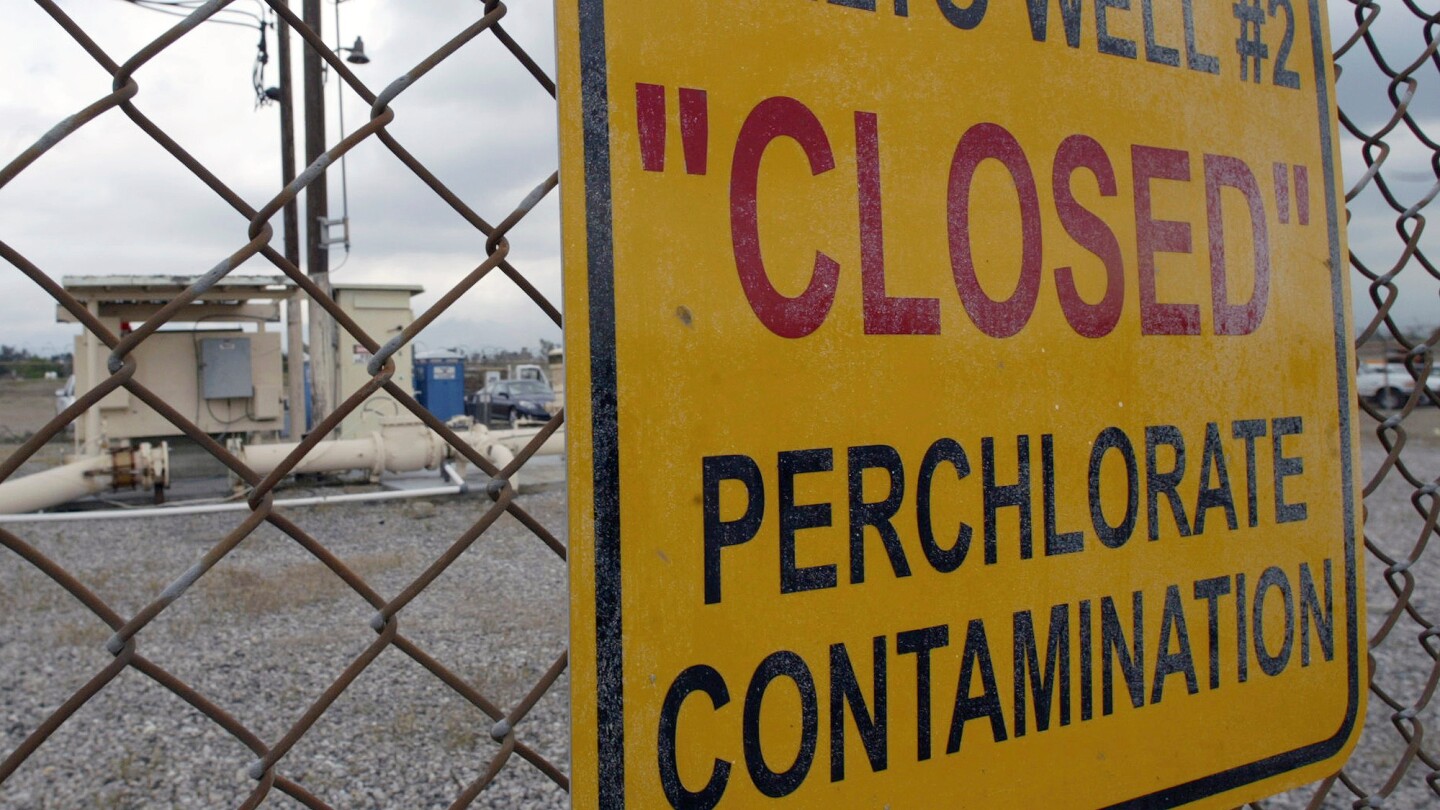
The chemical’s contamination issues have been most concentrated in the Southwest and along sections of the East Coast, primarily near defense, aerospace, and manufacturing sites where it seeped into groundwater. Nevada provides one notable case study in perchlorate remediation, having spent 20 years on cleanup efforts that dramatically reduced concentrations in Lake Mead after decades of accumulation from production facilities in the Las Vegas Valley dating back to the 1950s.
In its new proposal, the EPA will solicit public comment on potential limits of 20, 40, and 80 parts per billion, along with other regulatory elements. The agency has committed to working with states and communities to reduce contamination and noted that water systems could conduct less frequent sampling if initial testing doesn’t indicate a problem.
Environmental advocates have cautiously welcomed the move while expressing concerns about the proposed standards. Sarah Fort, a senior attorney with NRDC, stated: “Members of the public deserve to know whether there’s rocket fuel in their tap water. We’re pleased to see that, however reluctantly, EPA is moving one step closer to providing the public with that information.”
The NRDC further warned that even the strictest proposed standard of 20 parts per billion would be insufficient to protect public health, putting at risk “millions of people across the country, especially fetuses and young infants who are particularly vulnerable to this toxic chemical.”
The perchlorate decision represents a nuanced position from EPA Administrator Lee Zeldin’s EPA, which has generally pursued significant rollbacks of environmental regulations while promoting fossil fuel development. On drinking water issues, however, the agency has taken more moderate positions, including maintaining the Biden administration’s strict limits on common “forever chemicals” while extending compliance timelines for utilities.
The perchlorate proposal will now enter a period of public comment before the EPA makes a final determination on regulatory limits.
Fact Checker
Verify the accuracy of this article using The Disinformation Commission analysis and real-time sources.

5 Comments
The EPA’s stance on the limited health benefits is understandable, but I agree that even a small risk to infants and children warrants protective action. Proper monitoring and mitigation will be crucial, even if the overall impact is relatively low.
Interesting to see the EPA being forced to regulate perchlorate in drinking water. While the health impacts may be limited, it’s still an important safeguard for public health. I’m curious to see what the proposed limits will be and how water systems will handle the costs.
While the EPA may view this as a minimal public health issue, any exposure risks for infants and children are concerning. Glad to see the courts stepping in to force the agency’s hand on setting protective drinking water limits.
This feels like another example of the EPA having to be prodded into action on an environmental issue. I hope the proposed limits are stringent enough to meaningfully address the risks, despite the agency’s reservations. Transparent rulemaking will be key.
As an investor in mining and energy stocks, I’ll be watching this closely. Regulations on chemicals like perchlorate can impact operations and costs for certain companies. Curious to see how the industry responds.