


Listen to the article
Emirates Secures Fuel Supply, Reports Record Profit Amid Industry Challenges
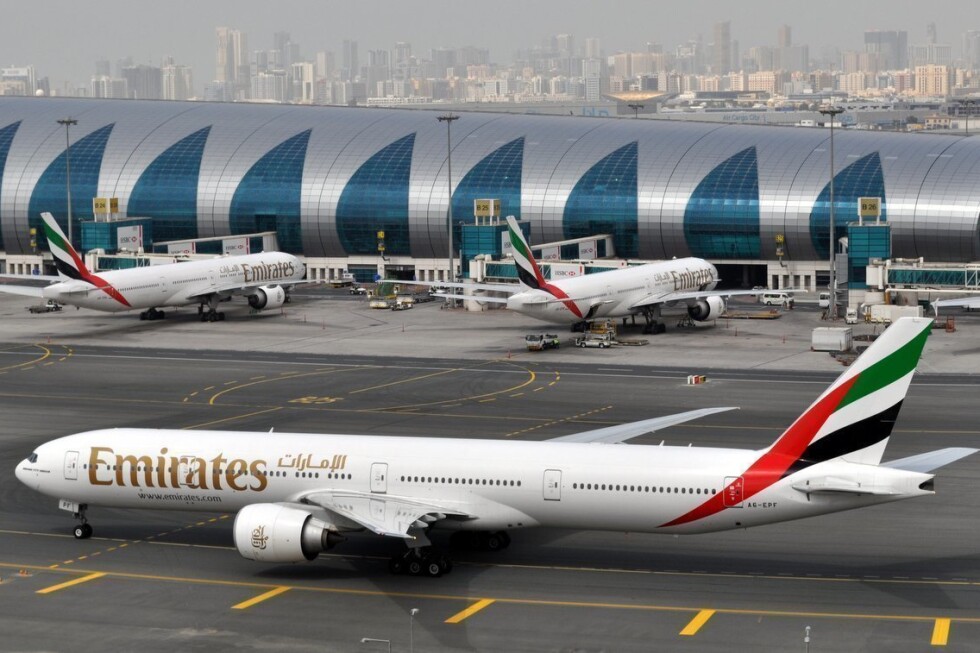
FRANKFURT, Germany — Emirates airline group has strategically hedged against rising jet fuel prices for the next three years and secured adequate fuel supplies to meet both current and future operational needs, the company’s top executive announced on Thursday alongside record annual profit figures.
“From a fuel perspective, Emirates is well-hedged until 2028-29; and we have worked with our suppliers to secure the volumes required to support our current operations and our scaling up to predisruption levels,” said Chairman and Chief Executive Sheikh Ahmed bin Saeed Al Maktoum in a statement accompanying the airline’s financial results.
The Dubai-based carrier’s proactive approach comes at a critical time for the global aviation industry, which has been grappling with significant fuel price volatility and potential supply disruptions. Many airlines worldwide have been caught off guard by sharp increases in jet fuel costs, which typically account for 20-30% of an airline’s operating expenses.
Recent geopolitical tensions have exacerbated the situation, with Iran’s threats to block the strategically vital Strait of Hormuz creating particular concern for Middle Eastern carriers. The strait serves as a crucial maritime chokepoint through which approximately 20% of the world’s oil supply normally passes, making any disruption potentially catastrophic for global fuel markets.
While competitors struggle with these challenges, Emirates’ hedging strategy demonstrates financial foresight that could provide a significant competitive advantage. Hedging involves using financial instruments such as forward contracts to lock in prices for future deliveries, essentially creating a financial shield against market volatility.
Several major European carriers, including Air France-KLM, Scandinavian Airlines (SAS), and Lufthansa, have already been forced to trim their summer schedules in response to higher operational costs and potential fuel constraints. These schedule reductions come during what would typically be the industry’s most profitable season, potentially impacting revenue forecasts across the sector.
Against this challenging backdrop, the Emirates Group reported remarkable financial performance. For the fiscal year ending March 31, the company posted a pre-tax profit of 24.4 billion dirham ($6.6 billion), representing a 7% increase from the previous year. Revenue climbed to 150.5 billion dirham ($41.0 billion), up 3% from the previous financial year.
These results underscore Emirates’ resilience and strategic planning in a turbulent market. As one of the world’s largest international airlines, Emirates has leveraged its hub-and-spoke model centered on Dubai International Airport to connect global traffic flows efficiently between East and West.
Aviation analysts suggest that Emirates’ fuel hedging strategy could become increasingly common across the industry as airlines seek to insulate themselves from market volatility. However, hedging carries its own risks, as airlines that locked in fuel prices before previous market downturns have sometimes found themselves paying above-market rates.
The Gulf carrier’s strong financial position also enables it to invest in fleet modernization and service enhancements at a time when many competitors are focusing on cost-cutting measures. Emirates operates one of the world’s youngest long-haul fleets, primarily composed of Airbus A380s and Boeing 777s, with significant orders for next-generation aircraft.
As the global aviation industry continues its post-pandemic recovery amid new challenges, Emirates appears well-positioned to maintain its competitive edge through strategic foresight and financial discipline, potentially expanding its market share as less-prepared competitors struggle with fuel costs and operational constraints.
Fact Checker
Verify the accuracy of this article using The Disinformation Commission analysis and real-time sources.

7 Comments
The global aviation industry faces significant fuel supply and pricing pressures. Emirates’ forward-looking hedging efforts highlight their financial discipline and ability to insulate operations, which should benefit the company long-term.
Kudos to Emirates for taking a proactive stance on fuel costs. Their multi-year hedging plan demonstrates a commitment to managing risk and protecting profitability, even in an uncertain market.
Definitely a strategic move by Emirates. Locking in fuel prices for the next several years provides stability that many airlines lack, putting them in a strong competitive position.
Hedging fuel costs is crucial in the volatile aviation industry. Emirates’ long-term approach seems prudent, insulating them from price spikes through 2028-29. This positions them well to withstand market turbulence and focus on growth.
Securing fuel supplies is a strategic challenge for airlines. Emirates’ proactive hedging efforts demonstrate foresight and risk management capabilities, which could provide a competitive advantage in the recovery from pandemic disruptions.
Agreed, long-term fuel hedging is a savvy move that can protect margins when prices surge. Having that runway of secured supply is a valuable asset for Emirates.
Jet fuel costs are a major pain point for airlines, so Emirates’ multi-year hedging strategy is an intriguing approach. It will be interesting to see if other carriers follow suit to weather future price volatility.