


Listen to the article
Arizona Implements New Groundwater Regulations as Drought Crisis Deepens
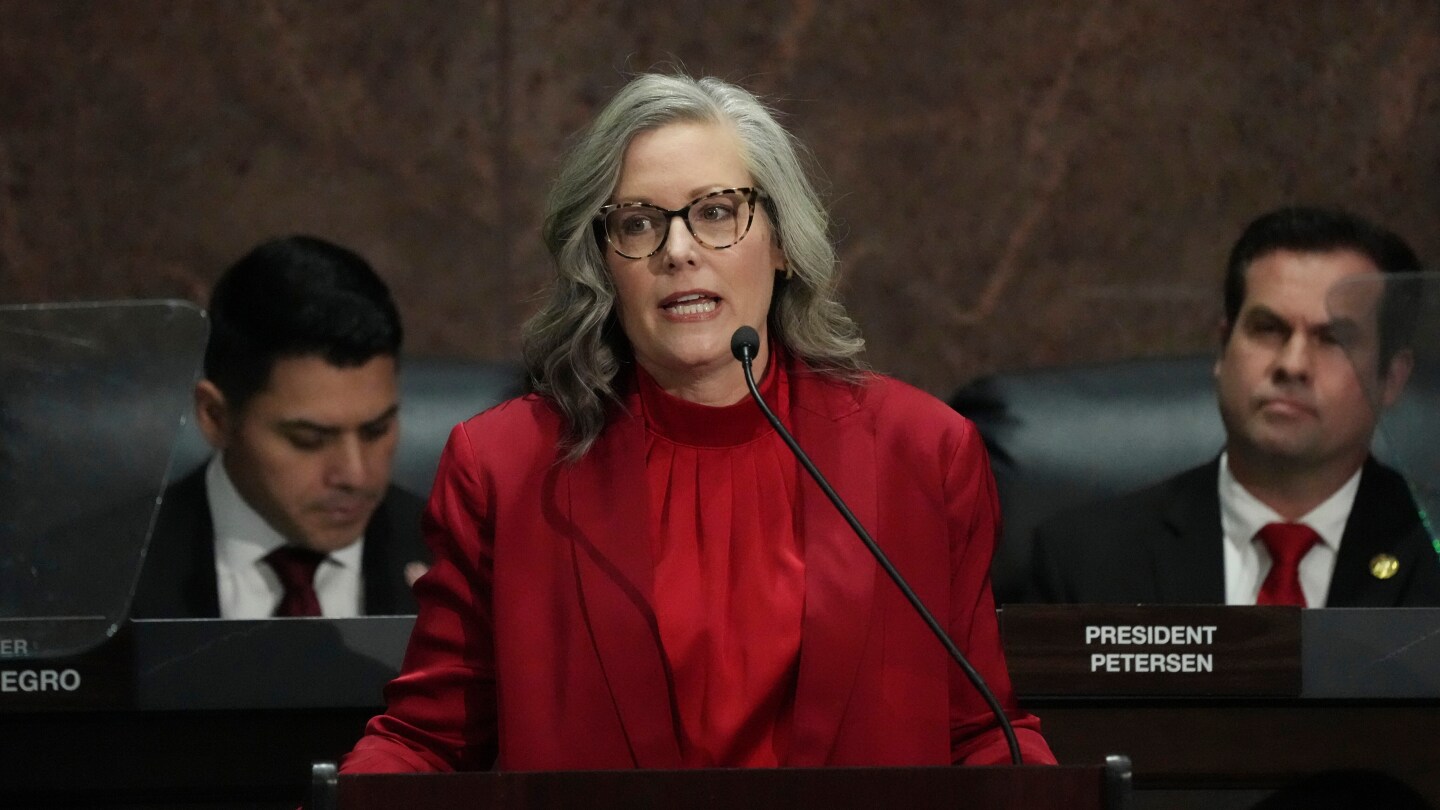
Officials in Arizona have taken decisive action to regulate groundwater usage in the state’s western region, where wells have been running dry amid prolonged drought conditions. The new regulations, announced by Governor Katie Hobbs during her annual address to the Legislature, designate the Ranegras Plain Groundwater Basin as an active management area.
The regulations establish a framework that allows for a management plan developed jointly by the Arizona Department of Water Resources and local stakeholders. While these measures won’t reverse the decline of groundwater levels, they aim to slow depletion through mandatory conservation requirements.
“We can no longer sit idly by while our rural communities go without help,” Hobbs said during her address. “They deserve solutions and security, not another decade of inaction and uncertainty.”
The designation comes after state water officials determined that plummeting water levels are causing land within the basin to sink, reducing the underground storage capacity. The subsidence is reportedly most pronounced in areas where Fondomonte, a Saudi Arabian agribusiness subsidiary of dairy giant Almarai Co., operates extensive farming operations.
Fondomonte has drawn significant attention in the region as it uses water from the basin to grow alfalfa as an export crop. The company’s operations have become emblematic of tensions surrounding water rights and foreign agricultural investments in drought-stricken areas.
Under the new regulations, all water users in the basin, including Fondomonte, will be required to track and report their water usage. This marks a significant shift from previous lax laws in rural areas that allowed essentially unlimited pumping.
For local residents, the changes offer a measure of protection. Kari Ann Noeltner, chief deputy assessor for La Paz County and a Republican who lives in the basin, expressed relief at the new oversight. She revealed she has already started saving money in anticipation of needing to dig a deeper well for her property.
“What this does is give us some breathing room that we’re not going to have more straws put into this basin without some serious oversight,” Noeltner said.
Arizona’s groundwater management framework was originally established in 1980, with a focus on the populous regions around Tucson and Phoenix. In these areas, housing developers must prove a 100-year water supply exists before building can commence. However, the less stringent regulations in rural areas have attracted large-scale farming operations seeking abundant water access with minimal restrictions.
The implementation of these new measures follows stalled legislative efforts. Governor Hobbs, a Democrat, had previously toured Fondomonte’s operation while calling on the Republican-led Legislature to pass a deal giving rural areas more flexible alternatives to active management areas. Those talks ultimately broke down, with some Republicans expressing concerns about potential negative impacts on the local economy, farming operations, and property values.
The designation represents the second such action taken by Hobbs since becoming governor and could face administrative or court challenges.
The agricultural industry has expressed concerns about the regulations. Philip Bashaw, chief executive of the Arizona Farm Bureau, worries that the measures are too stringent and will disproportionately impact farming operations.
“It doesn’t matter if it’s Fondomonte or they are family farms that have been in that area for a long time,” Bashaw noted. “Everyone is going to wind up with the same limitations.”
Following the governor’s announcement, Fondomonte spokesperson Barrett Marson stated that the company will continue to abide by all state and local regulations. He emphasized that Fondomonte has invested significantly in water efficiency measures at the farm.
“We are proud supporters of Arizona Agriculture and the farming community,” Marson said in a statement.
The situation has also drawn legal action from Arizona Attorney General Kris Mayes, who sued Fondomonte in 2024, alleging the company’s groundwater pumping constitutes a public nuisance and threatens public health, safety, and infrastructure. Fondomonte has disputed these claims, characterizing the lawsuit as an attempt to bypass the Legislature and implement water policy through judicial means.
As Arizona grapples with ongoing drought conditions, these new regulations represent a significant step toward more sustainable water management in the state’s vulnerable rural regions.
Fact Checker
Verify the accuracy of this article using The Disinformation Commission analysis and real-time sources.

10 Comments
This is a positive development, but the real test will be in the implementation of the new regulations. I hope the plan is truly collaborative and considers the diverse needs of all stakeholders, including rural communities and agriculture.
Fondomonte, the Saudi Arabian agribusiness, will likely be a key player in this process. Their water usage and impact on the region’s groundwater resources should be closely examined.
This is a prudent move by Arizona officials to manage their scarce groundwater resources. Drought is a major challenge, and proactive regulation is necessary to prevent further depletion and land subsidence. Curious to see how local stakeholders will be involved in the management plan.
Mandatory conservation requirements are important, but it will be critical to balance the needs of rural communities and agriculture. Collaborative solutions that work for all are the best path forward.
Regulating groundwater use is a sensitive and politically charged issue, but Arizona’s officials seem to be taking a pragmatic approach. I hope they can find a balance between the needs of agriculture, rural communities, and long-term water security.
The land subsidence issue is particularly concerning and will require innovative solutions to mitigate. Monitoring and adaptive management will be key to addressing this challenge.
Drought-induced water scarcity is a growing challenge across the American West. Arizona’s move to curb groundwater use is a necessary step, but it will require ongoing vigilance and tough decisions to ensure the long-term sustainability of the region’s water supply.
I’m curious to see how this new regulatory framework will be enforced and what penalties, if any, will be in place for non-compliance. Effective enforcement will be crucial for the success of this policy.
Groundwater management is a complex issue, especially in arid regions. I’m glad to see Arizona taking steps to address the problem, but this will likely be an ongoing challenge as the drought persists. Careful monitoring and adaptive policies will be key.
The land subsidence is a real concern that needs to be factored into the management plan. Protecting the underground storage capacity is crucial for long-term water security in the region.