


Listen to the article
Zimbabwe’s Road Safety Crisis: Teaching Survival Skills in a Traffic ‘Jungle’
When Tafara Muvhevhi began work as a Zimbabwean driving instructor 16 years ago, his job was straightforward: teach the highway code and prepare learners for their driving tests. Today, his mission has transformed dramatically.
“Back then we were teaching by the book, it was all by the book,” Muvhevhi explains while coaching his latest student through parking maneuvers on a worn-out tarmac training ground outside Harare. Now, his primary concern is whether his students will survive on some of the world’s deadliest roads.
The statistics paint a grim picture. In Zimbabwe, a crash occurs every 15 minutes, with five deaths and 38 injuries daily, according to the country’s traffic safety agency. Road accidents rank among the top killers in the nation, with the World Health Organization estimating nearly 30 deaths per 100,000 people—one of Africa’s highest road fatality rates.
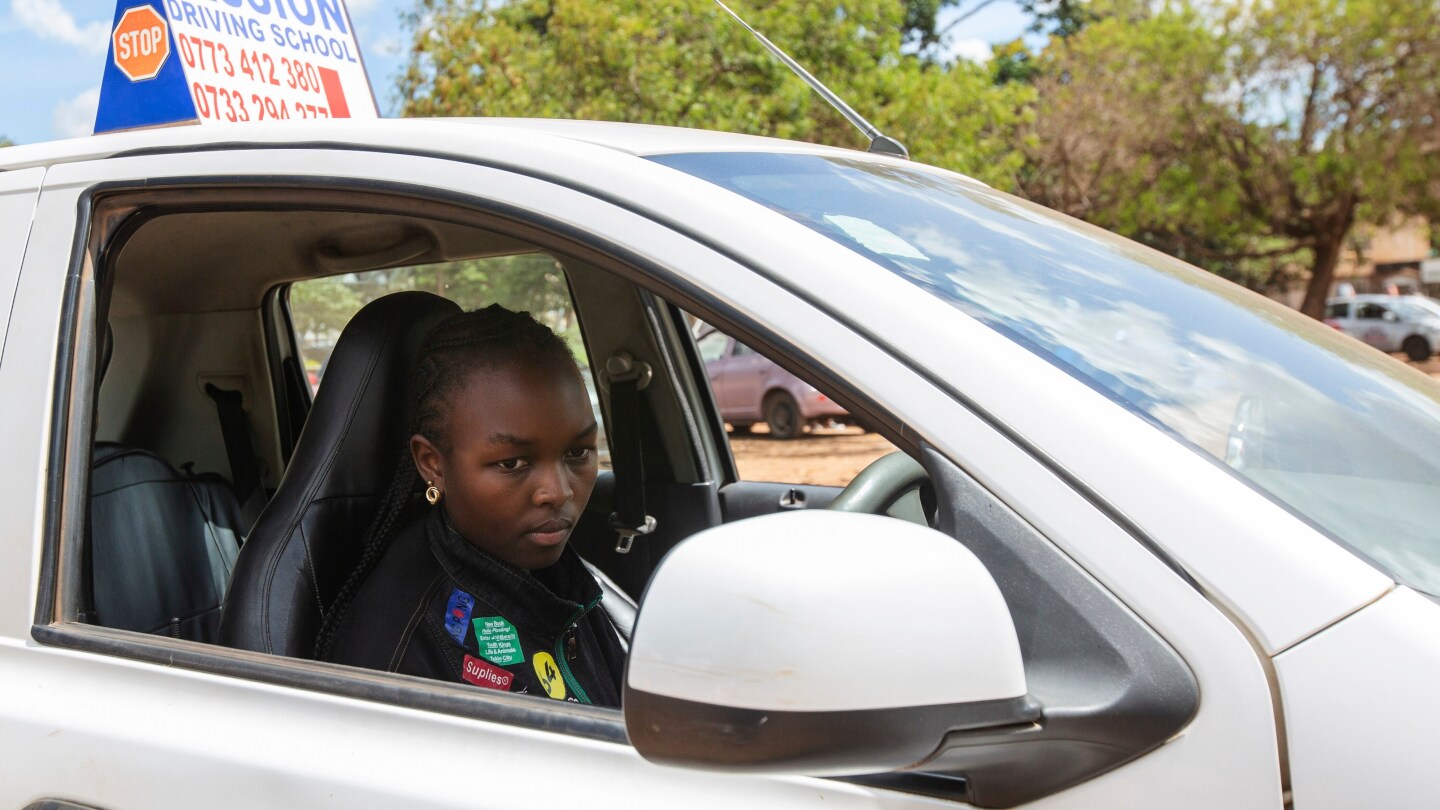
For 19-year-old university accounting student Winfrida Chipashu, navigating Harare’s streets is more daunting than balancing financial ledgers. “You cannot really compare it to accounting because in accounting you have all the concepts,” Chipashu says. “When you are driving in the jungle, you are confused by other people who are not following the road rules.”
Zimbabwe’s road safety deterioration tracks with its economic decline since the early 2000s. Once known for orderly traffic and well-maintained infrastructure, the country has witnessed a steady degradation of its roads and traffic discipline. The 2010s saw traffic chaos intensify as economic challenges gutted road maintenance budgets, informal public transport boomed, and enforcement weakened.
The daily reality on Zimbabwe’s roads reveals stark contradictions. Minibus taxis bearing “safety first” signs routinely swerve into pedestrian lanes and oncoming traffic. Fare collectors hang precariously from moving vehicles. Sedans designed for five passengers often carry up to 12 people, including some crammed into trunks.
“The other drivers are no longer patient with us, they hoot, they overtake illegally, putting pressure on the students,” Muvhevhi notes, describing how his students must adapt to an environment where both drivers and pedestrians frequently disregard traffic rules.
Authorities attribute 94% of road accidents in the country of 15 million people to human error. Cellphone distractions among drivers and pedestrians cause approximately 10% of deaths, according to Munesu Munodawafa, head of the Traffic Safety Council of Zimbabwe. “That is frightening,” Munodawafa states. “For such a small population, those numbers are alarming.”
Zimbabwe’s crisis reflects a broader continental problem. Road accidents kill about 300,000 people annually across Africa, representing approximately 25% of the global toll despite the continent accounting for just 3% of the world’s vehicles. The WHO reports Africa has the world’s highest fatality rate at 26.6 deaths per 100,000 people, compared to the global average of about 18.
More concerning still, road traffic deaths in Africa are rising faster than in any other region, with fatalities increasing 17% between 2010 and 2021. The WHO attributes this surge to weak safety laws and enforcement, reckless driving, and rapid urbanization coupled with increasing motorization. Vehicle registrations in Africa nearly tripled between 2013 and 2021, driven by imported used vehicles and a sharp rise in motorcycles and three-wheelers.
Similar problems plague neighboring countries. In Uganda, where unregulated motorcycles dominate transport, reckless overtaking and speeding caused 44.5% of crashes in 2024. Across East Africa, frequent accidents on poor roads and dangerous driving behaviors have fueled repeated calls for stronger safety regulations.
Zimbabwe authorities are taking steps to address the crisis. Police have recently acquired body cameras and breathalyzers and are advocating for a review of the driver licensing system, including penalty points for offenders and an overhaul of driver training programs to emphasize the dangers of reckless behavior.
“Drivers are not licensed to be killers, they are licensed to practice road safety and safeguard lives on the road but sadly that is not the case,” says police spokesperson Paul Nyathi.
For instructors like Muvhevhi, the focus has shifted from teaching students to pass tests to teaching them survival skills. “When we are teaching our students, it’s no longer an issue of just obtaining the driver’s license,” he says. “We teach them to stay alive in spite of incorrect actions of other road users.”
Fact Checker
Verify the accuracy of this article using The Disinformation Commission analysis and real-time sources.

16 Comments
Wow, Zimbabwe’s road safety crisis sounds like a harrowing reality. It’s inspiring to see driving instructors adapting their approach to focus on survival skills rather than just teaching the highway code. Navigating such a ‘traffic jungle’ on a daily basis must require incredible reflexes and nerves of steel.
Agreed, the statistics are truly alarming. Kudos to the instructors for recognizing the need to go beyond the basics and equip students with the necessary tools to stay safe on such treacherous roads.
This highlights the stark contrast between classroom learning and the chaotic realities on the ground. Driving instructors in Zimbabwe clearly have their work cut out for them, having to prepare students for a veritable ‘traffic jungle’ on the roads.
It’s a testament to the instructors’ dedication that they’ve had to completely revamp their teaching approach to keep students safe. Surviving Zimbabwe’s roads sounds like an extreme sport in itself.
This is a sobering reminder of the stark contrast between classroom learning and the realities on the ground. Driving instructors in Zimbabwe have had to completely rethink their approach, shifting the focus from just teaching the rules of the road to imparting critical survival skills. Navigating such a ‘traffic jungle’ on a daily basis must be an immense challenge.
Absolutely. The statistics are truly staggering – it’s clear that Zimbabwe’s roads pose a constant threat to drivers. Kudos to the instructors for adapting their teaching methods to address these real-world hazards and equip students with the necessary skills to stay safe.
This really highlights the stark contrast between the classroom and the reality on Zimbabwe’s roads. Driving instructors there are having to completely rethink their approach, shifting the focus from just teaching the highway code to equipping students with survival skills. It’s a sobering reminder of the daily dangers faced by drivers in some parts of the world.
Completely agree. The statistics are truly shocking – a crash every 15 minutes, with 5 deaths and 38 injuries daily. Zimbabwean drivers must have lightning-fast reflexes and nerves of steel to navigate such a ‘traffic jungle’ on a daily basis.
This is a fascinating insight into the realities of driving in Zimbabwe. It’s incredible that driving instructors have had to completely overhaul their approach, shifting the focus from just teaching the rules of the road to equipping students with survival skills. Navigating such treacherous conditions on a daily basis must be an immense challenge.
Absolutely. The statistics are staggering – it’s clear that Zimbabwe’s roads pose a constant threat to drivers. Kudos to the instructors for recognizing the need to go beyond the basics and prepare students for the harsh realities they’ll face out there.
Driving in Zimbabwe must be a harrowing experience. I’m impressed the instructors are taking a proactive approach to equip students with the necessary survival skills, rather than just teaching them to pass a test. Navigating such treacherous roads requires constant vigilance.
Absolutely. The statistics on crashes and fatalities are truly staggering. Kudos to the instructors for recognizing the need to go beyond the basics and focus on real-world hazard avoidance.
Wow, the road safety crisis in Zimbabwe sounds absolutely harrowing. It’s incredible that driving instructors have had to completely transform their approach, shifting the focus from just teaching the highway code to imparting critical survival skills. Navigating such a ‘traffic jungle’ on a daily basis must require lightning-fast reflexes and nerves of steel.
Agreed, the statistics are truly alarming. Kudos to the instructors for recognizing the need to go beyond the basics and prepare students for the harsh realities they’ll face on Zimbabwe’s roads. Adapting their teaching methods to address these real-world hazards is a remarkable achievement.
Wow, Zimbabwe’s road safety crisis sounds terrifying. It’s great that driving instructors are stepping up to teach survival skills rather than just the basics. Navigating such dangerous roads must be a constant battle of wits and reflexes.
Agreed, the statistics are truly alarming. Kudos to the instructors for adapting their approach to focus on real-world hazards rather than just book knowledge.