


Listen to the article
Chinese AI Startup DeepSeek Gains Global Traction, Narrowing Digital Divide
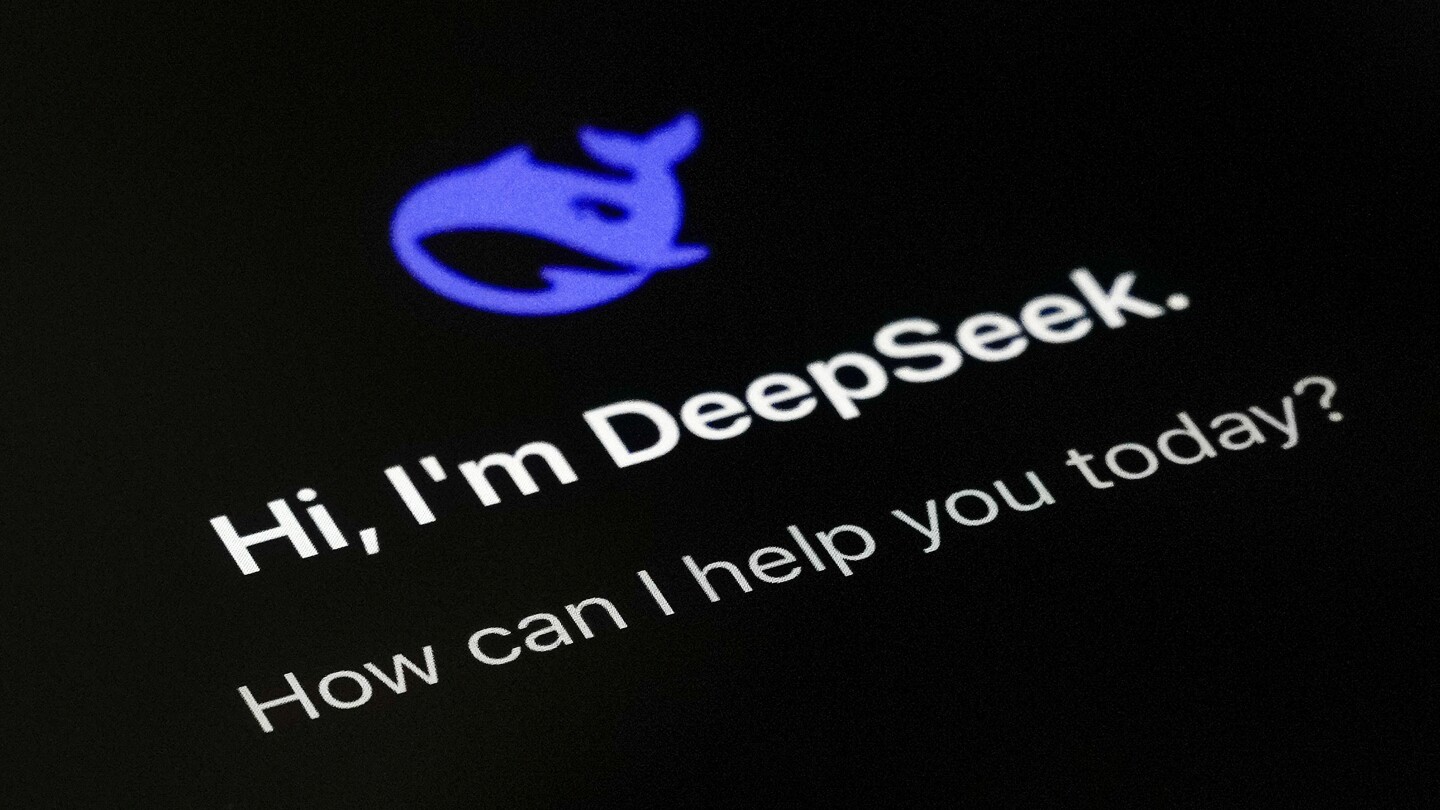
DeepSeek, a Chinese artificial intelligence startup challenging OpenAI’s ChatGPT, has been making significant inroads in developing nations, potentially helping to narrow the AI adoption gap between advanced and emerging economies, according to a new report from Microsoft.
The report, released Thursday, shows that global adoption of generative AI tools reached 16.3% of the world’s population in the last quarter of 2024, up from 15.1% in the previous quarter. However, researchers noted a concerning trend: AI adoption across developed nations is growing nearly twice as fast as in developing regions.
“We are seeing a divide and we are concerned that that divide will continue to widen,” said Juan Lavista Ferres, chief data scientist for Microsoft’s AI for Good Lab, which tracked global device usage through anonymized data.
Countries with early and consistent investment in digital infrastructure demonstrated the highest user adoption rates, including the United Arab Emirates, Singapore, France, and Spain. South Korea stood out in both Microsoft’s findings and an earlier Pew Research Center survey for its enthusiastic embrace of artificial intelligence.
DeepSeek’s rise has been particularly noteworthy. Founded in 2023, the company has fueled wider AI adoption across developing regions through its free and open-source models, which make key components available for anyone to access and modify.
The startup gained international attention in January 2025 with the release of its advanced reasoning AI model, DeepSeek R1, which the company claimed was more cost-effective than OpenAI’s similar offerings. The development surprised many in the global technology sector, highlighting China’s rapid advancement in AI capabilities. Leading science journal Nature published peer-reviewed research co-authored by DeepSeek founder Liang Wenfeng in September, describing it as a “landmark paper” from the Chinese startup.
Lavista Ferres acknowledged DeepSeek’s strengths, noting it is a “good model” for tasks like mathematics or coding. However, he pointed out that it operates differently from U.S.-based models on certain topics, particularly politics.
“We have observed that for certain type of questions, of course, they follow the same type of access to the internet that China has,” he explained. “Which means that there will be questions that will be answered very differently, particularly political questions. In many ways that can have an influence on the world.”
DeepSeek’s business model has been key to its expansion. The company offers a free-to-use chatbot on web and mobile platforms while giving developers global access to modify and build on its core engine. The absence of subscription fees has “lowered the barrier for millions of users, especially in price-sensitive regions,” according to Microsoft’s report.
“This combination of openness and affordability allowed DeepSeek to gain traction in markets underserved by Western AI platforms,” the report added. “DeepSeek’s rise shows that global AI adoption is shaped as much by access and availability as by model quality.”
Several developed nations, including Australia, Germany, and the United States, have moved to restrict DeepSeek usage over alleged security concerns. Microsoft itself banned employees from using the platform last year. The report found that while DeepSeek adoption remained low in North America and Europe, it surged in China, Russia, Iran, Cuba, and Belarus – countries where U.S. services face restrictions or where access to foreign technology is limited.
In many regions, DeepSeek’s prevalence correlated with its integration as the default chatbot on widely available smartphones manufactured by Chinese companies like Huawei. The report estimated DeepSeek’s market share in China at 89%, followed by Belarus at 56% and Cuba at 49%. In Russia, its market share reached approximately 43%, while Syria and Iran showed shares of around 23% and 25%, respectively.
The AI platform has also gained significant traction across Africa, with market shares between 11% and 14% in Ethiopia, Zimbabwe, Uganda, and Niger.
“Open-source AI can function as a geopolitical instrument, extending Chinese influence in areas where Western platforms cannot easily operate,” the report concluded, highlighting the technology’s growing role in global affairs and digital diplomacy.
DeepSeek did not immediately respond to requests for comment on the Microsoft report.
Fact Checker
Verify the accuracy of this article using The Disinformation Commission analysis and real-time sources.

11 Comments
The potential for AI like DeepSeek’s to help narrow the digital divide is exciting, but the report’s findings on uneven adoption rates are worrying. Targeted policies and partnerships will be needed to ensure these powerful tools reach underserved communities.
Absolutely. Equitable AI access should be a key consideration as this technology rapidly evolves. Proactive, collaborative efforts will be crucial to create more inclusive outcomes.
Interesting to see DeepSeek making inroads in the developing world. Bridging the AI adoption gap could have significant implications for economic development and opportunities. I wonder what the specific use cases are that are driving this growth in emerging markets.
Yes, it will be important to ensure equitable access to these transformative AI technologies. Widening divides could exacerbate existing inequalities.
The Microsoft report highlights both the promise and peril of AI’s global expansion. While it’s positive that tools like DeepSeek’s are reaching new markets, the uneven adoption patterns could deepen existing divides. Policymakers have their work cut out to ensure AI benefits are widely shared.
The Microsoft report paints a complex picture of AI adoption worldwide. While it’s heartening to see Chinese startups like DeepSeek gaining ground in emerging markets, the widening digital divide is a major concern. Coordinated policy responses will be key to realizing AI’s full development potential.
Fascinating to see DeepSeek making headway in the developing world. Democratizing access to transformative technologies like AI is vital for global progress. But the Microsoft data on uneven adoption rates is worrying. Closing this gap should be a top priority for policymakers and tech leaders alike.
It’s great to see Chinese AI startups like DeepSeek gaining traction globally, especially in developing markets. Democratizing access to transformative technologies can be a powerful force for economic and social progress. But the adoption gaps are concerning and merit close attention.
Kudos to DeepSeek for making inroads in the developing world. Bridging the AI divide is crucial for inclusive growth and opportunity. But the data on faster adoption in advanced economies is worrying. Concerted efforts will be needed to catalyze more equitable AI access globally.
The data on differing AI adoption rates between developed and developing nations is concerning. Proactive investment in digital infrastructure seems crucial to avoid further entrenching technological divides. I hope policymakers can find ways to accelerate AI access globally.
Agreed. Inclusive and sustainable AI development should be a priority, so the benefits are shared broadly rather than concentrated in a few regions or demographics.