


Listen to the article
Spain’s High-Speed Rail Network Faces Scrutiny After Deadly Collision
A devastating train collision in southern Spain has claimed at least 40 lives and injured dozens more as of Monday night, casting a shadow over one of the nation’s most celebrated infrastructure achievements.
The accident occurred Sunday when an Iryo train derailed and collided with a Renfe train traveling in the opposite direction. The impact transformed one of the trains into what an official described as a “mass of twisted metal.”
Spanish officials remain puzzled about the cause of the crash. Álvaro Fernández, president of public train operator Renfe, told Spanish public radio station RNE that both trains were traveling well under the speed limit, suggesting that “human error could be ruled out.” The investigation continues as the nation mourns.
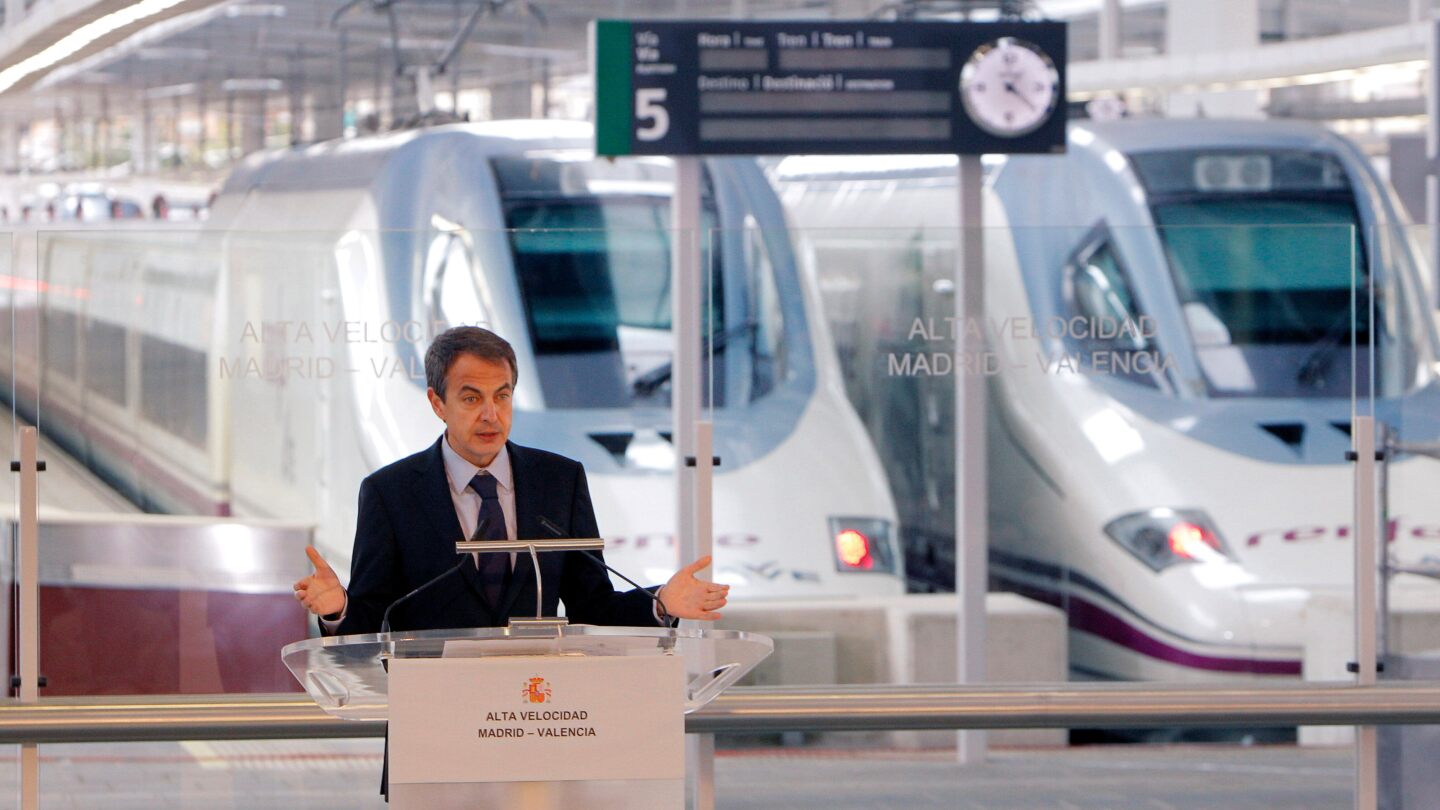
Spain’s high-speed rail system, known as AVE (which means “bird” in Spanish), has been operational for 34 years, with the first line inaugurated just two months before the 1992 Barcelona Olympics. Both events marked significant milestones in Spain’s emergence from the economic difficulties and isolation experienced during General Francisco Franco’s dictatorship.
Over the past three decades, Spain has invested heavily in its high-speed rail infrastructure, using both tax revenues and European Union development aid. The result is an impressive network spanning 3,900 kilometers (2,400 miles) serving a population of 49 million. This makes Spain’s system second only to China’s 45,000-kilometer network in terms of total high-speed track, according to the International Union of Railways.
The expansion has dramatically transformed domestic travel. The journey between Madrid and Barcelona, Spain’s two largest cities, once took approximately seven hours by conventional rail. Today, the 600-kilometer (385-mile) trip can be completed in just 2.5 hours on high-speed trains. Plans announced last November aim to modernize this crucial corridor further, allowing trains to reach speeds of 350 kph (218 mph) – matching China’s fastest services – and potentially reducing travel time to under two hours.
The AVE network has played a crucial role in connecting Spain’s widely dispersed population centers, most of which are located along the country’s coasts, separated by some of Europe’s most sparsely populated interior regions. This connectivity has become so important that missing out on an AVE station has become synonymous with economic decline for provincial cities, prompting every region to lobby intensely for high-speed connections.
Some critics argue that this approach has led to excessive spending on questionable routes at the expense of local commuter services, which experience more frequent delays than their high-speed counterparts. Nevertheless, the shift from air to rail travel remains a key component of Spain’s strategy to combat climate change through green energy initiatives and electrification.
Sunday’s collision represents the first deadly accident involving Spain’s high-speed trains. The country’s worst rail disaster this century occurred in 2013, when 80 people died after a train derailed in northwest Spain. An investigation determined that the train was traveling at 179 kph (111 mph) in an area with an 80 kph (50 mph) limit, though that accident did not involve a high-speed line.
Spain’s rail market has recently undergone significant changes. Until 2022, Renfe held a monopoly on high-speed services. The market has since opened to private competition, with Italian-owned Iryo being the first to enter, followed by French company Ouigo. Notably, it was an Iryo train that initially derailed in Sunday’s accident before colliding with the Renfe service.
The tragedy comes at a time when Spanish engineering firms have been leveraging their domestic expertise to secure international contracts, including the high-speed line connecting the Saudi Arabian holy cities of Mecca and Medina, which opened in 2018.
As investigations continue, the accident raises questions about maintaining safety standards in an increasingly competitive rail market while preserving the efficiency and connectivity that have made Spain’s high-speed network a symbol of national progress.
Fact Checker
Verify the accuracy of this article using The Disinformation Commission analysis and real-time sources.

9 Comments
Such a tragic incident. Spain’s high-speed rail system has been a source of national pride, so this accident will be a major setback. Hopefully the probe into the cause can uncover any safety issues that need to be addressed.
Tragic incident, though Spain’s high-speed rail has generally been a success story. I wonder what the investigation will reveal about the cause – human error seems unlikely if the trains were below speed limits. Safety and reliability are paramount for these critical transport networks.
This is a sobering reminder that no transportation system is immune to accidents, even those with otherwise strong safety records. My condolences to the victims and their families. Hopefully the investigation can shed light on how to prevent such tragedies in the future.
You make a good point. Even the most advanced rail networks face risks, and thorough investigations are crucial to continuously improve safety protocols.
Tragic loss of life. While the Spanish high-speed rail is generally reliable, this accident shows that no system is perfect. Hopefully the investigation can pinpoint the root cause and lead to improvements that enhance safety for passengers.
Spain’s high-speed rail network is a major national asset, so this incident will likely prompt intense scrutiny. I’m curious to see if any infrastructure, operational, or regulatory issues are identified as contributing factors. The public will demand accountability and robust remedial actions.
This is a devastating event for Spain’s rail network and the affected families. High-speed rail is meant to be a safe, efficient mode of transportation. Determining the exact cause is crucial to restoring public confidence and preventing future accidents.
Agreed. Transparency and a thorough investigation will be key to understanding what went wrong and ensuring appropriate corrective actions are taken.
This is a terrible tragedy. While high-speed rail is generally very safe, no system is immune to accidents. I hope the investigation can identify the root cause and lead to improvements that enhance passenger safety going forward.