


Listen to the article
Greek airspace reopened Monday following a widespread communications failure that grounded and diverted flights across the country for several hours on Sunday, with officials ruling out cyberattack as the likely cause of the disruption.
The incident began when noise was detected across multiple air traffic communication channels, including backup systems, forcing Greek aviation authorities to implement a temporary shutdown of the country’s airspace. The disruption created significant logistical challenges as incoming flights were diverted to neighboring countries.
“There is not the slightest indication that we are dealing with a cyberattack,” government spokesman Pavlos Marinakis stated firmly during Monday’s briefing. “I need to make that clear.”
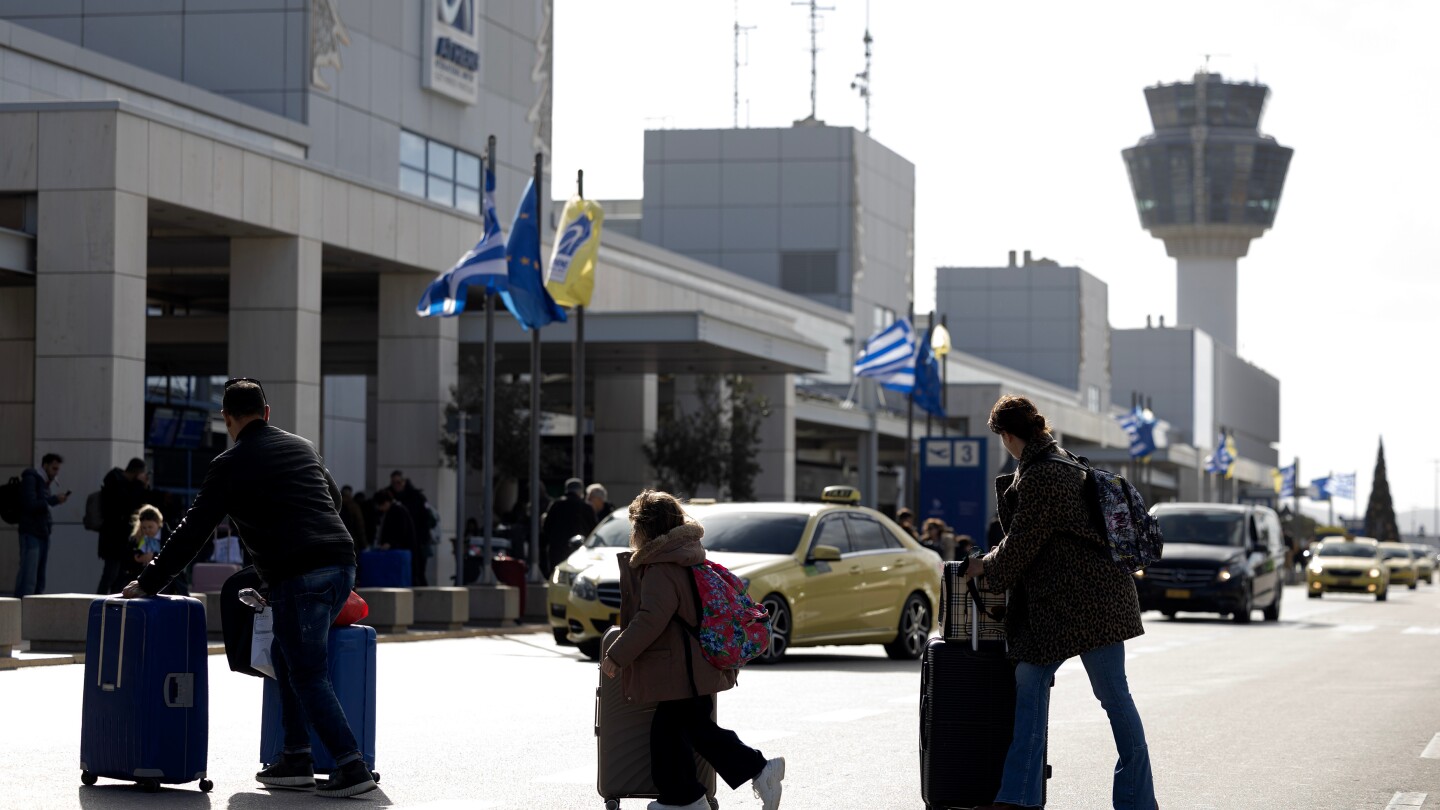
The shutdown affected Greece’s entire aviation network but had particular impact on Athens International Airport and Thessaloniki Airport, the nation’s two busiest air travel hubs. According to Eurocontrol, the Brussels-based European Organization for the Safety of Air Navigation, approximately 120 flights were grounded at these airports alone.
Thousands of travelers found themselves stranded as airlines scrambled to accommodate passengers on rescheduled flights. The ripple effects of Sunday’s disruption continued through early Monday as airlines worked to clear the backlog of delayed flights and return to normal operations.
The incident has prompted multiple investigations. Transport and Infrastructure Minister Christos Dimas announced the formation of a special investigative committee comprising representatives from civil aviation authorities, the Greek air force, Eurocontrol and a Greek state-run cybersecurity agency. Concurrently, judicial authorities have launched their own inquiry into the incident.
Despite the severity of the disruption, Minister Dimas emphasized that passenger safety was never compromised. “This was a very serious incident,” he acknowledged, “but at no point was there any risk to flight safety.”
Greece’s Air Traffic Controllers’ Association seized the opportunity to highlight long-standing concerns about the country’s aviation infrastructure. The association stated that the outage underscores their repeated calls for modernization and replacement of outdated equipment throughout the Greek air traffic control system.
The timing of the incident is particularly challenging for Greece, coming at the beginning of its peak tourist season. The country’s economy relies heavily on summer tourism, with millions of visitors arriving by air between May and September. Any prolonged disruption to air travel could have significant economic implications for the Mediterranean nation.
This incident also raises broader questions about aviation infrastructure resilience across Europe. In recent years, several European nations have experienced technical failures in their air traffic control systems, prompting industry experts to call for accelerated investment in modernizing critical aviation infrastructure throughout the continent.
Eurocontrol played a crucial role in managing the crisis, coordinating with neighboring air traffic control centers to safely redirect flights away from Greek airspace during the shutdown. This kind of regional cooperation highlights the integrated nature of European airspace management and the importance of cross-border protocols for handling such emergencies.
As operations return to normal, authorities continue their investigation into the precise cause of the communications failure. Technical experts are examining whether the issue stemmed from equipment malfunction, environmental interference, or other potential causes.
The Greek Civil Aviation Authority has pledged to implement any necessary improvements identified through the ongoing investigations to prevent similar incidents in the future.
Fact Checker
Verify the accuracy of this article using The Disinformation Commission analysis and real-time sources.

7 Comments
Interesting that they were able to rule out a cyberattack so definitively. Communications failures like this can really wreak havoc, so it’s good they were transparent about the incident. Curious to learn more about the technical details behind it.
Communications failures like this can really wreak havoc on air travel. Good to see the Greek government was quick to rule out a cyberattack as the cause. Wonder what the backup systems entail, and why those were also impacted. Safety has to be the top priority in these situations.
Glad the authorities were able to get the airspace reopened after a few hours. Communications failures can be tricky to diagnose, so it’s good they didn’t jump to conclusions about the cause. Curious to see if they pinpoint the issue and make any system upgrades to prevent a recurrence.
Sounds like a real operational challenge for Greece’s aviation authorities. Curious to learn more about the technical issues behind the communications failure. Hopefully they can identify the root cause and implement safeguards to ensure it doesn’t happen again.
Fascinating incident. Glad to hear it wasn’t a cyberattack – that would have been much more concerning. Curious what caused the communications failure, though. Hopefully they can get to the bottom of it and prevent similar disruptions in the future.
This must have been a real headache for the airport and airline staff trying to accommodate all those stranded passengers. Kudos to them for managing the situation as best they could. Hopefully they can identify the root cause and put safeguards in place to prevent similar disruptions.
A widespread communications failure grounding flights is certainly concerning. Glad the authorities were able to reopen Greek airspace relatively quickly. Curious what the technical issues were and if there are any lessons learned to improve resilience of these critical systems.