


Listen to the article
Canyons in eastern Utah are set to experience massive water releases this spring, with flows equivalent to 50,000 toilets flushing simultaneously, as officials undertake emergency measures to maintain critical electricity generation across the Western United States.
The ambitious operation aims to raise water levels at the severely depleted Lake Powell by releasing up to one-third of the water stored in Flaming Gorge Reservoir, which straddles the Wyoming-Utah border. This intervention follows the driest winter on record in the region and exceeds a similar record release conducted in 2022.
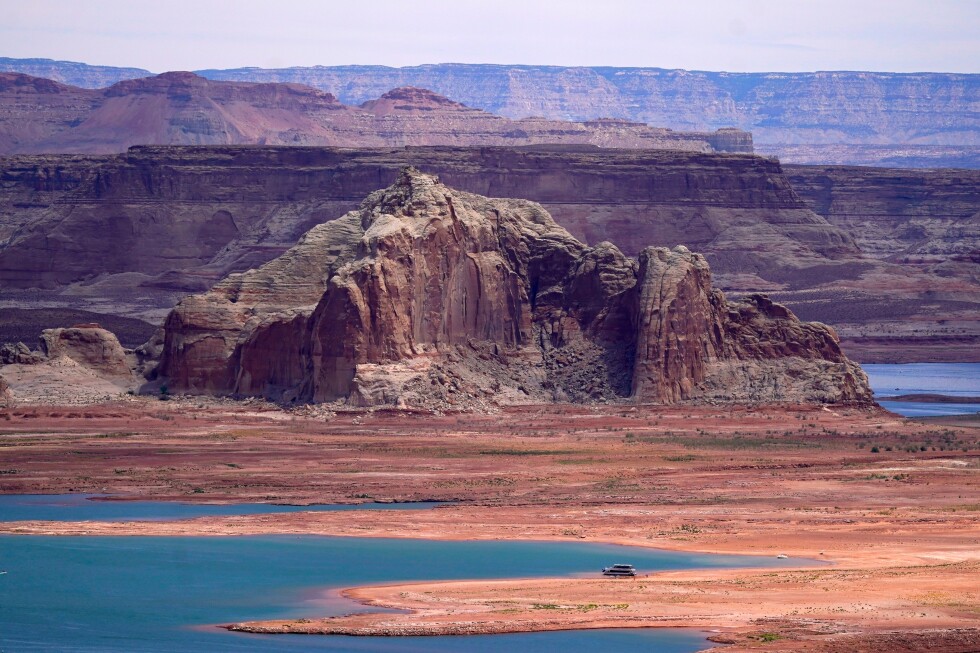
Lake Powell, created by Glen Canyon Dam, provides affordable, carbon-free electricity to more than 350,000 homes. However, maintaining this power source is creating increasing strains elsewhere in the Colorado River Basin, which serves approximately 40 million residential water users, along with ranchers and various industries.
For businesses operating along Flaming Gorge, like Buckboard Marina in southwestern Wyoming, the consequences are becoming increasingly apparent. Owners Tony and Jen Valdez expect water levels to drop by 10 feet by late summer due to the planned releases.
“Of course we’re concerned,” Jen Valdez acknowledged. “And it will probably get to a point where we’ll need to be more concerned.”
The situation looks even more challenging in the longer term. If the planned water management strategy proceeds as expected—and without significant relief from natural precipitation—Flaming Gorge could see levels plummet by as much as 27 feet within a year, further complicating marina operations.
Downstream effects will also be substantial. Water managers plan to retain more water than usual in Lake Powell, meaning Lake Mead near Las Vegas will likely approach the dramatically low levels seen four years ago, when receding waters revealed long-submerged boats and even human remains.
The Bureau of Reclamation explains these measures as necessary to maintain Lake Powell’s water level high enough to operate power generation turbines without risking damage from air entering the system—a scenario that would further compromise the region’s energy supply.
The federal Western Area Power Administration (WAPA) distributes hydropower from Glen Canyon Dam to 155 customers, including cities, tribes, rural electric cooperatives, and public utility districts. While none of these entities relies exclusively on hydropower, many serve disadvantaged communities, and all are not-for-profit organizations that help cover the costs of dam operations and maintenance.
Leslie James, executive director of the Colorado River Energy Distributors Association, notes that WAPA has contractual obligations to provide specific amounts of electricity to its customers. If Glen Canyon’s hydropower generation diminishes significantly or ceases altogether, WAPA would need to source alternative power—likely at higher costs and from non-renewable sources.
“If Glen Canyon hydropower is reduced to zero or a low amount, it will have different impacts on what they charge communities,” James explained, adding that in her 48-year career serving electricity customers across six Western states, she’s never witnessed such a situation.
Some utilities are already feeling the pinch. Heber Light & Power, serving communities southeast of Salt Lake City, has implemented rate increases for five consecutive years, with the most recent jump reaching 13%, according to Emily Brandt, the utility’s energy resource manager.
Lake Powell now stands at just 23% of its full capacity, with its surface elevation at 3,526 feet above sea level. Critical for power generation, the reservoir cannot drop below 3,490 feet—the level of water intakes for the dam’s electricity generators. Since Glen Canyon Dam’s completion in 1963 and Lake Powell reaching capacity in 1980, the water level has never fallen below this critical threshold.
In 2022, the Bureau of Reclamation released an unprecedented 500,000 acre-feet of water from Flaming Gorge to bolster Lake Powell. The latest planned releases could eventually total twice that amount.
Concurrently, holding back 1.5 million acre-feet in Lake Powell will reduce Hoover Dam’s electricity production by 40% as Lake Mead levels drop further downstream.
Environmental concerns add another dimension to this crisis. Warm water releases from Lake Powell’s surface could foster the spread of invasive smallmouth bass, which threatens the native humpback chub in the Colorado River below Glen Canyon Dam. Conservation groups like the Grand Canyon Trust advocate mixing in deeper, cooler water to create conditions less hospitable to the invasive species.
Initial water releases from Flaming Gorge will be calibrated to support native fish populations in the Green River. Eventually, the reservoir is projected to decline from 83% of capacity to approximately 59%.
Following the 2022 releases, a relatively wet winter provided temporary relief across the region. “We kind of got saved by Mother Nature,” remarked Valdez of Buckboard Marina.
However, experts caution that sporadic wet years won’t reverse the 25-year “megadrought” intensified by human-caused climate change. Despite this, Valdez remains optimistic about eventual recovery: “Hopefully we can expand into doing some other things. Because it’s going to come back eventually.”
Fact Checker
Verify the accuracy of this article using The Disinformation Commission analysis and real-time sources.

8 Comments
This emergency measure to maintain Lake Powell’s hydroelectric output highlights the precarious balance in the Colorado River Basin. While necessary in the short term, the long-term impacts on businesses like Buckboard Marina are concerning. Careful water management will be crucial going forward.
Absolutely. The ripple effects of these water releases on local businesses are worrying. Policymakers will need to find creative solutions to support affected communities while also securing the region’s long-term water and energy needs.
I’m curious to see how these emergency water releases will impact the broader Colorado River Basin, particularly in terms of water allocation and usage by different industries and communities. Balancing environmental, economic, and social priorities will be a major challenge.
The Colorado River water releases to prop up Lake Powell’s electricity generation are understandable, but it’s concerning to see the basin’s water supply under such strain. I hope this can be a wake-up call to address the long-term sustainability of the region’s water usage.
It’s good to see officials taking proactive steps to maintain Lake Powell’s electricity generation, which is critical for the region. However, the long-term sustainability of this approach is concerning, especially with the record-low winter snowpack in the basin.
Agreed. While the emergency measures may provide short-term relief, a more comprehensive, long-term strategy is needed to address the structural water challenges facing the Colorado River Basin. This will require tough decisions and collaborative efforts across multiple stakeholders.
The planned water releases from Flaming Gorge Reservoir to bolster Lake Powell’s levels are a testament to the complex water management challenges in the Western U.S. It will be interesting to see how this intervention affects the broader Colorado River system and the communities that rely on it.
The magnitude of the water releases, equivalent to 50,000 toilets flushing, is staggering. This underscores the severity of the situation at Lake Powell and the difficult tradeoffs involved in managing the Colorado River’s limited resources.