


Listen to the article
A transfer portal that has seemingly spiraled beyond regulatory control has prompted the newly formed College Sports Commission (CSC) to issue a stern warning to athletic directors nationwide. In a memo sent Friday evening, the commission expressed “serious concerns” about multimillion-dollar contracts being offered to college athletes through name, image, and likeness (NIL) arrangements.
The timing of the memo was notable, arriving just an hour before kickoff of the College Football Playoff semifinal between Indiana and Oregon – a high-profile event that has competed for headlines with news of players signing lucrative deals to transfer between institutions or remain at their current schools.
The commission’s message served as a pointed reminder that third-party NIL deals must be properly evaluated through their official system, NIL Go, before being considered valid. “Without prejudging any particular deal, the CSC has serious concerns about some of the deal terms being contemplated and the consequences of those deals for the parties involved,” the memo stated.
The current regulatory framework, established through the House settlement, allows schools to share revenue directly with players from a designated pool of $20.5 million. However, third-party arrangements, often facilitated by businesses created to support specific institutions, have emerged as workarounds to this de facto salary cap.
These third-party deals are subject to CSC evaluation through the NIL Go portal to ensure they serve legitimate business purposes and provide fair compensation for the services rendered. The commission’s growing concern stems from what appears to be increasingly aggressive financial arrangements designed to circumvent established guidelines.
While the CSC did not specifically identify problematic contracts, the college football landscape has witnessed numerous seven-figure deals enticing players to new schools since the transfer portal opened on January 2. The open market for talent has created unprecedented movement and financial competition between programs.
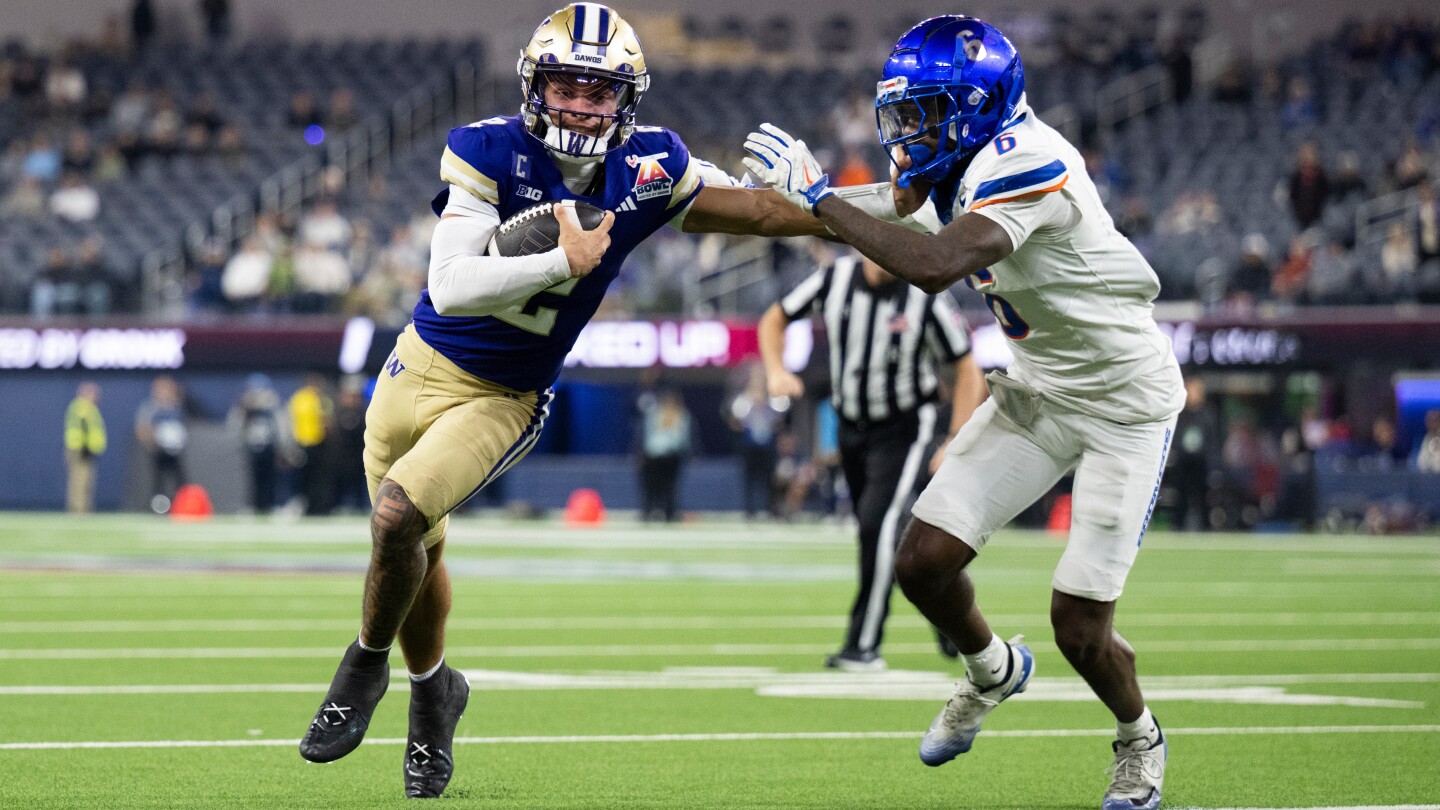
One particularly contentious case involved Washington quarterback Demond Williams Jr., who initially sought to enter the transfer portal despite reportedly having a $4 million deal with the Huskies. After legal threats emerged, Williams reversed course and remained at Washington, highlighting the complex and sometimes contentious nature of these arrangements.
The CSC directly addressed problematic practices in its communication: “Making promises of third-party NIL money now and figuring out how to honor those promises later leaves student-athletes vulnerable to deals not being cleared, promises not being able to be kept, and eligibility being placed at risk.”
The commission also clarified two critical aspects of its evaluation process. First, it emphasized that creative labeling of agreements as “agency” or “services” contracts does not exempt them from NIL Go reporting requirements. Second, it specified that agreements with associated entities must include direct activation of the student-athlete’s NIL rights – directly addressing the practice of “warehousing” rights by paying athletes first and determining how to use their NIL later.
The escalation of NIL deals represents a transformative shift in college athletics’ economic structure since the Supreme Court’s unanimous 2021 ruling in NCAA v. Alston, which opened the door for student-athletes to profit from their name, image, and likeness. What began as modest endorsement deals has rapidly evolved into multimillion-dollar transfers and bidding wars between institutional supporters.
Industry observers note that the current situation reflects the growing pains of an amateur sports model transitioning toward professional-style player compensation without established guardrails. The tension between maintaining some semblance of collegiate athletic tradition while allowing market forces to determine player value has created regulatory challenges that the CSC is struggling to address.
For universities, athletic departments, and compliance officers, the memo serves as a warning that the current free-market approach may face increased scrutiny and potential enforcement actions as the CSC attempts to bring order to what has become an increasingly chaotic transfer and recruitment landscape.
Fact Checker
Verify the accuracy of this article using The Disinformation Commission analysis and real-time sources.

16 Comments
This issue highlights the complex dynamics of the transfer portal and NIL deals in college sports. It will be interesting to see how the CSC navigates these concerns and maintains integrity within the system.
You raise a good point. The CSC faces a delicate balance between preserving fairness and allowing players to benefit from their name and image.
The CSC’s memo highlights the complexities involved in regulating the transfer portal and NIL deals. Maintaining fairness and integrity in this evolving landscape will be crucial for the future of college sports.
Absolutely. The CSC faces a challenging task in developing policies that protect the student-athlete experience while also adapting to the realities of the modern college sports landscape.
The spiraling transfer portal and lucrative NIL deals are certainly creating challenges for college sports regulators. I’m curious to see how the CSC plans to address these issues going forward.
Agreed. Striking the right balance between player empowerment and system integrity will be critical for the CSC in this evolving landscape.
The transfer portal and NIL deals have undoubtedly introduced new dynamics to college sports. I’m curious to see how the CSC’s regulatory approach evolves to address these challenges while still supporting student-athletes.
It’s a delicate balancing act. The CSC will need to find ways to preserve the integrity of the system while also allowing players to benefit from their name and image.
The CSC’s memo highlights the delicate balance that must be struck between player empowerment and system integrity in college sports. It will be interesting to see how they approach these concerns and work to address the challenges posed by the transfer portal and NIL deals.
Agreed. The CSC’s regulatory approach will set an important precedent for how college athletics adapts to the evolving landscape of player rights and commercial opportunities.
This is a timely and important issue for college sports. The CSC’s concerns about the transfer portal and NIL deals underscore the need for thoughtful, proactive regulation to ensure fairness and preserve the spirit of college athletics.
Well said. The CSC’s role in navigating these complex issues will be crucial in shaping the future direction of college sports.
This is a complex issue that speaks to the broader tensions in college athletics between commercialization and preserving the student-athlete experience. The CSC’s stance raises important questions about the future direction of the transfer portal and NIL rules.
Well said. The CSC’s concerns underscore the need for thoughtful policymaking that protects the core values of college sports while adapting to changing realities.
The CSC’s concerns about the transfer portal and NIL deals underscore the broader tensions in college sports between commercialization and preserving the student-athlete experience. This is a complex issue that will require nuanced policymaking to address.
Absolutely. The CSC’s response will be closely watched as it seeks to balance these competing priorities and chart a path forward for the future of college athletics.