


Listen to the article
As global leaders convene for the annual COP30 conference, climate change stories once again dominate news headlines. But the constant stream of information about natural disasters, heat waves, and rising sea levels is taking a psychological toll on many people worldwide.
“When you throw a ton of scary facts and information at people, their nervous system shuts down. It’s a coping mechanism,” explains Sarah Newman, founder and executive director of the Climate Mental Health Network.
This phenomenon, commonly referred to as climate anxiety, has become so prevalent that the American Psychiatric Association reports a significant number of Americans experience it. Surveys consistently show growing concern about climate change impacts, manifesting as feelings of dread, doom, fear, or hopelessness.
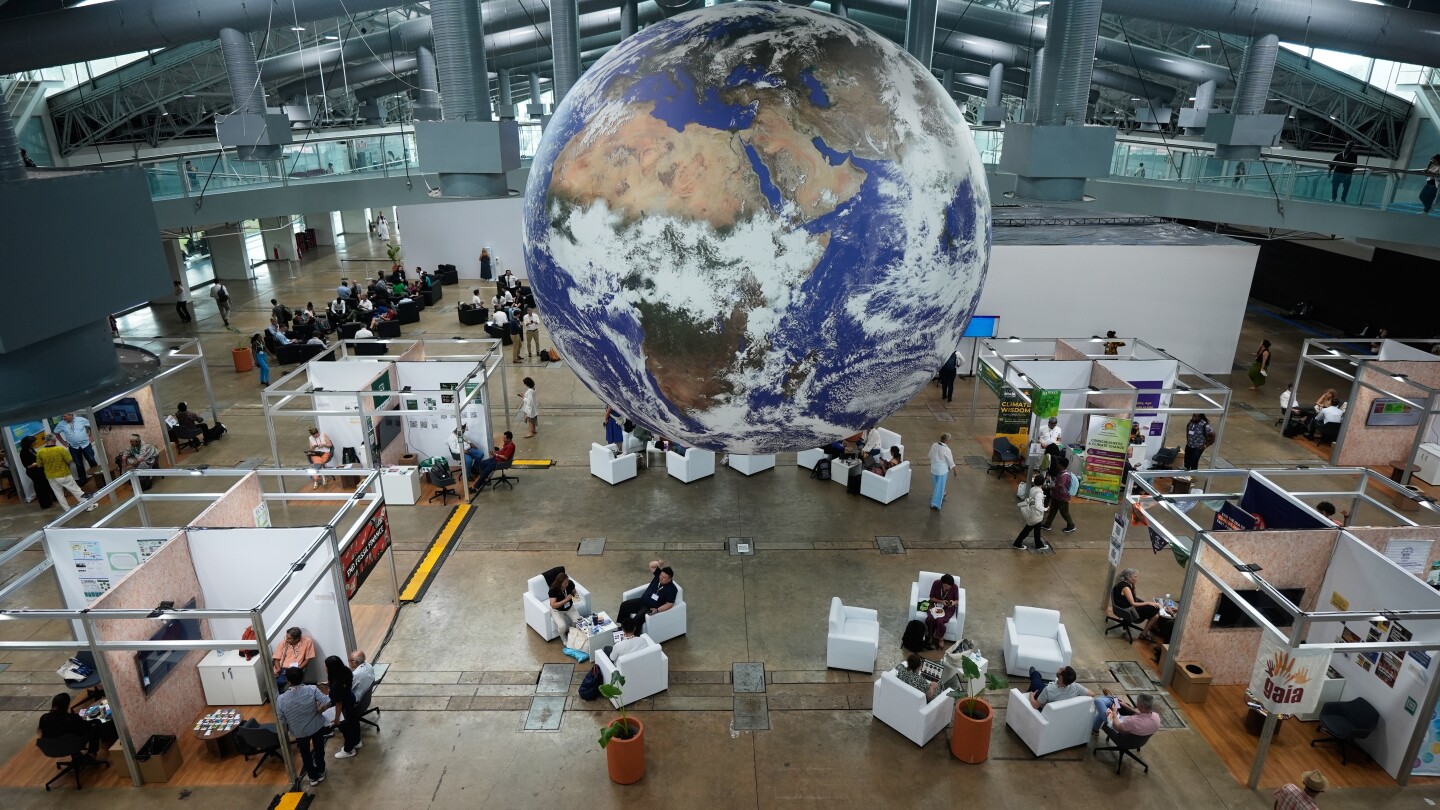
Recognizing this growing issue, COP30 organizers have expanded mental health programming at this year’s conference. The event now features sessions focused on building psychological resilience, integrating mental health discussions into climate education, and even a dedicated “mental health corner” offering art and meditation sessions for attendees.
Climate anxiety differs fundamentally from generalized anxiety disorders, according to research published by the National Institutes of Health. While general anxiety typically activates brain regions associated with fear and emotion, climate anxiety engages parts responsible for higher cognition, willpower and tenacity.
“It’s an ongoing larger problem that I need to attend to over time and that is largely out of my control,” explains climate psychologist Thomas Doherty. “I can’t just flip a switch around climate change.”
Unlike immediate threats that can be resolved quickly, climate change presents a complex, indefinite challenge requiring sustained attention and varied responses. Doherty, author of a book on coping with climate anxiety, emphasizes that this anxiety isn’t inherently negative—it’s a natural reaction to a legitimate threat and often the first step in addressing it.
“The rest of the cycle is ultimately taking some action to resolve the threat as best that we can,” he notes.
Mental health experts highlight connection as one of the most effective strategies for combating climate anxiety. During New York City’s annual Climate Week, a small gathering focused on finding connection and hope amid climate concerns revealed just how common these feelings are. When participants were asked about experiencing morning despair or hopelessness, nearly every hand in the room went up.
“Not just in the morning!” one attendee remarked, prompting knowing laughter throughout the room.
This shared experience addresses what Doherty identifies as one of climate anxiety’s greatest risks: isolation. “Just like working on any problem, any issue, once you have a team around you, then you feel better. You’re not alone. You feel stronger,” he says.
Communities are responding with initiatives like Climate Cafes and organizations such as the Climate Psychology Alliance, which host events where people can share experiences and build collective resilience.
Newman’s work with the Climate Mental Health Network focuses on breaking this isolation. “When people start to recognize that they’re not alone with what they’re feeling, there’s an opportunity for people to move from that helpless state to one of empowerment,” she says.
Basic anxiety management techniques remain effective for climate concerns. Immediate grounding exercises like the 3-3-3 technique (naming three things you see, hear, and can move) or the 5-4-3-2-1 method can help people reconnect with the present moment. Doherty also recommends prioritizing rest, exercise, spending time in nature, and other practices he calls “basic mental hygiene.”
Beyond coping, experts suggest channeling climate concern into purposeful action, starting locally. Doherty recommends beginning with “ceremonial actions”—small, repeatable activities aligned with personal values, such as reducing plastic use or bringing reusable bags to stores. These actions, while individually modest in impact, can build momentum toward larger changes like transitioning away from fossil fuel-powered home appliances.
The United Nations offers guidance through its list of ten actions individuals can take to reduce their environmental impact, providing concrete steps for concerned citizens.
Newman emphasizes that addressing climate anxiety isn’t about eliminating difficult emotions but learning to live with them differently. “I still carry those emotions and I still have the worry and I have the anger and I have the sadness, but I’m able to live with them in a different way,” she reflects.
As climate impacts intensify globally, mental health professionals expect climate anxiety to become an increasingly important aspect of both individual wellness and collective climate action.
Fact Checker
Verify the accuracy of this article using The Disinformation Commission analysis and real-time sources.

11 Comments
Interesting to see climate anxiety getting attention at COP30. Building resilience and integrating mental health into climate education are smart approaches. It’s a complex issue with no easy answers, but raising awareness is a good first step.
I agree, the psychological impacts of climate change are just as important as the physical ones. Providing resources and support for people dealing with climate anxiety is crucial.
Addressing climate anxiety through COP30 programming is a wise decision. The constant stream of alarming climate news can take a heavy toll on people’s mental well-being. Offering resources and coping strategies is an important step in supporting those impacted.
Absolutely. Climate change is a daunting challenge, but maintaining our mental health and resilience is crucial for navigating it effectively. Integrating these considerations into climate action is a smart and necessary approach.
The mental health corner at COP30 sounds like a great initiative. Climate anxiety is a serious issue that deserves more attention. I hope this sets a precedent for future climate conferences to prioritize psychological support alongside the environmental discussions.
It’s heartening to see COP30 organizers recognize the need to address climate anxiety. Providing outlets like art and meditation sessions can help attendees cope with the heavy subject matter. Integrating mental health into climate education is also a smart move.
Agreed. Empowering people with coping strategies and a sense of agency is crucial for maintaining hope and resilience in the face of the climate crisis.
While the constant barrage of climate news can feel overwhelming, I’m glad to see events like COP30 addressing the mental health side of the crisis. Focusing on resilience-building and coping strategies is a thoughtful way to empower people.
Absolutely. Tackling climate change requires a holistic approach that considers both the environmental and human dimensions. Mental health support should be an integral part of the climate response.
I’m glad to see COP30 organizers recognizing the need to address climate anxiety. Providing mental health support and coping strategies at a major climate conference is an important acknowledgment of the psychological impacts of this crisis. It’s a step in the right direction.
The inclusion of mental health programming at COP30 is a step in the right direction. Climate anxiety is a very real issue that deserves more attention. I hope this leads to more resources and support for those struggling with the psychological impacts.