


Listen to the article
Chinese Shoppers Scale Back on “Singles’ Day” Festival as Economic Concerns Persist
In Guangzhou, 29-year-old marketer Alice Zhang has slashed her spending during China’s “Singles’ Day” shopping festival this year, spending only about 3,000 yuan ($421) – roughly half of what she spent in 2024.
“I’ve made a conscious effort to cut back,” said Zhang, whose pay was reduced by more than 20% this year, forcing her to opt for cheaper alternatives and abandon plans to purchase new shoes.
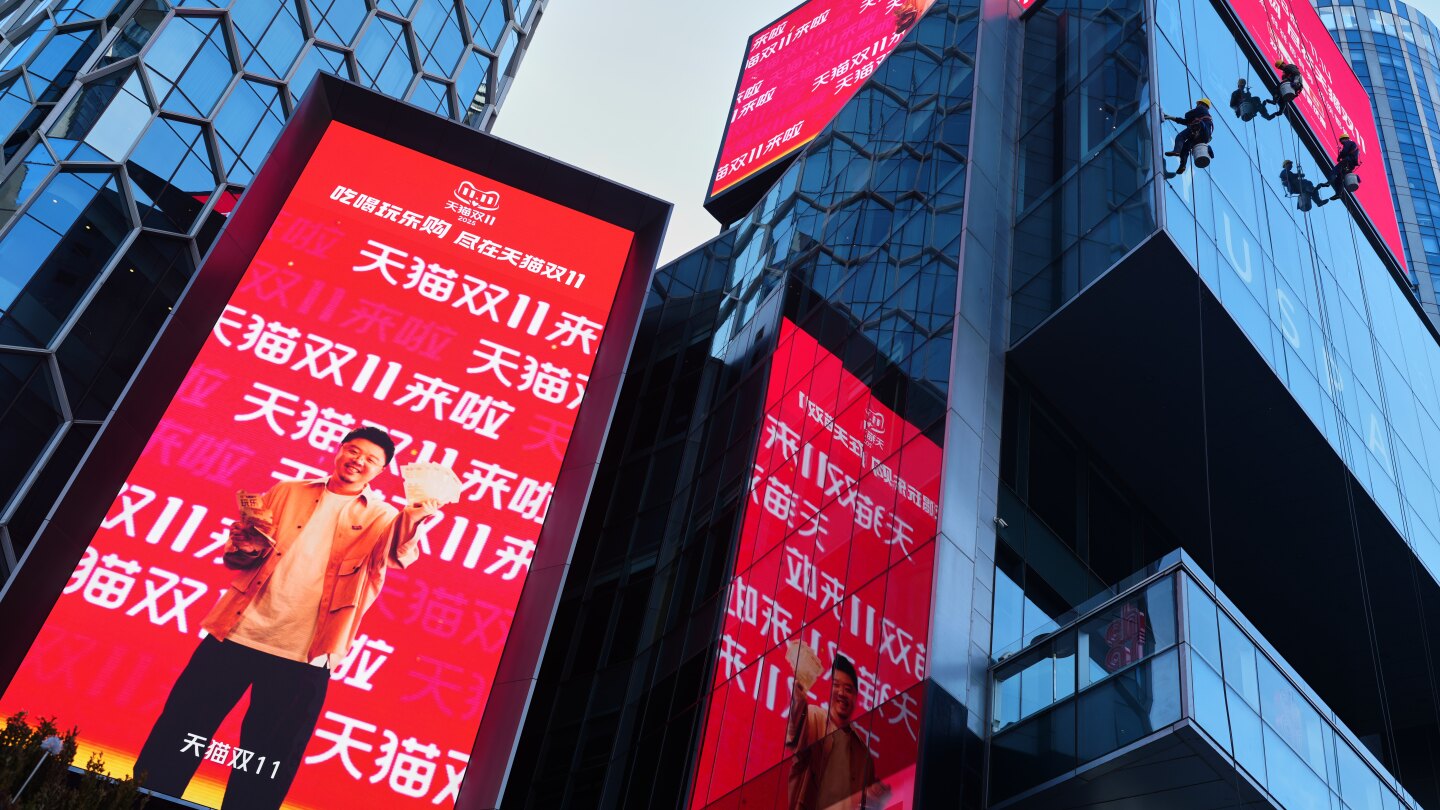
Zhang’s spending pattern reflects a broader trend in China’s largest annual online shopping event, which began on October 9 this year – several days earlier than last year – and concludes this week. Initially launched by Alibaba in 2009 as a one-day event on November 11 (11/11, or “Double 11” in Chinese), the festival was conceived as a celebration for unattached singles but has since evolved into China’s equivalent of Black Friday.
According to retail data provider Syntun, the gross merchandise value for this year’s Singles’ Day topped 1 trillion yuan ($140 billion) by October 31. This figure trails behind 2024’s estimated sales of 1.44 trillion yuan, which represented a 26% year-on-year increase.
Economists closely monitor Singles’ Day spending as a barometer for China’s broader economic health, particularly as the ruling Communist Party has prioritized boosting domestic consumption and business investment to stimulate growth.
“Confidence remains quite downbeat among households,” said Lynn Song, chief economist for Greater China at ING Bank, noting that big-ticket purchases have been especially weak as value-conscious consumers focus on essentials and affordable items.
Industry analysts suggest the earlier start to this year’s festival reflects e-commerce giants’ attempts to compensate for weaknesses in consumer spending.
“It’s an attempt by players like Alibaba and JD.com to drum up business,” explained Shaun Rein, managing director at China Market Research Group. “But it’s not going to be easy.”
Consumer sentiment appears increasingly cautious across China. Beijing resident Zhang Shijun, a 45-year-old vocational training institution employee, explained his modest approach: “Apart from daily necessities, I don’t need to buy any big items. I still need to buy some clothes for my family, because winter is coming.”
Many shoppers have also grown more skeptical about discounts during the shopping festival. Guangzhou-based freelance media worker Sonia Song is among those who suspect retailers inflate prices before applying discounts. She now conducts extensive research, comparing prices across platforms like Douyin, Xiaohongshu, Taobao, and JD.com.
“I’ll only buy what’s cheapest or most cost-effective now,” Song said.
Government initiatives offering rebates for trading in home appliances and vehicles have further diminished the appeal of Singles’ Day promotions. “The logic is fairly simple. If you bought a new washing machine earlier in the year at a discount, further discounts, no matter how steep, are not likely to attract new purchases,” ING’s Song explained.
Chinese e-commerce companies are increasingly looking overseas to boost sales. According to a recent report by Bain & Company, Alibaba-owned Taobao is running simultaneous Singles’ Day promotions across 20 countries this year, representing a significant expansion of its cross-border selling efforts.
With the United States ending its “de minimis” tariff exemption for small shipments – a policy change that has hurt retailers like Shein and Temu – Chinese companies are redirecting their focus toward Southeast Asian markets including Thailand, Vietnam, and the Philippines.
For consumers still willing to spend, certain categories are expected to perform better than others. “Look good, feel good items such as beauty and health-related products will likely outperform this year,” predicted Jacob Cooke, CEO of consultancy WPIC Marketing + Technologies.
Beijing resident Gao Liang, who works at a fitness and swimming club, exemplifies the widespread belt-tightening. After experiencing a 20% drop in income this year due to declining club membership, he’s significantly reduced his Singles’ Day budget from the 3,000-5,000 yuan he spent in previous years.
“I don’t think I will spend that much this year,” Gao said. “Given my unstable income, I don’t need to hoard things.”
As the extended festival wraps up, analysts remain watchful for signs that consumer confidence might finally be recovering after years of pandemic disruptions and a prolonged property market downturn that has weighed heavily on household wealth and spending power.
Fact Checker
Verify the accuracy of this article using The Disinformation Commission analysis and real-time sources.

16 Comments
It will be interesting to see if the Singles’ Day shopping numbers in China can rebound after a slowdown last year. Consumers appear to be more cautious with their spending amid economic concerns.
That’s a good observation. The drop in spending reflects the broader economic headwinds in China right now.
It’s interesting to see how the Singles’ Day shopping festival has evolved over the years, from a niche event for singles to a major barometer of China’s consumer economy. The slowdown this year underscores the need for Beijing to find new ways to spur domestic spending.
That’s a good point. The Singles’ Day event has become a key indicator of broader economic trends in China.
The slowdown in Singles’ Day sales highlights the challenges China faces in transitioning to a more consumer-driven economic model. Policymakers will need to address factors like stagnant wage growth and high household debt to get shoppers spending again.
Agreed. Nurturing a robust domestic consumer market is crucial for China’s long-term economic stability and growth.
It’s not surprising to see Chinese shoppers scaling back their Singles’ Day purchases given the ongoing economic uncertainties. Inflationary pressures and concerns about job security seem to be taking a toll on their willingness to spend.
That’s a fair assessment. The Chinese government will likely need to introduce more targeted measures to stimulate consumer demand.
The lower Singles’ Day sales figures suggest that Chinese consumers are starting to feel the pinch of the country’s economic headwinds. Policymakers will need to carefully consider how to address the underlying factors driving this cautious spending behavior.
Absolutely. Reviving consumer confidence will be crucial for China’s economic growth going forward.
While the Singles’ Day numbers fell short of expectations, it’s still an impressive feat for China to generate over $140 billion in sales during the shopping festival. The country’s e-commerce infrastructure and consumer base remain formidable.
That’s a good point. Even with the slowdown, the sheer scale of China’s Singles’ Day shopping event is remarkable.
The Singles’ Day shopping festival has become a key barometer for consumer sentiment in China. The lower sales figures this year suggest that Beijing still has work to do in encouraging domestic consumption.
Absolutely. Boosting consumer spending is crucial for China as it tries to shift its economy away from an over-reliance on exports and investment.
The pullback in Singles’ Day spending could be an early sign that Chinese consumers are becoming more cautious about their finances. Policymakers will need to closely monitor this trend and consider measures to boost consumer confidence.
Absolutely. Maintaining a healthy consumer sector is vital for China’s economic stability and growth.