


Listen to the article
China has launched an investigation into imported dichlorosilane from Japan, a chemical gas used in semiconductor manufacturing, as trade tensions between the two Asian economic powers continue to escalate. The Chinese Commerce Ministry announced the probe on Wednesday, citing a 31% price decrease in Japanese imports between 2022 and 2024.
“The dumping of imported products from Japan has damaged the production and operation of our domestic industry,” the ministry stated in its official announcement.
This investigation comes just one day after Beijing imposed restrictions on the export of “dual-use goods” to Japan—items that could potentially serve military applications. The timing suggests a coordinated approach to applying economic pressure on Tokyo.
The deteriorating trade relationship appears to stem from political tensions that have been building since late last year. Japan’s Prime Minister Sanae Takaichi suggested that Japanese military forces could intervene if China were to take action against Taiwan, a self-governing island that Beijing considers part of its territory.
Relations were further strained on Tuesday when Japanese lawmaker Hei Seki, who was previously sanctioned by China, visited Taiwan and publicly declared it an independent country. “I came to Taiwan to prove this point, and to tell the world that Taiwan is an independent country,” Seki said, according to Taiwan’s Central News Agency.
Chinese Foreign Ministry spokesperson Mao Ning dismissed these comments, stating that “the nasty words of a petty villain like him are not worth commenting on.”
Japan has responded to the trade restrictions through diplomatic channels. Masaaki Kanai, head of Asia Oceanian Affairs at Japan’s Foreign Ministry, called on China to withdraw the trade measures, arguing that actions exclusively targeting Japan that deviate from international norms are unacceptable. However, Tokyo has not yet announced any retaliatory measures.
Market analysts are watching closely for signs that China might further escalate by restricting exports of rare earth elements to Japan. The state-owned China Daily newspaper quoted anonymous sources suggesting Beijing is considering such restrictions, though this has not been officially confirmed.
Such a move would be particularly significant as China controls the majority of global production of heavy rare earths, which are essential components in manufacturing high-performance magnets used in defense systems and electric vehicles. Previous rare earth restrictions have been a key weapon in China’s trade dispute arsenal, most notably in its ongoing trade tensions with the United States.
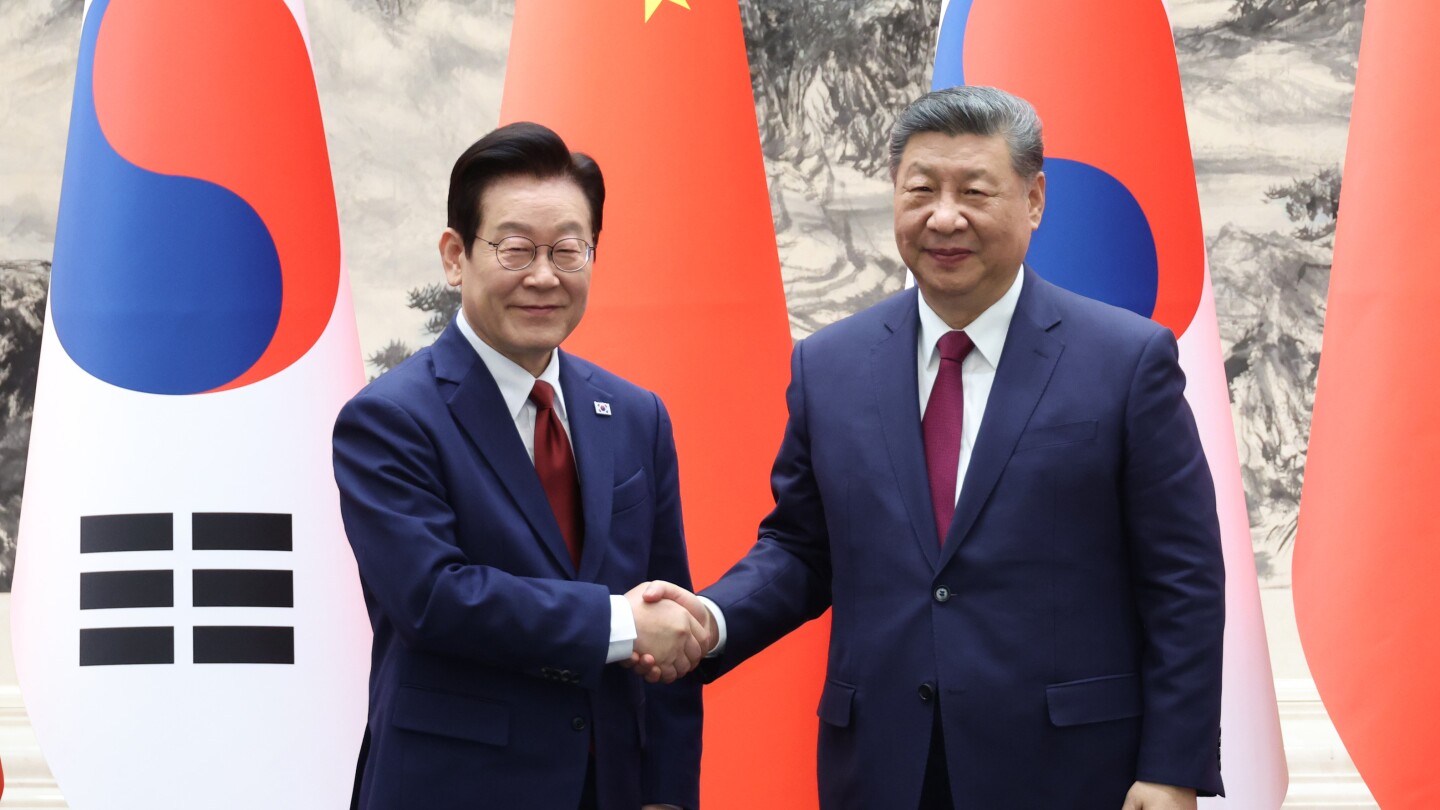
The growing rift with Japan stands in stark contrast to China’s improving relations with South Korea. South Korean President Lee Jae Myung just concluded a four-day visit to China, his first since taking office in June. During the trip, Lee and Chinese President Xi Jinping oversaw the signing of multiple cooperation agreements covering technology, trade, transportation, and environmental protection.
The visit resulted in 24 export contracts worth a combined $44 million, according to South Korea’s Ministry of Trade, Industry and Resources. Chinese state media also highlighted that South Korea has surpassed Japan as the top destination for Chinese travelers during the recent New Year’s holiday period.
China has been actively discouraging its citizens from traveling to Japan, claiming that Japanese leaders’ comments regarding Taiwan have created “significant risks to the personal safety and lives of Chinese citizens in Japan.”
The escalating trade tensions between China and Japan, both major economies in the Asia-Pacific region, could have significant implications for global supply chains, particularly in the semiconductor industry where both countries are key players. Analysts will be closely monitoring whether these trade disputes expand to other sectors or prompt Japan to seek closer economic alignment with the United States and its allies as part of a broader regional realignment.
Fact Checker
Verify the accuracy of this article using The Disinformation Commission analysis and real-time sources.

18 Comments
While I can understand China’s desire to protect its domestic industries, using trade restrictions as a political weapon is risky and could lead to escalating tensions. I hope the two governments find a way to resolve this through dialogue.
Agreed. Economic coercion is not an effective long-term strategy. Stable, predictable trade relationships are crucial for businesses and consumers on both sides.
The semiconductor industry is so crucial to the modern global economy. Disruptions to that supply chain could have far-reaching consequences. I hope China and Japan can find a way to deescalate this trade dispute before it causes significant damage.
Absolutely. Semiconductors are the building blocks of so much of the tech we rely on today. Protecting that industry should be a priority for both countries.
The timing of these new trade measures from China suggests a coordinated effort to apply pressure on Japan. It’s an concerning tactic that could backfire and further damage economic ties between the two countries.
Absolutely. Tit-for-tat retaliation is rarely productive in these situations. Both sides need to take a step back and focus on areas of mutual interest and benefit.
The escalating trade tensions between China and Japan are concerning. Both sides seem to be taking retaliatory measures that could further disrupt supply chains and economic cooperation in the region. It’s important that they find a diplomatic resolution to these political disputes.
Agreed. Ratcheting up trade barriers is unlikely to resolve the underlying political issues and could end up harming both economies. Cooler heads need to prevail.
While I understand China’s position, using trade restrictions as a political tactic is a risky strategy that could backfire. I hope the two countries can find a more constructive path forward that protects their industries without escalating tensions.
The semiconductor industry is so critical to the global economy. Disruptions to that supply chain could have far-reaching consequences. I hope China and Japan can find a diplomatic solution that avoids further escalation of trade tensions.
This is a concerning development, as it suggests the political frictions between China and Japan are spilling over into the economic realm. I hope the two countries can find a way to resolve their differences through dialogue and negotiation.
This is a worrying development, as it suggests the political disputes between China and Japan are becoming more entrenched. I hope the two countries can find a way to deescalate the situation and focus on areas of mutual economic benefit.
While I can understand China’s position, using trade restrictions as a political tool is a risky strategy that could backfire. I hope the two countries find a way to work through their differences in a more constructive manner.
The semiconductor industry is so crucial to the global economy. Disruptions to that supply chain could have widespread impacts. I hope China and Japan can find a diplomatic solution that protects their domestic industries without escalating tensions.
This is a worrying development, as the semiconductor industry is a critical part of the global tech supply chain. I hope China and Japan can work out their differences through negotiation rather than escalating economic warfare.
Me too. Disruptions to semiconductor production could have far-reaching impacts, especially given the chip shortages we’ve already seen. Diplomatic solutions are needed here.
This is a concerning development, as it suggests the political tensions between China and Japan are spilling over into the economic realm. I hope cooler heads can prevail and they find a way to resolve their differences through diplomacy.
While I can sympathize with China’s desire to protect its domestic industries, using trade restrictions as a political weapon is a dangerous game. I hope the two countries can find a more constructive way to address their differences.