


Listen to the article
China and South Korea Strengthen Ties Amid Regional Tensions and North Korean Missile Tests
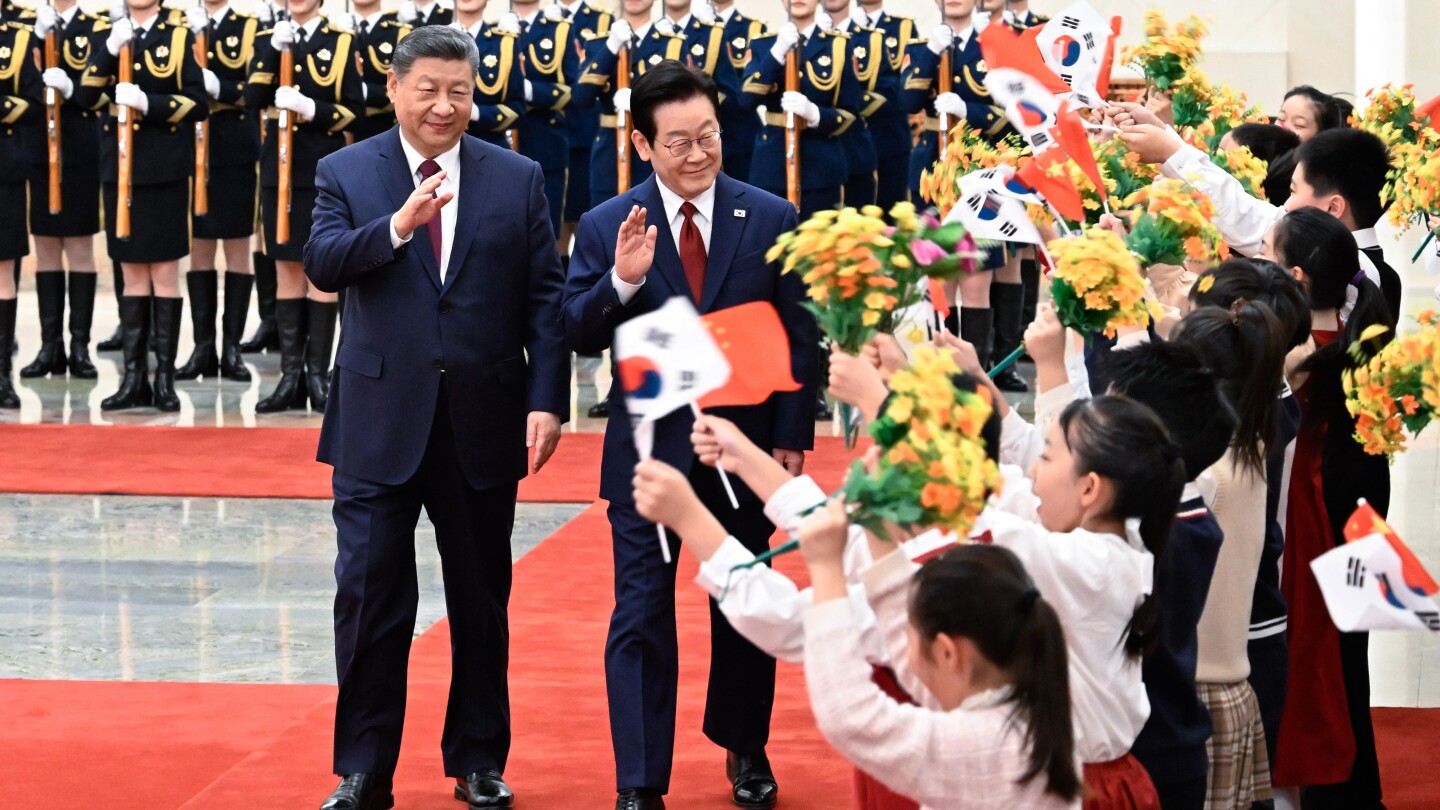
Chinese and South Korean leaders reaffirmed their commitment to enhancing bilateral trade and maintaining regional stability during South Korean President Lee Jae Myung’s first visit to Beijing since taking office in June.
The four-day diplomatic mission was overshadowed by North Korea’s launch of several ballistic missiles into the sea just hours before Lee’s arrival. Pyongyang claimed some were hypersonic weapons, though foreign experts remain skeptical about North Korea’s capabilities in this advanced technology.
During their meeting at the Great Hall of the People, Chinese President Xi Jinping emphasized both nations’ “important responsibilities in maintaining regional peace and promoting global development,” according to China’s state broadcaster CCTV. Lee responded by expressing his desire to open “a new chapter in the development of Korea-China relations” during these “changing times.”
“The two countries should make joint contributions to promote peace, which is the foundation for prosperity and growth,” Lee stated during the talks.
The summit resulted in both nations agreeing to explore creative approaches to ease tensions on the Korean Peninsula. China confirmed its commitment to play “a constructive role” in promoting peace, according to South Korea’s national security adviser Wi Sung-lac. This pledge comes at a critical time, as China remains North Korea’s most significant ally and economic lifeline.
In recent years, China, alongside Russia, has repeatedly blocked U.S.-led efforts to strengthen UN sanctions against North Korea. This diplomatic stance highlights Beijing’s complex role in managing regional security while maintaining influence with Pyongyang.
The visit takes place amid shifting regional dynamics. Lee’s liberal administration has promised to improve relations with Beijing while simultaneously strengthening ties with Washington and Tokyo—a delicate balancing act in an increasingly polarized geopolitical landscape. Previous conservative South Korean governments had prioritized relationships with the U.S. and Japan, causing friction with China, particularly regarding the installation of a U.S. missile defense system on South Korean soil.
Regional tensions have been further complicated by recent developments between China and Japan. During his meeting with Lee, Xi referenced both countries’ historical rivalry with Japan, calling on them to “join hands to defend the fruits of victory in World War II and safeguard peace and stability in northeast Asia.” This statement comes as China expresses concern over recent comments by Japan’s new leader suggesting Tokyo could intervene if China were to attack Taiwan.
Last week, China conducted large-scale military drills around Taiwan, which it considers part of its territory, to warn against what it termed “separatist and external interference forces.”
When asked about South Korea’s military cooperation with the U.S., Lee told CCTV before his trip that such cooperation “shouldn’t mean that South Korea-China relations should move toward confrontation.” He emphasized that his visit aimed to “minimize or eliminate past misunderstandings or contradictions and elevate and develop South Korea-China relations to a new stage.”
Economic cooperation formed a significant component of the discussions. China and South Korea maintain robust trade ties, with bilateral trade reaching approximately $273 billion in 2024. During their meeting, the leaders oversaw the signing of 15 cooperation agreements spanning technology, trade, transportation, and environmental protection.
Earlier on Monday, Lee had attended a business forum in Beijing with representatives from major corporations including Samsung, Hyundai, LG, and Alibaba Group. There, Lee and Chinese Vice Premier He Lifeng witnessed the signing of additional agreements in consumer goods, agriculture, biotechnology, and entertainment sectors.
The economic relationship between these neighboring powers remains crucial for both nations, especially as global supply chains face ongoing disruptions and economic uncertainties persist in various markets worldwide.
As both nations navigate complex regional politics, this high-level exchange signals a potential thawing in relations that had cooled in recent years, while highlighting the continuing challenges posed by North Korea’s weapons programs and broader geopolitical tensions in Northeast Asia.
Fact Checker
Verify the accuracy of this article using The Disinformation Commission analysis and real-time sources.

10 Comments
This summit seems to strike a balance between addressing regional tensions and exploring opportunities for deeper economic ties. Navigating these complex geopolitical dynamics will require careful diplomacy from both sides.
Agreed. The leaders’ acknowledgment of their “important responsibilities” in maintaining peace and promoting growth is a constructive approach to these evolving regional dynamics.
This summit seems to signal a pragmatic approach from both sides to boost economic cooperation while navigating geopolitical challenges. Balancing regional peace and prosperity will be the key focus.
Yes, the emphasis on joint contributions to promote peace is an important message. Fostering regional stability should be the foundation for further growth and development.
The timing of North Korea’s missile tests right before the China-South Korea summit is quite concerning. However, the leaders’ focus on regional peace and global development is a reassuring sign.
Indeed. While the security challenges are significant, the emphasis on building a “new chapter” in bilateral relations is a positive step forward.
It’s good to see China and South Korea reaffirming their commitment to enhancing bilateral ties, especially given the uncertain times with North Korea’s missile tests. Maintaining open dialogue is crucial.
Absolutely. Strengthening economic and diplomatic cooperation between these two major regional powers could help mitigate some of the tensions and risks in the Korean peninsula.
Interesting to see China and South Korea strengthening ties despite rising regional tensions. Maintaining stability and promoting development will be critical in these changing times.
Agreed. The missile tests by North Korea are certainly complicating matters, but continued dialogue between Beijing and Seoul is a positive step.