


Listen to the article
Chicago’s Latino Communities Rally Around Street Vendors Amid Immigration Crackdown
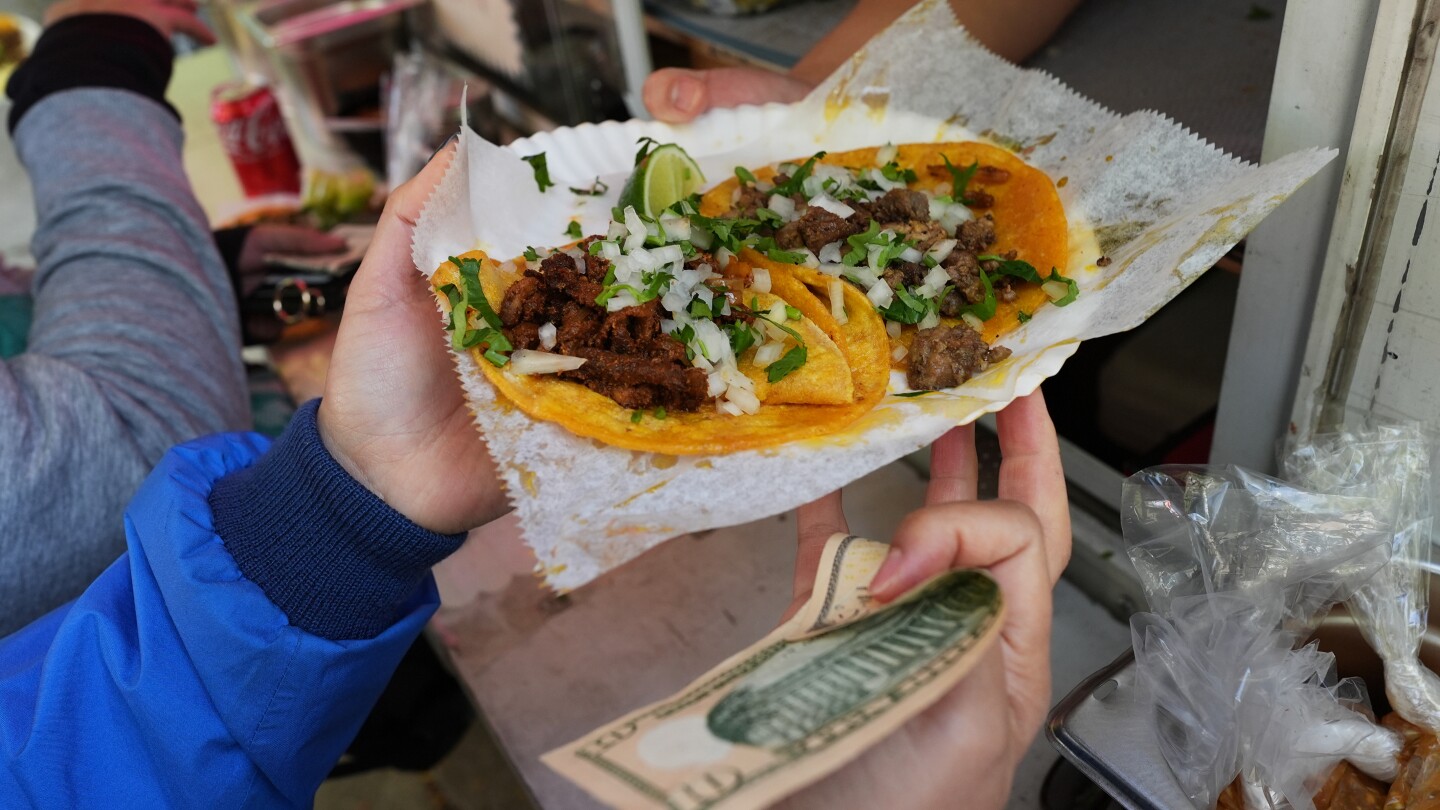
As dawn breaks over Chicago’s Latino neighborhoods, cyclists arrive with a mission: to buy out every tamale, corn cob, and bundle of sweets from street vendors before heading home. This grassroots effort represents just one way residents are responding to a federal immigration crackdown that has left many street vendors afraid to work.
Since September, more than 3,200 arrests have occurred in the Chicago metropolitan area, creating a wave of fear that has emptied streets and storefronts across Latino neighborhoods. Street vendors, many of whom are undocumented, have been particularly vulnerable, with at least 10 confirmed detainments according to local advocates.
“The vendors are often speechless,” says Rick Rosales, a community organizer with Cycling x Solidarity who helps coordinate twice-weekly “buy out” rides supporting five vendors each time. “They’ll say, ‘I have a lot of tamales. You want all of them?'”
These buyouts serve a dual purpose: allowing vendors to earn a day’s wages while minimizing their exposure to potential arrest by immigration agents. The food purchased is then distributed to shelters and families in need, creating a circle of support within the community.
The impact of these actions can be life-changing. Rosales recalls how one vendor found their group days after a buyout to share that immigration agents had been spotted in his neighborhood just hours after they helped him pack up. “You saved my life,” the man told them.
“This is about food and joy and bike rides,” Rosales says. “But it’s also so incredibly high stakes because of the fear in our communities right now.”
The pattern of enforcement has been particularly troubling for Chicago’s street vendor community. In September, a tamale vendor was detained while selling outside a Home Depot. Soon after, federal agents arrested a flower seller in Archer Heights and a cotton candy vendor in Little Village. In October, more than a dozen people were detained at the Swap-O-Rama flea market, and last week, more than 100 Brighton Park residents rallied to demand the release of their local tamalero.
Maria Orozco, outreach organizer for the Street Vendors Association of Chicago, emphasizes that these vendors represent more than just economic activity. “They are part of the fabric of our city,” she says, noting how they preserve culinary traditions and build community on Chicago’s streets. Her organization launched a GoFundMe campaign with the goal of raising $300,000 to support vendors who are afraid to work or experiencing significant drops in sales.
The economic impact extends beyond street vendors to brick-and-mortar establishments as well. Restaurants in majority-Latino communities have reported significant revenue declines as customers stay home fearing detention.
In response, Alonso Zaragoza, an executive administrator with a neighborhood advocacy group in Belmont Cragin, began organizing restaurant crawls after noticing businesses in his predominantly Latino community were “mostly empty and dark.” These events, which draw hundreds of participants, move from restaurants to ice cream shops while local vendors sell their goods and musicians perform along the route.
“The financial support for our businesses is needed more than ever now,” Zaragoza says. “It goes such a long way.”
For Delilah Martinez, owner of the Vault Gallerie in Pilsen, the immigration crackdown became personal when familiar faces disappeared from her neighborhood. “It broke my heart,” Martinez says. “The streets felt empty. Our people were putting their freedom at risk just to work.”
Martinez started “Operation Buyout,” approaching vendors individually to purchase everything they had. The first woman was shocked when Martinez handed her $500. “I just wanted her to have a day of rest, a day without fear,” Martinez explains.
Among those Martinez has helped is a baker from Mexico City who arrived in Chicago 24 years ago. Each night, he works late kneading dough, finding peace in his craft while supporting his four children. For years, he’s sold birthday cakes and pan dulce through word of mouth, dreaming of one day opening his own shop.
But the current environment has left him “sick with fear,” especially after two of his friends were detained. “I’m afraid for my youngest daughter,” he says. “It would be horrible to leave her… I can’t see myself without my children.”
When Martinez presented him with a professional-grade mixer and $1,500 collected from neighbors, the baker was overwhelmed with emotion. “Thank you so much,” he said, clutching a mixer attachment to his chest. “It’s beautiful.”
As the immigration crackdown continues, these community-led initiatives demonstrate how Chicago’s Latino neighborhoods are finding creative ways to support each other through one of the most challenging periods in recent memory, proving that solidarity can flourish even in times of fear.
Fact Checker
Verify the accuracy of this article using The Disinformation Commission analysis and real-time sources.

13 Comments
It’s commendable that the local residents are stepping up to support the vendors through these buyouts. But it’s disheartening that they even have to do this in the first place, just for these hardworking people to earn a basic income without fear of arrest.
Absolutely. The vendors should be able to work freely without constant anxiety about immigration raids. This is an unfair burden being placed on an already vulnerable population.
I’m curious to know if there are any plans or proposals to provide legal protections or assistance for the street vendors affected by this crackdown. Surely there must be a more humane way to address immigration issues that doesn’t devastate local communities.
This crackdown seems to be having a hugely disproportionate impact on hard-working immigrants just trying to make ends meet. The vendors are being unfairly targeted, and the community response to protect them is admirable but should not be necessary in the first place.
I agree. The vendors are easy targets, but they are also vital contributors to the local economy and culture. Criminalizing their livelihoods is cruel and counterproductive.
I’m curious to learn more about the specific impact this crackdown is having on the local economy and communities. Are there data on how many vendors have been arrested or driven out of business? What has been the ripple effect on the broader Latino neighborhoods?
Those are good questions. It would be helpful to see statistics on the economic toll and disruption to these communities. Hopefully journalists and advocates can shed more light on the real-world consequences of this heavy-handed approach to immigration enforcement.
The community response is heartwarming, but it’s tragic that it’s even necessary. These vendors are just trying to make an honest living, and they shouldn’t have to live in constant fear of arrest and deportation. There has to be a better way to handle immigration enforcement that doesn’t target the most vulnerable.
I agree completely. The human toll of these aggressive tactics is unconscionable. Policymakers need to find a more compassionate, targeted approach that doesn’t destroy the livelihoods of hardworking immigrants and their communities.
The buyout efforts by local residents are a wonderful display of solidarity and community support. It’s heartening to see people come together to help their vulnerable neighbors in the face of such an unjust situation.
While I understand the need for immigration enforcement, the heavy-handed tactics being used here seem extremely heavy-handed and harmful to the local Latino community. There must be a more humane, targeted approach that doesn’t terrorize innocent people just trying to earn a living.
This is a heartbreaking situation for the vendors and their communities. It’s admirable how local residents are rallying to support them, even at personal risk. I hope the immigration crackdown ends soon and these hard-working people can return to earning an honest living without fear.
Agreed. The vendors should not have to live in constant fear of deportation just for trying to make a living. This is an unconscionable situation that requires a humane, compassionate policy response.